
F1 The Movie is All Throttle and No Sense – A Review
This Review contains minimal spoilers for F1 The Movie.
F1 is absolute nonsense, and I mean that with something dangerously close to affection. Its story is awful, its rules are optional, its romance is contrived within an inch of its life, and its understanding of Formula One sometimes feels reverse-engineered from a fever dream in the paddock club. Yet Joseph Kosinski’s film works because it understands what makes the sport so seductive: speed, danger, ego, money, theatre, and the lunatic beauty of cars being pushed beyond common sense.
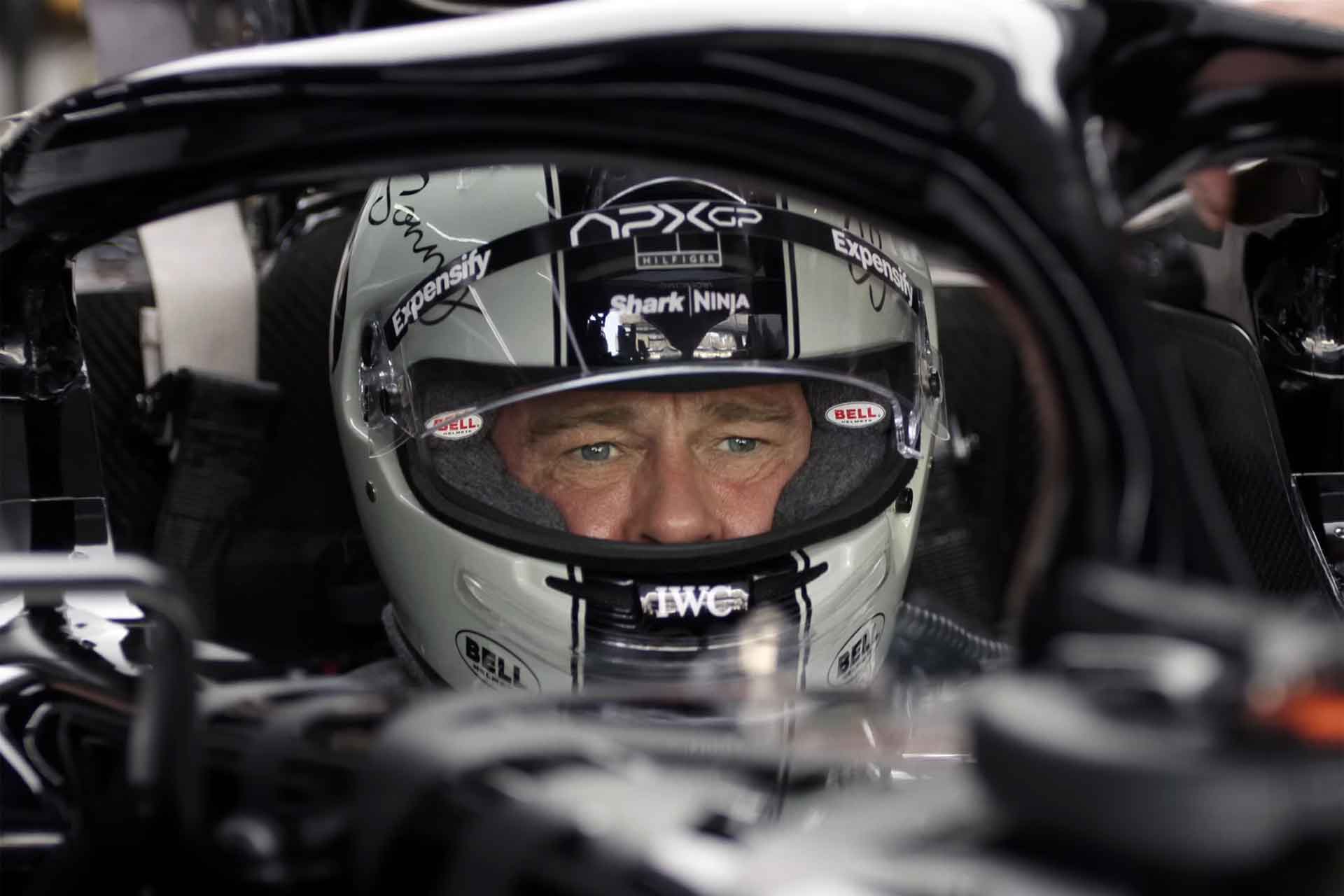
Brad Pitt plays Sonny Hayes, a former F1 prodigy dragged back into the sport by Javier Bardem’s Ruben Cervantes to help save the failing APXGP team. He is paired with Damson Idris’s Joshua Pearce, the young driver with all the pace and none of the patience, and from there F1 settles into the oldest sports-movie shape imaginable: damaged veteran, gifted rookie, desperate owner, impossible comeback. It does not reinvent that chassis. It just drives it hard enough for the familiar parts to glow.
Sonny only really makes sense as a man from the 1990s: a survivor from a more dangerous, less polished, more mythic version of the sport. Pitt is strongest when Sonny feels slightly out of time, living on instinct, regret and whatever seat will still take him. Around the data walls, sponsor boards and image-managed drivers, he carries the air of someone who came from a sport that was still half romance and half roulette wheel.
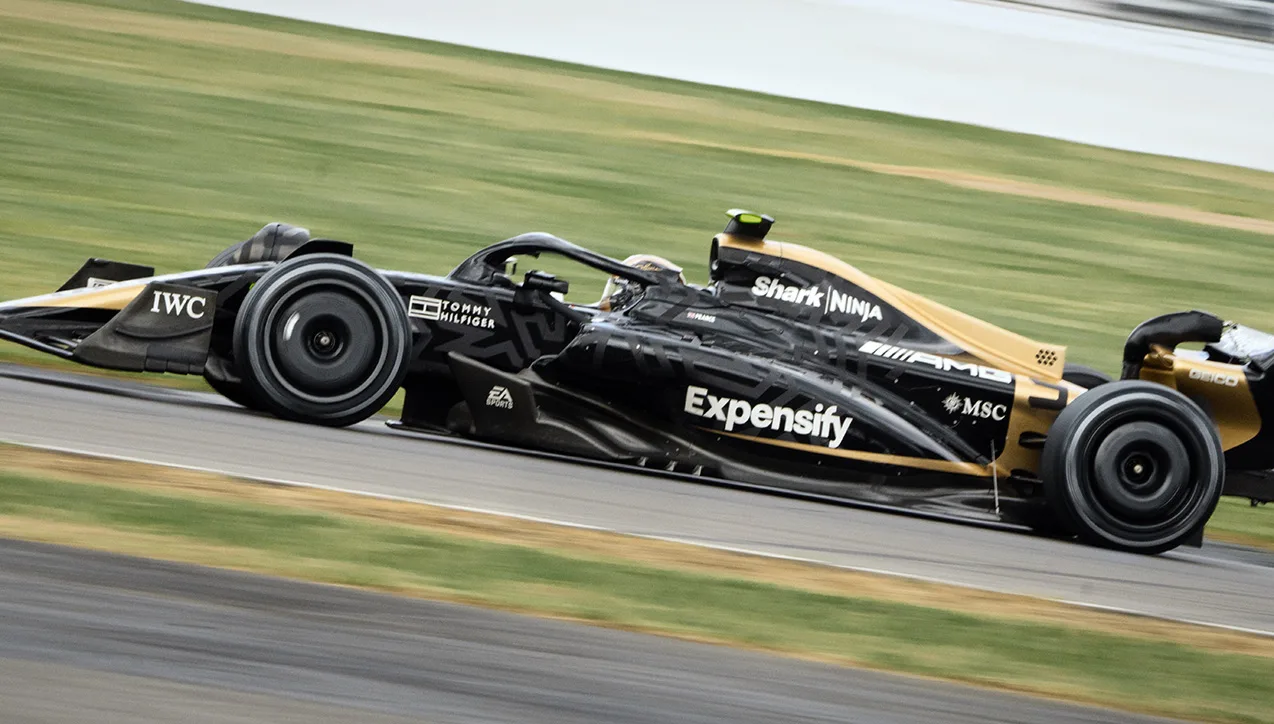
F1 sells the raw speed of the sport like no other movie.
The problem is the screenplay keeps trying to make that idea profound by saying it louder. The repeated “built for combat” mantra begins as a blunt team ethos before becoming the daftest cult chant in motorsport cinema, and the sporting logic around it is worse. Penalties exist when convenient. Stewarding appears to have gone for lunch. Radio procedure, team orders, strategy calls and basic competitive sense all bend around the next dramatic surge. For a film made with Lewis Hamilton among its producers, real circuits, real drivers and real broadcast language, it treats the FIA like optional lore. As a Formula One story, it is constantly ridiculous. As a Formula One feeling, somehow, it is frequently dead on.
That contradiction reaches the cars too, though in a specific and less ruinous way. APXGP’s cars were built from modified F2 machinery, a reasonable production compromise that Kosinski sells beautifully at speed. The issue is consistency: because the film adjusts the cars around story, photography and production, they sometimes look like hybrids of the year they are meant to occupy and the year just before it. Most viewers will never notice and most F1 fans probably will not care, but anyone tuned into the sport’s yearly design grammar can feel the joins. Convincing in motion, a little suspect under inspection. That is practically the whole film.
What keeps the illusion alive is the ambition of the production. F1 looks real because so much of it was built from the real thing: actual Grand Prix weekends, real circuits, real paddocks, real drivers moving through the frame, and modified race cars dropped into the existing circus. This is not Formula One faked from a safe distance. It pushes a fictional team into the sport’s machinery, then buries the joins under speed, noise and access.
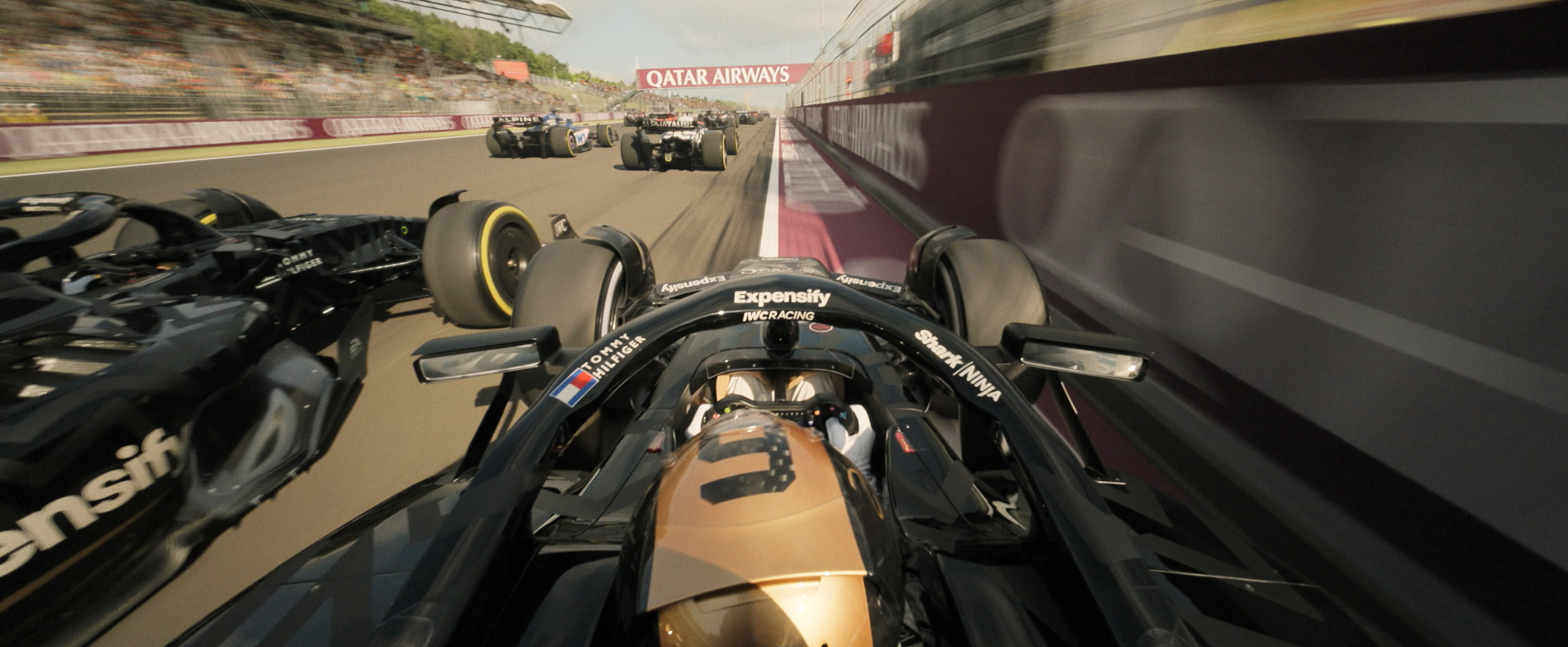
Joshua Pearce’s (Damson Idris) APXGP car being squeezed against the wall during a race, echoing the familiar onboard angle of a live Formula One broadcast.
That access gives the set pieces their authority. Kosinski remains one of the few modern blockbuster directors who can make velocity feel physical rather than decorative, while Claudio Miranda’s cinematography turns garages, cockpits, grids and floodlit straights into objects of worship. The racing is strongest when it trusts the texture of the sport: the wrong angle, the sudden lift, the spray of debris, the awful half-second where everyone waits to understand what has just happened. When metal leaves the ground, F1 suddenly becomes serious. It understands that a racing incident is not just action. It is the instant the sport’s glamour falls away and physics takes over.
The wind tunnel scenes are just as good because they show something racing films usually ignore: the invisible labour of speed. Formula One is airflow, design, simulation, compromise and tiny gains hunted until they become religion. When F1 looks at that side of the sport, it remembers that modern racing is not only about nerve. It is an engineering war fought in millimetres.
The cast drags the weaker material further than it deserves. Bardem is a joy as Ruben, Idris gives Joshua real bite, Tobias Menzies turns corporate slime into something almost elegant, and Pitt’s distance often works for Sonny. Kerry Condon is the standout, which makes the romance more frustrating. Kate McKenna directly resists being reduced to a driver’s accessory, more than a WAG orbiting Sonny’s comeback, and the film then does exactly that anyway. Condon nearly sells it, but the writing betrays her. It lets Kate name the trap, then walks her into it regardless.
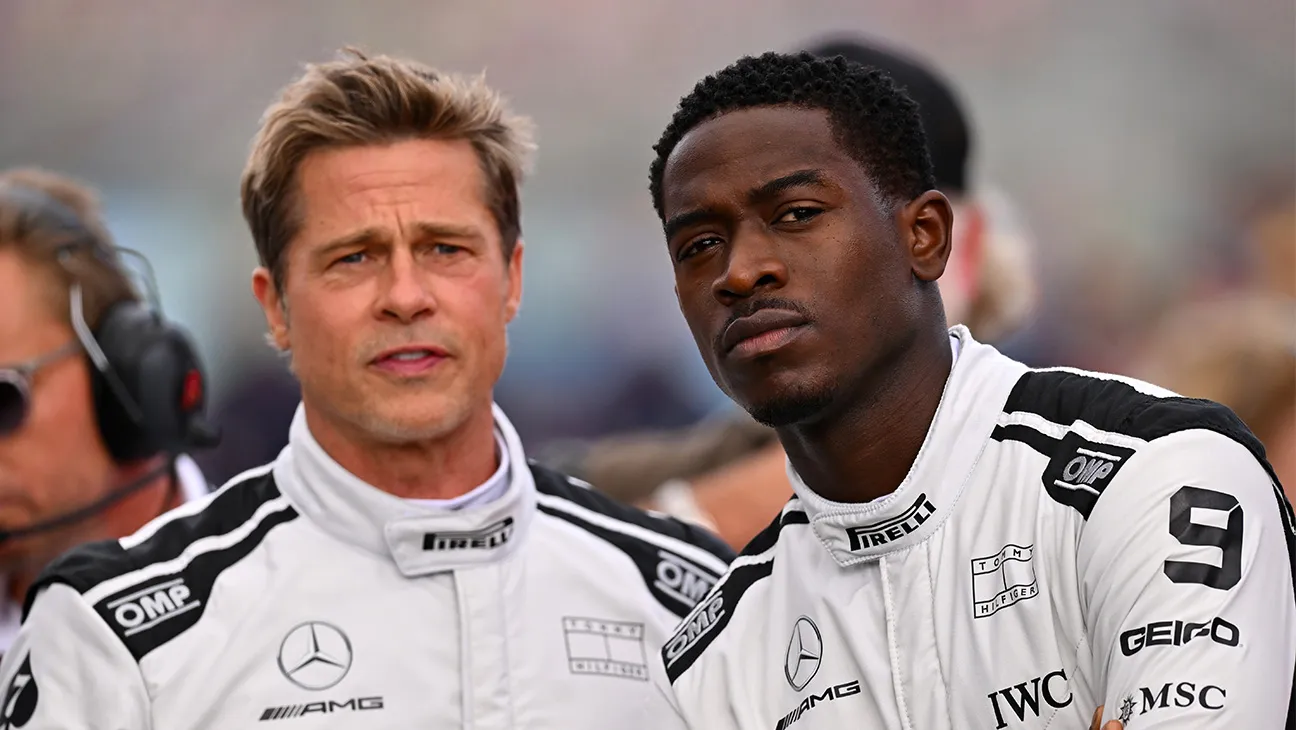
Pitt’s Sonny Hayes and Pearce’s Joshua Pearce are the heart of the paddock.
The cameos are shamelessly effective. They should feel cheap, and occasionally they do, but I would be lying if I said they did not work on me. The real drivers, familiar faces, broadcast texture and flashes of Hamilton mythology give F1 a charge that a fully fictional racing world would struggle to match. It understands the glossy self-importance of the circus: global excess, brand worship, ridiculous seriousness, elite engineering and travelling soap opera.
The final act is where the bad story most clearly catches up with the great filmmaking. The climactic racing is breathtaking, but F1 reaches for the easiest roar from the crowd when a cleaner, braver emotional resolution is sitting right there. It chooses legend over consequence, and the film is less interesting for it.
Still, I cannot pretend this did not work on me. Rush and Ford v Ferrari are better dramas, with cleaner character work and richer consequence. F1 is dumber, shinier and far more ridiculous, but it understands modern Formula One as experience. Not regulation. Not procedure. Experience.
That is what saves it. F1 mangles logic, wastes good dramatic possibilities and saddles one of its best characters with a romance the film knows is a problem and then does anyway. It is also beautifully shot, thunderously edited, superbly scored and alive with the mad glamour of the pinnacle of motorsport. Built for chaos, not combat.



No Comments