

The perfectly played disaster in Game Night – A Review
This review contains minimum spoilers for Game Night.
There is a point in Game Night when Jason Bateman and Rachel McAdams are dealing with an injury neither of them is remotely qualified to treat, and the scene keeps finding new ways to go wrong. Not wildly wrong, at first. Just enough to require another decision, then another, each made with the confidence of two people who have mistaken mutual agreement for competence. Bateman tightens with every setback; McAdams somehow becomes more enthusiastic. They are frightened, revolted and having the time of their lives.
Their chemistry is insane. You understand their marriage immediately. They cannot do anything without turning it into a competition. Winning is how they flirt, how they encourage each other and how they become intolerable to everybody around them. Bateman’s particular strain of exhausted irritation works perfectly against McAdams, who meets every disaster with a brightness only a few degrees away from mania. Even when panic sets in, she seems delighted that the evening has become this elaborate. You believe they love each other. You also believe that losing a board game could ruin the drive home.
McAdams never gets ahead of the joke. Everything is sincere. When confidence gives way to confusion, the confusion becomes the new thing she commits to completely, and the film moves with her. The camera discovers fresh evidence of their incompetence, sometimes before they do, while the editing lets each terrible idea survive just long enough to produce the next one. Relationship comedy becomes physical comedy, brushes against something genuinely gruesome and keeps going. The scene does not stop to change gears. It simply becomes something else.
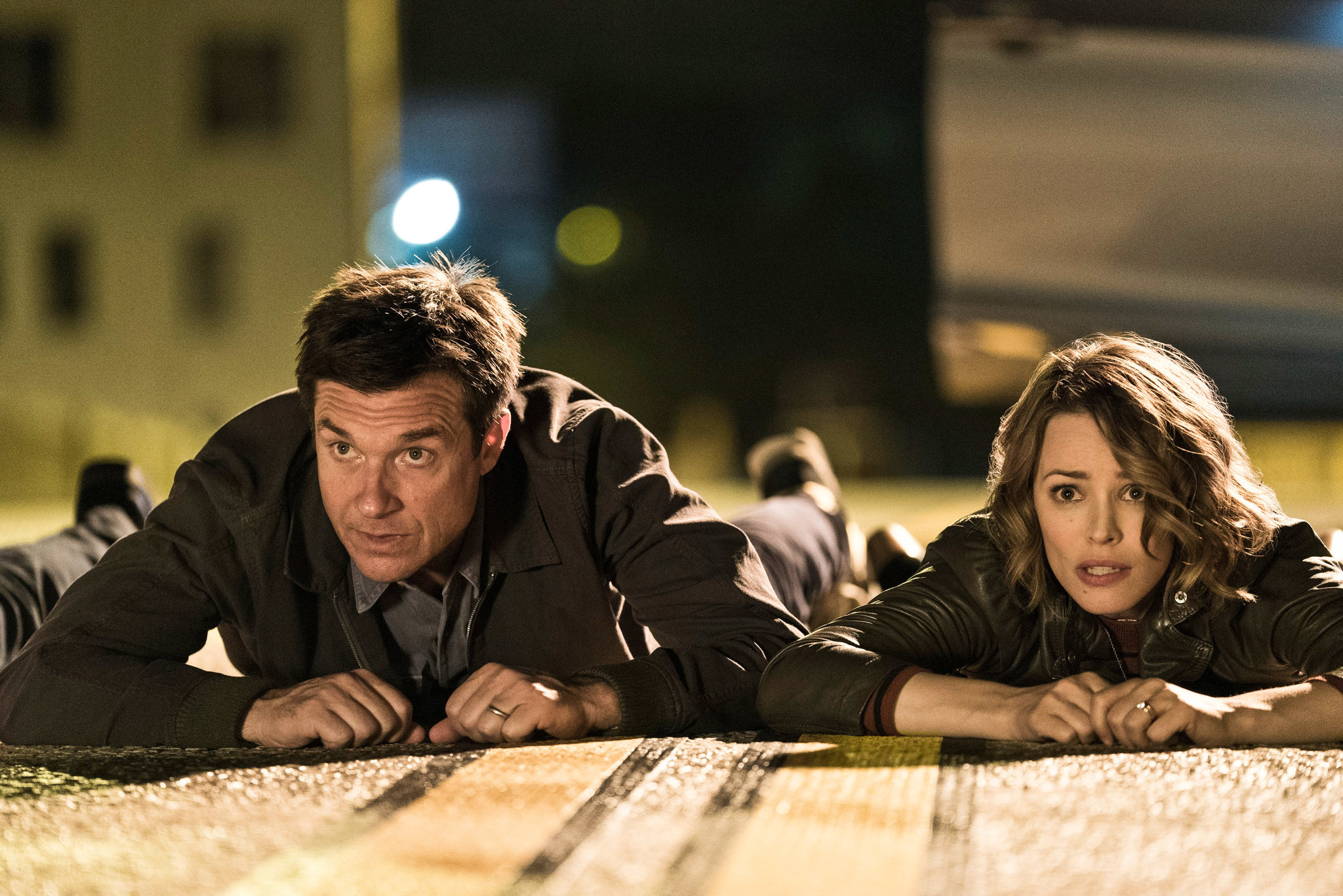
The chemistry between Bateman and McAdams is Electric.
It is not just them. The whole group arrives carrying years of victories, grudges and private jokes, and you can feel all of it before the plot has properly started. One person celebrates too early, somebody else takes a harmless comment personally, and a third immediately understands exactly why it has landed badly. The jokes bounce around the room, gathering reactions and reopening arguments, often leaving the funniest person somewhere near the edge of the frame. Each couple has its own ridiculous little crisis, but those crises refuse to remain politely inside separate subplots. They leak into everything. Immediate danger can be unfolding while somebody is still trying to settle a marital dispute from three rooms ago.
The camera loves them because they give it so much to chase. It follows one joke and finds another waiting in the next room; it pulls our attention towards a conversation, then lets a look in the background quietly change it. Game Night could easily have been another comedy that points a camera at funny actors and considers the work finished. Instead, the filmmaking joins in.
Even the streets are playing. Houses, cars and entire neighbourhoods are photographed like miniature pieces arranged on a board, making the characters look as though they have already been placed inside a game they do not know they are playing. The film never holds the idea up for inspection. The image passes, the night moves on, and that faint sense of an unseen hand arranging things remains.
Then an object begins travelling around a house and the camera goes with it.
The sequence is absurdly well choreographed. Doorways become routes, furniture becomes an obstacle and every handoff briefly shifts control of the room. Plans are invented and abandoned in seconds. People appear from the wrong direction, miss what is happening by inches and recover with the sort of confidence that guarantees a larger failure is coming. Yet the geography is always perfectly clear. We know where the object is, where it needs to go and which character is about to make that considerably less likely. The precision never pins the scene down. It gives the panic somewhere to run.
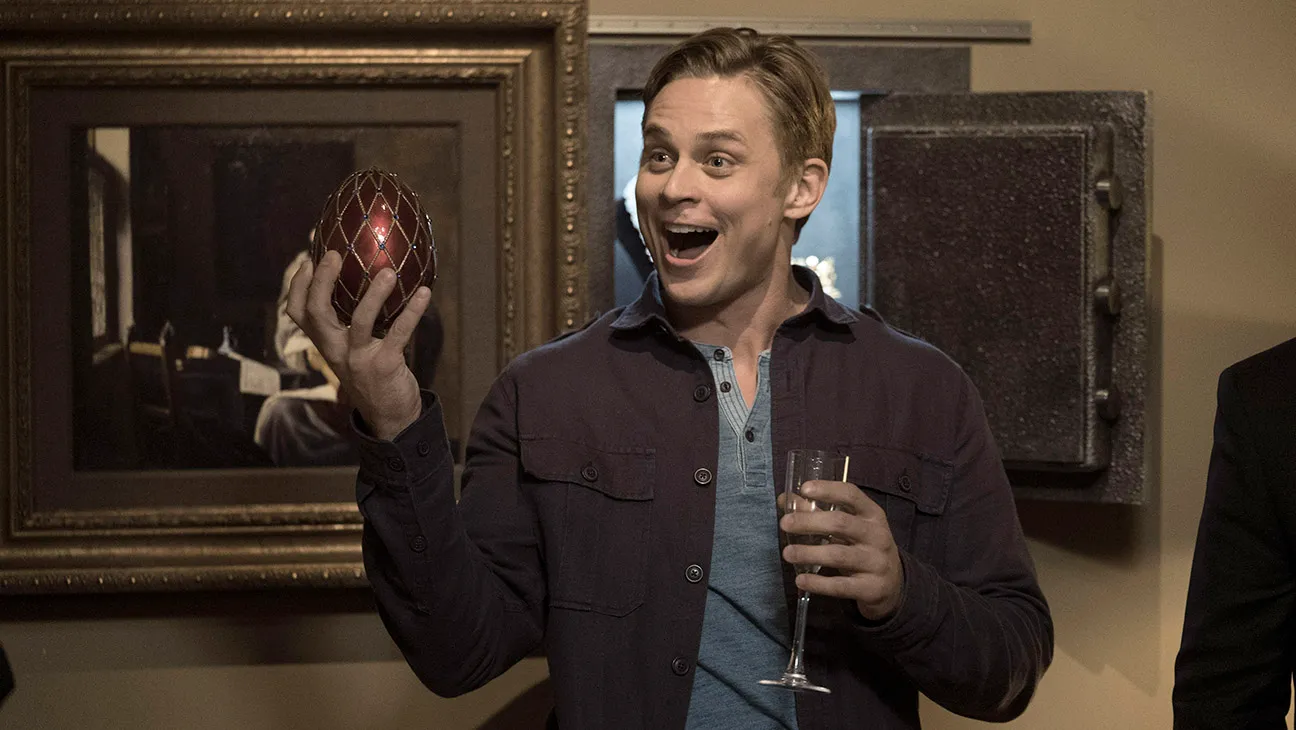
Billy Magnussen’s Ryan earns his place in a very enjoyable supporting cast.
The plot moves the same way. Another piece of information arrives while the characters are already in motion, so they grab whatever fragment supports the version of events they currently prefer and charge ahead. A threat is mistaken for part of the performance. Something ridiculous acquires real consequences. Somebody finally works out what is happening seconds after the explanation has stopped being useful, and another terrible plan is born before anyone can ask whether the last one made sense.
It should become exhausting. The reversals keep coming, details return with a second purpose and throwaway jokes suddenly find themselves holding pieces of the story together. One more twist should snap the whole thing in half. Instead, it gets faster. Game Night plants something, pays it off and keeps running.
The danger keeps pace. It is allowed to feel real, sometimes for an uncomfortably long time, because the laughter changes when the characters are still responding as though everything is pretend. Their stupidity becomes funnier as the consequences sharpen, then more alarming when you realise how far it has carried them. Just as the tension begins to settle, somebody misunderstands the situation in a way that is completely plausible for them and disastrous for everybody else.
Into all that movement walks Jesse Plemons.
Plemons is an absolute delight and he barely moves at all.
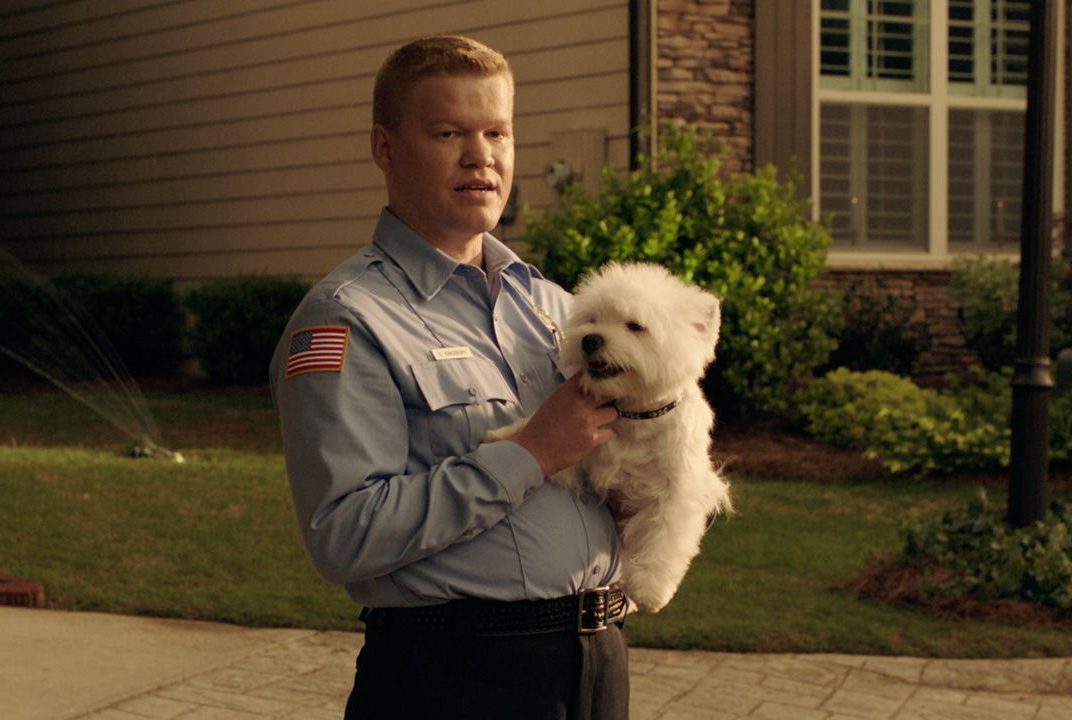
Jesse Plemons is deliciously awkward as Gary.
A question from Gary can stop an entire room because nobody knows what answer might release them from the conversation. Every word sounds as though it has been examined by a private internal committee. Every pause lasts long enough for the other characters to become conscious of their hands, their voices and the distance to the nearest door.
He could have played Gary as an obvious creep and collected easy laughs. Instead, the loneliness is painfully sincere. He wants to be included, everyone knows he wants to be included, and nobody can imagine including him without making the evening feel like the beginning of a police statement. You feel sorry for him. Then a stare continues for half a second too long and you remember why everyone wants to leave.
The group changes whenever he appears. These people can turn almost any interaction into a game, but Gary gives them no rules they can recognise. The overlapping jokes disappear. Everyone starts choosing words too carefully. Plemons simply waits while the silence does the work, stealing scenes from a film moving at full speed by making it afraid to move at all.
Funny people are not enough. Game Night understands that the joke might be in the distance between two actors, the route an object takes through a house or a cut that arrives before a character understands what it has revealed. It can gather speed across several scenes or sit motionless in a doorway. Directors John Francis Daley and Jonathan Goldstein keep playing with where the next laugh might come from, never pausing to make a ceremony out of how tightly any of it has been constructed.
The film is having far too much fun. And so am I.



No Comments