

The Invite turns Marital Misery into a Feast – A Review
This review contains minimal spoilers for The Invite.
Olivia Wilde spends one of The Invite’s funniest moments crouched before an oven, watching a soufflé rise with the devotional intensity of a woman awaiting divine judgement. Behind her, a marriage is collapsing. The soufflé ends up in the bin. It still has better odds.
Angela needs the dinner to go well. She has cooked, dressed up and prepared the apartment for the arrival of their upstairs neighbours, while Joe, her husband, would rather lie on the floor and complain about his back. He cannot understand why she cares so much. She cannot explain it without admitting that the evening represents something larger than dinner, and so every disagreement arrives carrying years of accumulated irritation. They can turn a question about the food into an argument about their entire life together without either appearing to change the subject.
Then Hawk and Pína arrive.
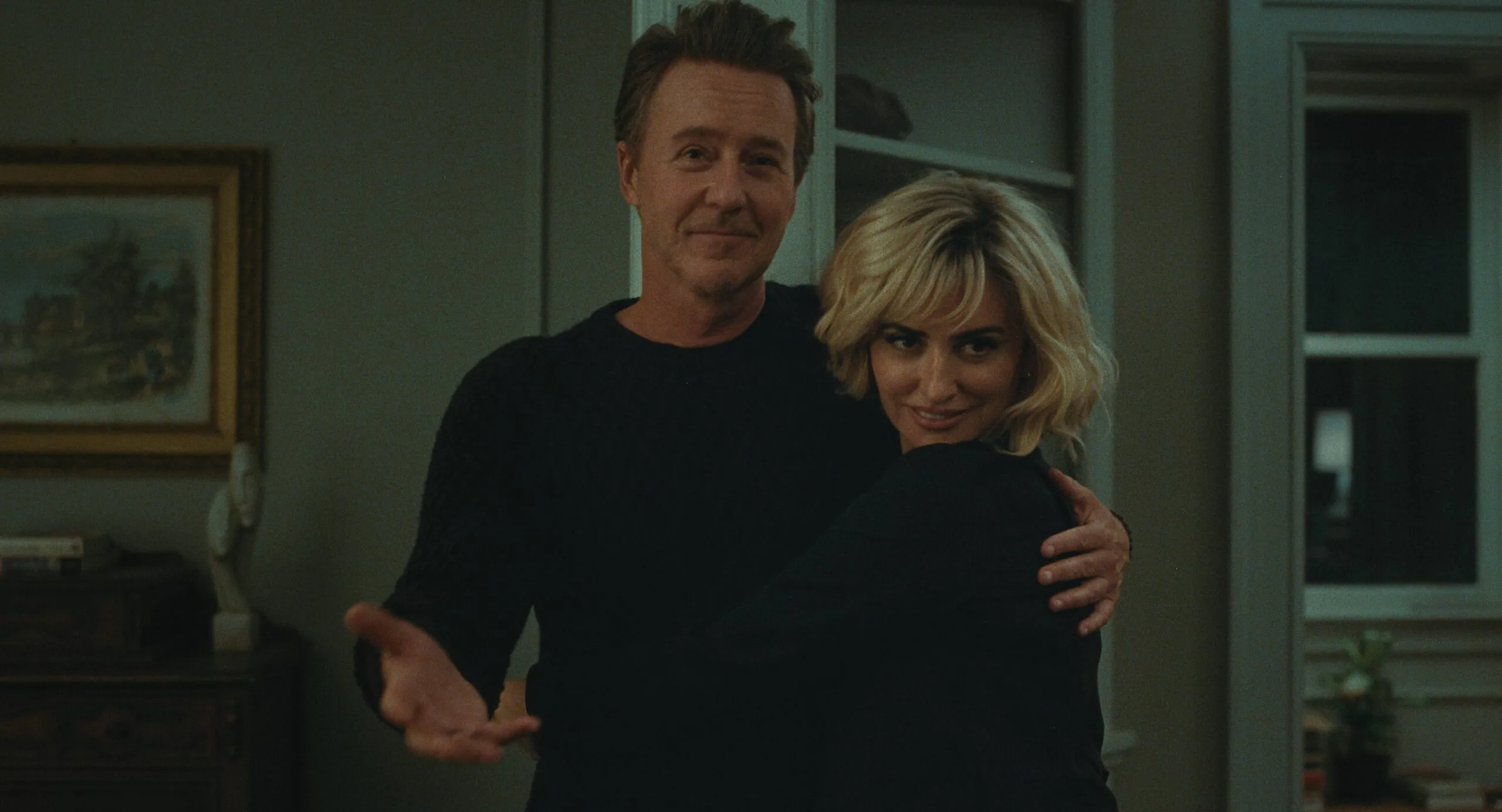
Edward Norton and Penélope Cruz glide through the apartment with the ease of people who sleep well, communicate openly and possess the kind of sex life that makes everybody else feel as though they have been completing marriage incorrectly. Angela is fascinated by them. Joe is immediately suspicious. When they explain why they have really come downstairs, both reactions become much harder to disguise.
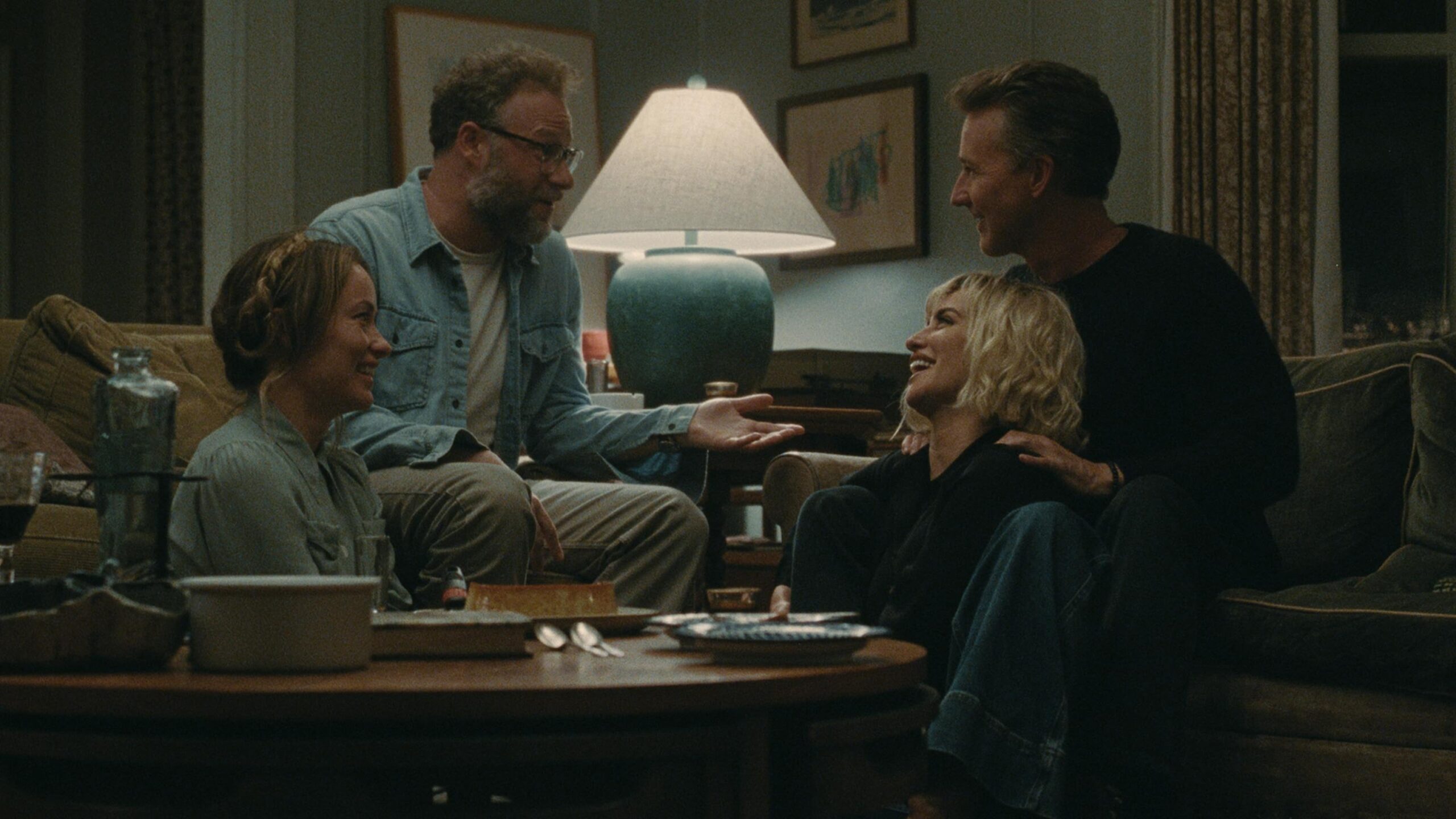
The proposed foursome is the least dangerous thing about the evening. What follows is less a seduction than a home invasion conducted through emotional literacy. Hawk and Pína begin asking the questions Joe and Angela have spent years avoiding, and every attempt to answer exposes another part of the marriage. A compliment becomes evidence of neglect. A joke reaches something neither finds funny. Small talk keeps opening beneath them, with embarrassment barely given time to settle before it becomes something crueller.
Rashida Jones and Will McCormack understand how much history a married couple can hide inside an ordinary sentence. Joe and Angela are never arguing only about the thing in front of them. A harmless comment about dinner can contain a failed ambition, an old embarrassment and three previous arguments which neither has forgiven. The dialogue does not wait its turn. People interrupt to prevent an embarrassment and create a larger one. A remark moves around the room, changing meaning according to who hears it, while the best joke may be waiting on the face of whoever has stopped speaking.
The Invite is funniest in the distance between what Joe and Angela feel and what they want the neighbours to see. Angela is desperate to appear relaxed, desired and interesting. Joe is still trying to establish whether the conversation is actually happening. She attempts to silence him without making it look as though she is silencing him, which he notices, resents and answers by speaking even more. Every effort to perform a happy marriage produces fresh evidence that they do not have one.
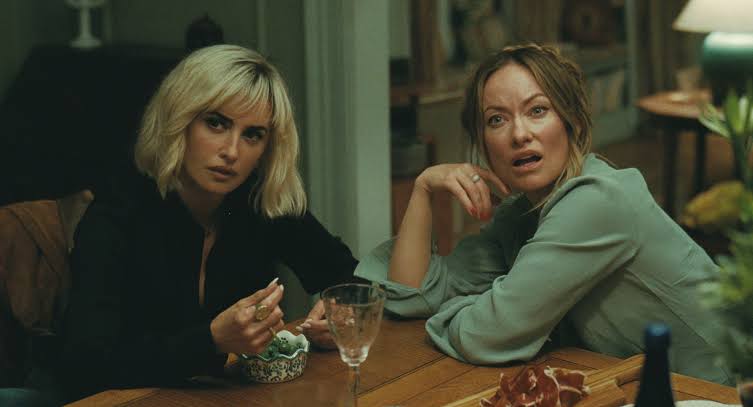
Wilde is extraordinary as that performance begins to collapse. Angela’s smile freezes whenever Joe starts a sentence she knows will humiliate them. Her eyes widen. Her entire body seems to move into his line of sight as she attempts to communicate a decade of marital history through one murderous look. Rogen receives the warning, understands it completely and finds a reason to continue anyway.
Joe begins as the evening’s bewildered sceptic, forever several minutes behind its real purpose and increasingly furious that everyone else appears to know something he does not. Rogen is extremely funny when confusion hardens into wounded theatricality. A small embarrassment becomes a grievance, the grievance becomes a principle and within seconds he is defending his entire existence against something nobody actually said.
The anger is covering something real. Joe feels outnumbered in his own home, ashamed of his failures and increasingly certain that his wife would prefer him to be somebody else. Angela wants the evening to release her from the person she has become. Joe suspects he is the part of that person she most wants to escape.
Hawk and Pína do not need to expose the marriage because Joe and Angela are doing an excellent job themselves. They merely remain present while it happens. Norton plays Hawk as a man built out of emotional availability, silver hair and the confidence to enter somebody else’s bathroom without asking. He should be unbearable, especially to Joe, but his composure is too sincere to dismiss as performance. Cruz is even more direct. Pína discusses sex without embarrassment or provocation, making everybody else’s evasions look absurd because she sees no reason for them.
Their openness initially makes them appear impossibly well adjusted. It would be easy to leave them there, as enlightened outsiders sent to diagnose another couple’s unhappiness, but strain eventually reaches them too. The difference is not that Hawk and Pína are immune to jealousy or hurt. They allow what has been said to alter the conversation. Joe and Angela receive every new piece of information as support for the argument they were already having.
As those alliances shift, the apartment shifts with them. The Invite has four principal actors, one home and enough conversation to resemble a stage play, but Wilde never allows the space to become a box around the performances. Somebody retreats into another room and somebody follows. One conversation continues through a doorway while another begins behind it. Characters drift towards the person they desire and leave their partner stranded at the edge of the frame. A movement or glance rearranges the room before the dialogue has caught up.
The most revealing division is already built into the apartment. A wall separates Joe’s childhood home from the extension Angela fought to create, and they repeatedly find themselves standing on opposite sides of it. He sees the place where he grew up, preserved around him as evidence that his life never truly began. She sees years of labour spent trying to turn his inheritance into something they could share. What feels like stagnation to Joe is partly the result of Angela’s exhausted attempt at renewal.
Both readings are true. Neither has room for the other.
That is why The Invite never conducts their marriage like a trial. Joe has become so committed to disappointment that recognising Angela’s efforts would threaten the story he tells about his life. Angela has spent so long feeling ignored that she can no longer express what she needs without making contempt part of the request. He experiences her attempts to change their life as rejection. She experiences his refusal to change as a rejection of her. Neither is innocent, but neither reached this point alone.
As all of that history begins arriving at once, Devonté Hynes’ restless score tightens beneath the conversation and Wilde’s cutting pushes the evening from discomfort into panic. The film occasionally drives the chaos one degree beyond where it needs to go, reaching for another escalation after the situation has already found its laugh. The actors keep it attached to something painfully human. However absurd the night becomes, every terrible decision makes complete sense to the person making it.
The sex is only where the damage becomes visible. Joe and Angela’s dead bedroom carries abandoned ambitions, invisible domestic labour, parenthood, ageing and the suspicion that life became permanent before either decided what they wanted it to be. They no longer feel desirable because neither feels recognised. Hawk and Pína offer a sexual invitation, but what they really introduce is the possibility that the life Joe and Angela have built is not the only one available to them.
The ending refuses to decide whether the marriage is beginning again or finally ending. It does not need to. The night has already forced Joe and Angela to stop defending the life they hate and admit what neither could say when it began. Whatever happens tomorrow, it cannot be another version of yesterday.
The soufflé is ruined. The dinner is a catastrophe. The marriage may be over. The Invite could not have gone better.



No Comments