

The Empire That Ate Cinema, Part Two: How Hollywood Became Central
By the first years of the twentieth century, The Movies had become a business. Companies were being founded, studios built, prints shipped abroad and audiences gathered wherever somebody could put up a screen.
France had gained the early lead. Pathé grew with astonishing speed, producing films, manufacturing cameras and projectors and shipping prints far beyond France. By 1906, the company had offices in London, Moscow and New York, with more opening across the world. Gaumont expanded alongside it. Such was the French industry’s reach that, in 1907, Pathé sold twice as much film footage in the United States as all the American production companies combined.
That was happening in a country whose appetite for cinema was growing at a remarkable rate. American production was spreading through New York, New Jersey and Chicago, where Edison faced competition from Biograph, Vitagraph and dozens of smaller companies. Their films fed a rapidly expanding network of nickelodeons, small indoor theatres where a five-cent ticket bought a programme of short films. By 1908, there were around 8,000 of them across the United States. Programmes changed frequently, prints moved between exhibitors and another audience was always waiting somewhere further down the line.
An American producer could make a film in New York, send it through exchanges to Philadelphia, Chicago, St Louis and dozens of smaller cities without ever taking it outside the country. Thousands of places to show the same film, all within one domestic market.
At Walton-on-Thames, Cecil Hepworth was building a successful British film business of his own. In 1905, he released Rescued by Rover. The plot could hardly have been simpler. A baby is kidnapped; the family dog tracks her down and brings help. Audiences loved it. So many prints were struck from the original negative that it wore out, forcing Hepworth to shoot the film again. When that negative wore out too, he shot it a third time.
Hepworth was hardly working alone. Charles Urban had built the Warwick Trading Company into a successful international business before establishing his own firm in 1903. His cameramen travelled across the world, filming everything from distant landscapes to the Russo-Japanese War, sometimes covering the same conflict from opposing sides. Working with the inventor George Albert Smith, Urban introduced Kinemacolor in 1908, a process that could reproduce moving images in colour using alternating red and green filters.
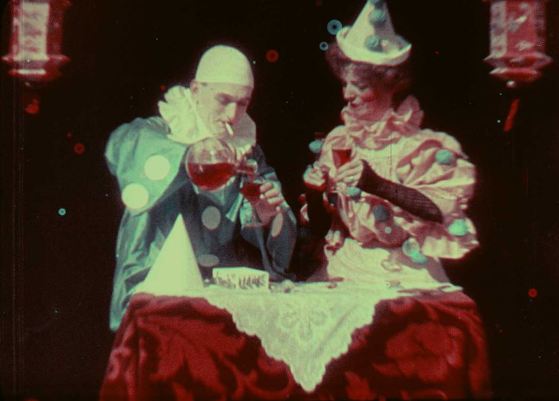
A frame from George Albert Smith‘s early colour film ”Two Clowns” (c. 1907).
In Copenhagen, Ole Olsen established Nordisk Film in 1906, adopting a polar bear standing on top of the globe as the company’s emblem. It was an appropriate choice. Nordisk soon had offices in Berlin, Vienna, London and New York, selling Danish films to exhibitors across the world. Its studio at Valby became one of the most productive in Europe, and a country with fewer than three million inhabitants was exporting films to audiences across several continents.
Asta Nielsen made her breakthrough in Denmark with The Abyss in 1910, a film whose success soon took her to Germany. There she made most of her subsequent films, becoming an international star through performances that were unusually naturalistic for their time. By 1914, she was receiving fan letters from England and South America, and cinemas as far apart as Düsseldorf, Nagasaki and San Francisco had been named after her. Audiences did not need to understand Danish or German to recognise a face they wanted to see again.
In Sweden, Victor Sjöström caused a national controversy in 1913 with Ingeborg Holm, a drama about a widowed mother whose poverty leads to her children being taken away. Its treatment of Sweden’s poor-relief laws provoked public debate that extended well beyond the cinema.
German filmmakers were exploring quite different possibilities. The Student of Prague, released that same year, used photographic trickery to bring a young man’s reflection out of the mirror and into the world. Further east, Russia’s Yevgeni Bauer was making elaborate psychological dramas, filling his sets with furniture, curtains and carefully arranged spaces that gave his characters’ private troubles a physical presence.
Moving pictures had reached Japan in the 1890s, and within two decades permanent cinemas were appearing across its major cities. In 1912, four established film businesses merged to form Nikkatsu, bringing production, distribution and exhibition together under one company. Much of the filmmaking drew upon Japan’s theatrical traditions. Historical dramas borrowed the costumes, stories and stylised performances of Kabuki, making a star of the actor Onoe Matsunosuke, while studios in Tokyo favoured more contemporary melodramas.
Watching these films was an experience of its own. Benshi stood beside the screen, narrating events, providing dialogue and interpreting characters as the film played. The most popular became celebrities, sometimes commanding as much attention as the actors themselves. People might choose which cinema to visit because of the benshi appearing there, and two screenings of the same film could become quite different performances.
In Bombay, audiences had already been watching imported films for years. After seeing a film depicting the life of Christ, Dadasaheb Phalke began imagining what Indian stories might look like on the screen. He travelled to London to purchase equipment and learn about filmmaking, seeking advice from Cecil Hepworth along the way.
Back in India, Phalke set about adapting the story of King Harishchandra from Hindu mythology. Finding a woman willing to appear on screen proved difficult, so a male performer was cast as the queen. Raja Harishchandra opened at the Coronation cinema in May 1913, bringing a story familiar to Indian audiences into a medium they had largely experienced through films made elsewhere.
The Italian epic Quo Vadis? arrived internationally in 1913, running for around two hours, with enormous sets and thousands of performers recreating ancient Rome. It became a success across Europe and America, drawing audiences accustomed to much shorter films into a production of extraordinary size. Italian studios were already preparing spectacles that would surpass it.
Giovanni Pastrone took that ambition further with Cabiria in 1914. Produced in Turin, the film recreated the ancient Mediterranean world on an enormous scale, staging Hannibal’s crossing of the Alps, the eruption of Mount Etna and elaborate scenes of Carthaginian life. Pastrone’s camera moved through the sets, revealing their scale rather than simply recording the action from a fixed position. The production drew upon the resources of theatre, music and literature, with the poet Gabriele D’Annunzio lending his name and writing the intertitles.
On 18 April 1914, Cabiria received simultaneous premières in Turin and Milan. The film would soon travel across Europe, America and as far as Japan, but in Turin it screened with an orchestra of eighty musicians and a choir of seventy.
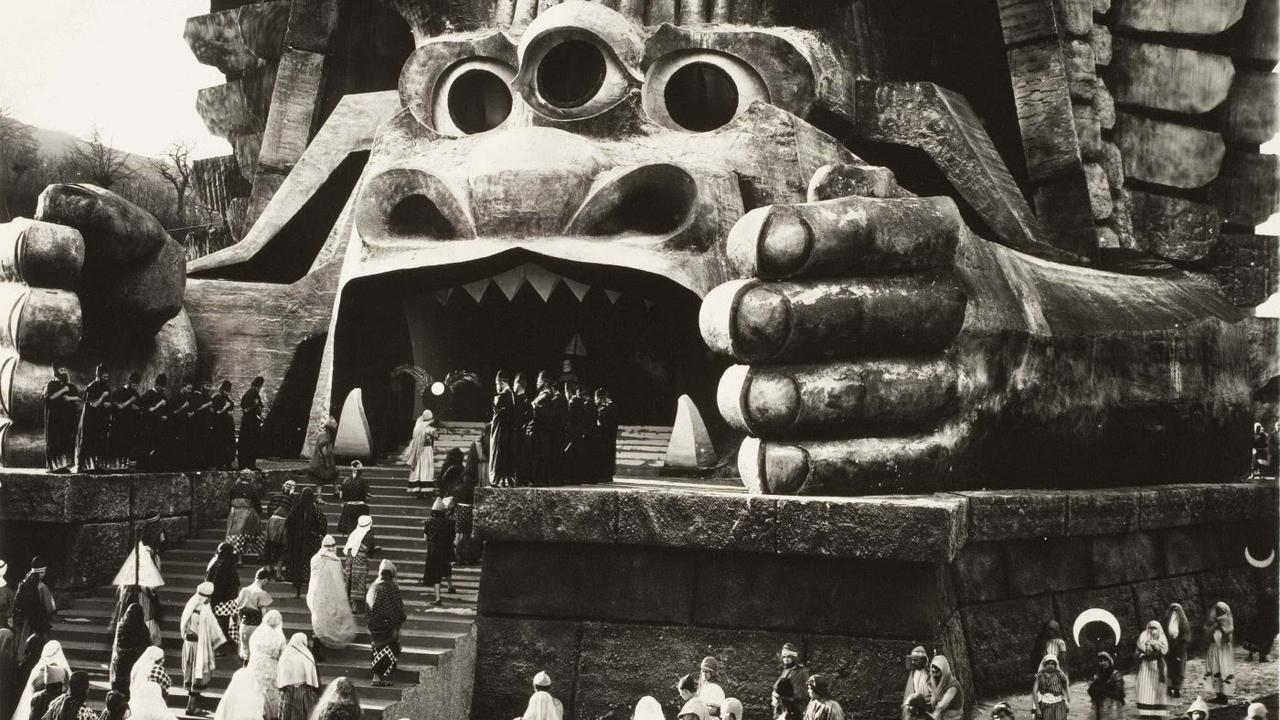
A Frame from Giovanni Pastrone’s Cabiria.
The War That Changed Cinema
In October 1911, a disused tavern on Sunset Boulevard in California was converted into a film studio. The bar became a carpenter’s workshop, its dining rooms became dressing rooms, and David Horsley’s Nestor company began making pictures there. It was the first permanent studio in Hollywood itself, although other companies had already established themselves around Los Angeles. William Selig had built a studio in Edendale, and D.W. Griffith had brought his Biograph company west to escape the eastern winter. By 1913, almost every major American producer except Edison had established some presence in Southern California.
On 28 July 1914, Austria-Hungary declared war on Serbia. Within days, much of Europe was drawn into the conflict, and the consequences reached its film industries immediately. In France, workers were called into military service, transport became difficult and production slowed. In 1915, Pathé began putting part of its Vincennes facilities to military use. By the following year, workers there were making protective goggles. The company that had supplied so much of the world’s cinema was turning part of its production towards the war.
The war also disrupted the international trade in films. American exports initially declined as shipping routes and trading relationships became uncertain. But cinemas still needed films, and by 1915 European producers were struggling to supply many of their established foreign markets. American companies had the means to fill those gaps, although reaching the customers themselves was another matter.
In South America, French films had long been popular, sold through local agents representing companies such as Pathé and Gaumont. American producers began making arrangements to compete directly. Fox, which had no foreign offices before late 1915, opened its first in Montreal that October, followed by branches in Argentina and Brazil in December. An Australian subsidiary followed in April 1916, and other companies were establishing their own operations across Asia and Europe.
For years, London had served as an international clearing house for American films. British distributors purchased rights and arranged for prints to travel onwards, sometimes receiving the rights to entire foreign territories as part of an agreement for Britain alone. The American companies were now learning to bypass them. Instead of selling overseas rights to an intermediary, they could negotiate directly with foreign buyers and keep more of the revenue.
In 1916, Adolph Zukor merged Famous Players with Jesse L. Lasky’s production company and gained control of Paramount’s distribution operation. The resulting enterprise could make films and exercise far greater control over how they reached cinemas. That year, American productions accounted for nearly 79 per cent of the value of films shown in Britain.
By the final months of the war in 1918, the shift in international trade was unmistakable. British distributors reported that Scandinavian buyers were going directly to New York, Australia was purchasing little beyond newsreels from Britain, and South America had become virtually inaccessible to British film exporters.
The Machinery of Dominance
The end of the war did not restore the film industry that had existed before it. France struggled to recover its former international reach, while American companies now possessed the distribution networks and foreign customers that European producers had once relied upon. Even when production resumed, winning those markets back was another matter. Hollywood had established itself abroad, and its competitors were finding that making films was considerably easier than getting them shown.
During the 1920s, the major American studios began tightening their control over the business. Paramount, MGM, Warner Bros., Fox and RKO would come to dominate production, distribution and exhibition, with the largest companies purchasing cinema chains of their own. A successful film could be made by a studio, distributed through its offices and shown in a theatre it owned. Independent exhibitors often had to accept block booking, purchasing packages of films to secure the productions audiences actually wanted to see.
There was money to support it all. By 1929, American cinemas were attracting an estimated 80 million admissions each week. The revenues allowed studios to maintain permanent facilities, employ actors and technicians under long-term contracts and produce films on a scale difficult for most foreign competitors to match. Their stars were becoming familiar faces around the world.
When Warner Bros. released The Jazz Singer in 1927, its synchronised dialogue and musical performances helped accelerate the transition to sound. The change was expensive. Studios needed new recording equipment, cinemas required sound systems, and performers had to adapt to an entirely different form of production. Hollywood’s enormous domestic market made those costs easier to absorb, although the arrival of dialogue created a new difficulty for films intended to travel abroad.
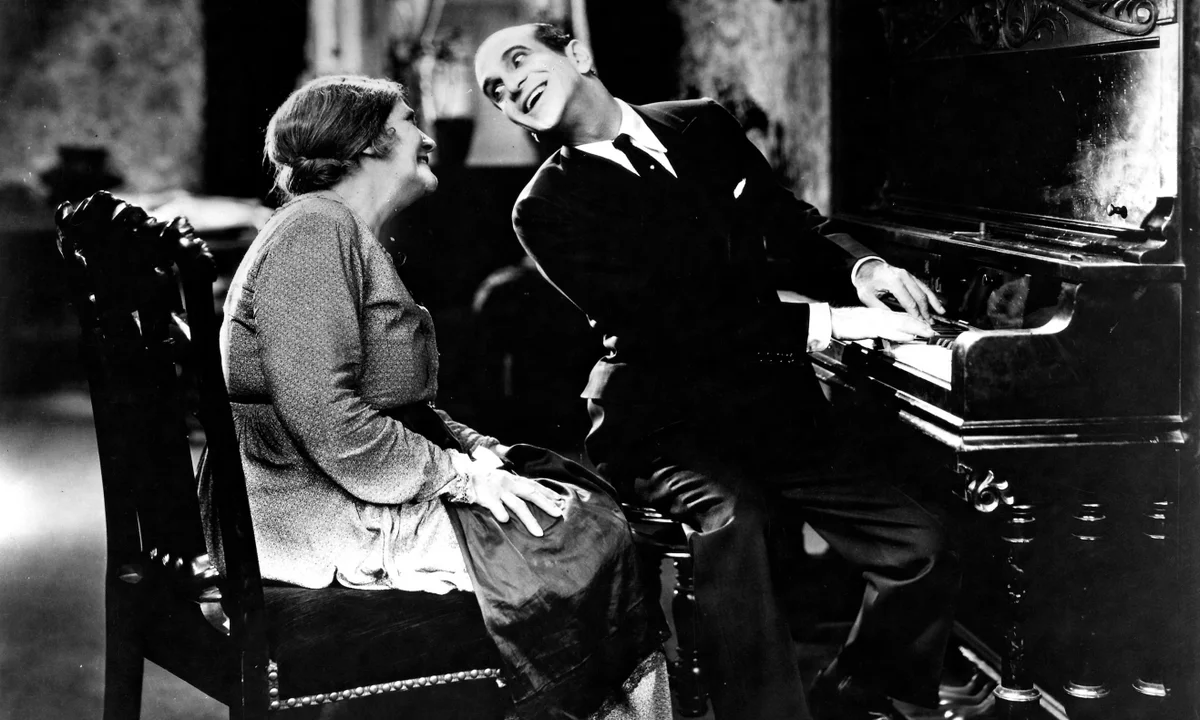
A Frame from The Jazz Singer, which gave birth to ‘the talkies’.
For a brief period, studios experimented with shooting the same production in several languages, sometimes using different casts on the same sets. Universal’s Dracula was filmed in English and Spanish in 1931, with the Spanish-language cast working at night after the English-language crew had finished. Dubbing and subtitling eventually proved more practical, allowing Hollywood to continue exporting films without remaking them for every audience.
Other countries were attempting to protect their industries. In Germany, UFA had assembled its own network of studios, distributors and cinemas, but financial difficulties forced it to accept a substantial loan from Paramount and MGM in 1925. The agreement gave American films access to UFA’s German cinemas, while offering far less certainty that German productions would receive American screenings. Two years later, Fritz Lang’s enormously expensive Metropolis added to the company’s financial troubles.
Britain took a legislative approach. The Cinematograph Films Act of 1927 required distributors and exhibitors to handle a minimum proportion of British films, with the quotas increasing over the following decade. It encouraged domestic production, but also created a market for cheaply made pictures produced primarily to satisfy the law. Some of these so-called ‘quota quickies’ were financed by American companies themselves, allowing Hollywood to meet the requirements without surrendering its position in British cinemas.
The political upheavals of the 1930s brought further changes. Nazi control of Germany drove filmmakers including Fritz Lang, Billy Wilder and Robert Siodmak towards Hollywood, where their experience would enrich American cinema. The outbreak of the Second World War in 1939 brought another period of disruption, although its effects varied considerably between countries.
In occupied France, filmmaking continued under German supervision, with the German-controlled Continental Films producing French-language pictures. In Britain, studios were requisitioned for military purposes even as other facilities continued making feature films. Pinewood, which had opened only three years before the war, became home to military film units, while parts of the complex were used by the Royal Mint and for government food storage. British cinema continued to produce important work, but its resources were being shared with the demands of wartime.
America entered the war in December 1941, but Hollywood’s studios largely remained intact. They produced propaganda, training films and entertainment for troops while continuing to supply domestic audiences. When peace returned in 1945, European industries faced the problems of restoring international trade, recovering equipment and facilities, and securing the money to make and distribute films. Hollywood already possessed the infrastructure to reach those markets.
The war had not created Hollywood’s dominance, any more than the First World War had. But twice in a generation, European filmmaking had endured a catastrophic disruption while the American industry retained much of the industrial capacity and commercial reach it had already accumulated.
The World Beyond Hollywood
In 1945, the major American studios established the Motion Picture Export Association, an organisation intended to protect and advance their interests overseas. Companies that competed fiercely for audiences at home could now negotiate collectively with foreign governments, challenge restrictions on American imports and coordinate their international dealings. The industry that had once relied on British intermediaries to reach much of the world now had a body devoted specifically to keeping those markets open.
Yet Hollywood’s expanding influence did not mean that other film industries were disappearing. In India, filmmaking had developed across different languages, regions and production centres, serving audiences whose tastes and traditions were not necessarily reflected in American productions. Its films were also travelling abroad. Raj Kapoor’s Awara, released in 1951, became an extraordinary success in the Soviet Union, attracting an estimated 64 million admissions following its release there in 1954.
Japan had developed an equally formidable domestic industry. Its major studios operated extensive production, distribution and exhibition networks, much like their American counterparts, and directors such as Akira Kurosawa and Kenji Mizoguchi were achieving international recognition. In 1958, Japanese cinemas recorded more than 1.1 billion admissions, with domestic productions accounting for over 76 per cent of distribution revenue. Six major studios were producing hundreds of films annually, supported by an audience that overwhelmingly favoured its own national cinema.
Neither country had needed to reproduce Hollywood’s international dominance to develop an enormously successful film industry. Hollywood’s distinction was not that it alone could produce films audiences wanted to see, but that its companies had acquired the means to sell them consistently across much of the world.
Cinema itself remained international. Half a century earlier, Pathé had supplied films to audiences across continents, but Hollywood had since established an international commercial presence more extensive and enduring than that of its early competitors. Films continued to be made in extraordinary quantities elsewhere, often for audiences Hollywood could not hope to replace. Yet the balance of power had changed. The world’s cinema had not become American, but much of the business through which films travelled internationally had acquired an American centre.
Sources and further reading
The historical account was checked primarily against Kristin Thompson’s Exporting Entertainment, supplemented by academic histories, film archives and contemporary industry records. Particular attention was given to the development of international distribution, the impact of both world wars and the strength of competing national film industries.
Kristin Thompson, Exporting Entertainment: America in the World Film Market, 1907–34 – Hollywood’s international expansion, the First World War and the development of American distribution networks. Exporting Entertainment
Elmbridge Museum, “Cecil Hepworth: Cinema’s Forgotten Pioneer” – early British filmmaking and the international success of Rescued by Rover. Elmbridge Museum: Cecil Hepworth
Nordisk Film, “Our History” – Denmark’s early international film industry and the establishment of Nordisk in 1906. Nordisk Film: Our History
National Film Archive of Japan, “Nihon Eiga: The History of Japanese Film” – Japanese cinema’s origins, benshi narration and the development of its studio system. National Film Archive of Japan
Museo Nazionale del Cinema, “Cabiria & Cabiria: The Restoration” – Giovanni Pastrone’s Cabiria, its production and international significance. Museo Nazionale del Cinema: Cabiria
Los Angeles Department of City Planning, SurveyLA – the establishment of Hollywood’s early studios and the arrival of Nestor in 1911. SurveyLA: Entertainment Industry Historic Context
Filmportal, “Ufa’s Founding” – the consolidation of Germany’s film industry during the First World War. Filmportal: Ufa’s Founding
BFI, “10 Great Quota Quickies” – Britain’s Cinematograph Films Act of 1927 and the consequences of film quotas. BFI: 10 Great Quota Quickies
American Film Institute Catalog, Drácula (1931) – Universal’s Spanish-language production and Hollywood’s experiments with multilingual filmmaking. AFI Catalog: Drácula
Motion Picture Association, “About” – the establishment of the Motion Picture Export Association in 1945. Motion Picture Association: History
Art Palace of Georgia, “Raj Kapoor in Georgia” – the Soviet success of Awara and its estimated audience of 64 million. Google Arts & Culture: Raj Kapoor in Georgia
Motion Picture Producers Association of Japan – historical Japanese cinema admissions, domestic production and market shares, including the record figures for 1958. Japanese Film Industry Statistics


No Comments