
The Sheep Detectives is Too Smart to be This Careless – A Review
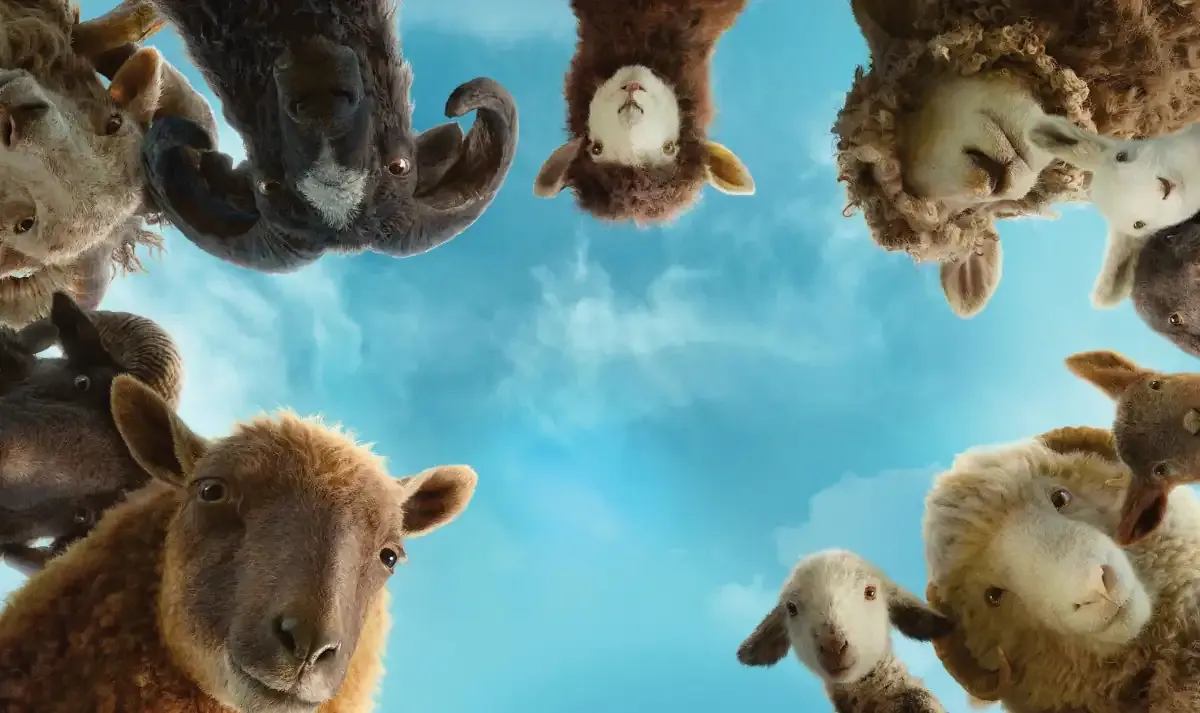
The sheep look up at the sky and decide that clouds are their dead. It is the kind of joke that should collapse the moment you explain it, yet somehow improves the longer you sit with it. Wool below, wool above. A flock with almost no working understanding of the universe has looked at the heavens and invented theology.
That is where The Sheep Detectives is most alive: inside the small, baffled civilisation of the flock. At their best, these sheep are not people in fleeces, but animals given a little language and no corresponding increase in comprehension. They observe, misread, panic, forget, confer, and treat the arrival of any thought at all as an intellectual event. “We can’t do nothing, so we gotta do something” is not a plan, but to a sheep it carries the force of strategy. “Justice? No. Just us.” is ridiculous, and very nearly stirring.
Their stupidity has texture. These sheep can form theories, invent myths, love “doggies”, and occasionally stumble towards the outline of a moral idea. They cannot quite process grief, so they mislay it. Their forgetfulness begins as a joke, then becomes something stranger once the film starts playing with memory as an unevenly distributed burden. Their choice of ignorance is funny because it is pathetic, not noble. They are not escaping the pain of consciousness. They are simply too emotionally under-equipped to carry sadness for very long.
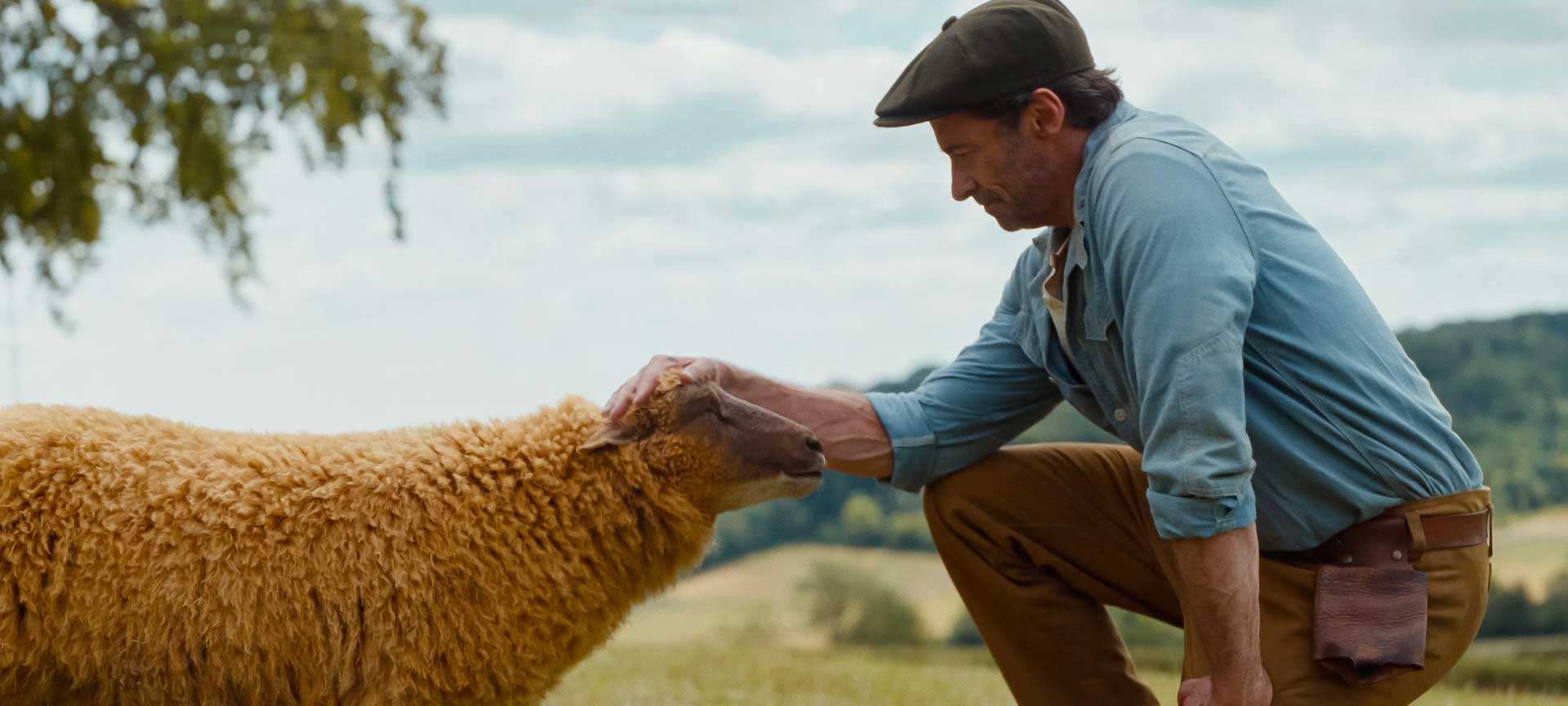
Admittedly, Hugh Jackman makes for a convincing farmer as George Hardy.
Craig Mazin’s script is often impressively engineered, which makes the film all the more maddening. The jokes cut in at the right moment. The whodunnit machinery is cleaner than the premise suggests. Setups return as payoffs, throwaway details gather meaning, and the mystery has the pleasing sense of a comic contraption clicking into place. A weaker film could have coasted on the novelty of detective sheep. This one keeps finding sharper ideas inside the silliness: memory as mercy, ignorance as instinct, a flock as family and failure of comprehension.
That sharpness makes the carelessness harder to forgive. This is the writer of Chernobyl, and while The Sheep Detectives is operating in a far dafter register, Mazin’s structural gifts are visible. The film knows how to build a joke, shape a reveal, pace suspicion, and pay off an image. Its storytelling is frequently precise. Its observation is not. The better the script becomes, the more glaring its incuriosity about place feels.
As an adaptation of a book I have not read, I can only judge The Sheep Detectives on its own merits. On that level, much of it works. The direction is simple but competent. The film looks pleasant in a clean, storybook fashion, and the CG sheep are convincing enough that the illusion holds. Their limited physical interactions with the human cast mostly work, and the actors sell the rhythm of the comedy. Tim, in particular, gives the human side more warmth than expected.
Then George speaks.
He is the first human voice, arriving before Denbrook has properly become a place, and his broadly West Country sound becomes the film’s first map. He is the farmer, rooted by occupation before the plot has to explain anything, and nothing suggests he is an outsider. His voice brings soil, sheep, weather, work, age, locality. It gives the film an immediate claim to rural authenticity.
Then the film walks away from it.
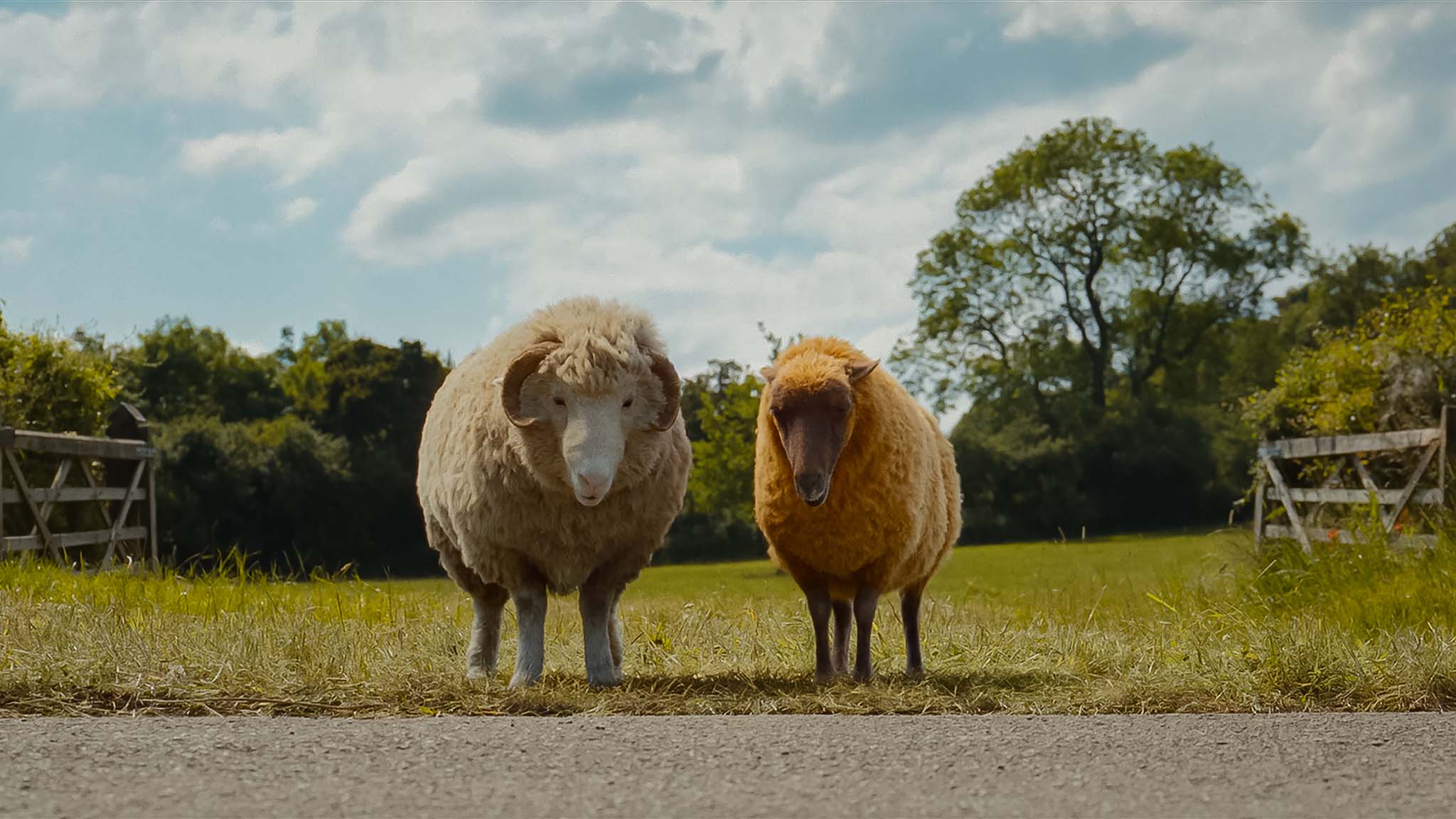
Mopple (Chris O’Dowd) and Lily (Julia Louis-Dreyfus) coming into contact with their greatest challenge yet… a road!
The rest of Denbrook drifts towards the more socially acceptable Estuary English it otherwise seems to prefer, as though George’s voice was useful only for opening the gate. In Britain, where class is heard before it is named, that drift lands sharply. West Country voices have long been filed away as rustic, comic, simple, charming, earthy, rarely serious. The film does not need to sneer for the effect to sting. It only has to use the accent as atmosphere, then discard the place attached to it.
That is the part I could not shrug off. Class prejudice in Britain often survives by sounding like taste, humour, harmless regional colour. A West Country voice can be borrowed for instant rural flavour and then abandoned for something more acceptable, and many viewers will hear nothing wrong. That is not a defence of the film. That is the mechanism by which this sort of thing keeps passing unnoticed. It is part of my culture being mined for charm and then discarded.
The sheep make the problem worse. Human variation can be explained away. People move into villages. Lawyers, shopkeepers and outsiders can come from elsewhere. Sheep do not. They are George’s flock. If anyone should belong to the same field, the same farm, the same patch of country, it is them. Instead, they speak as though they have been gathered from Britain, Ireland, America and New Zealand for vocal colour. Accent becomes sound rather than belonging.
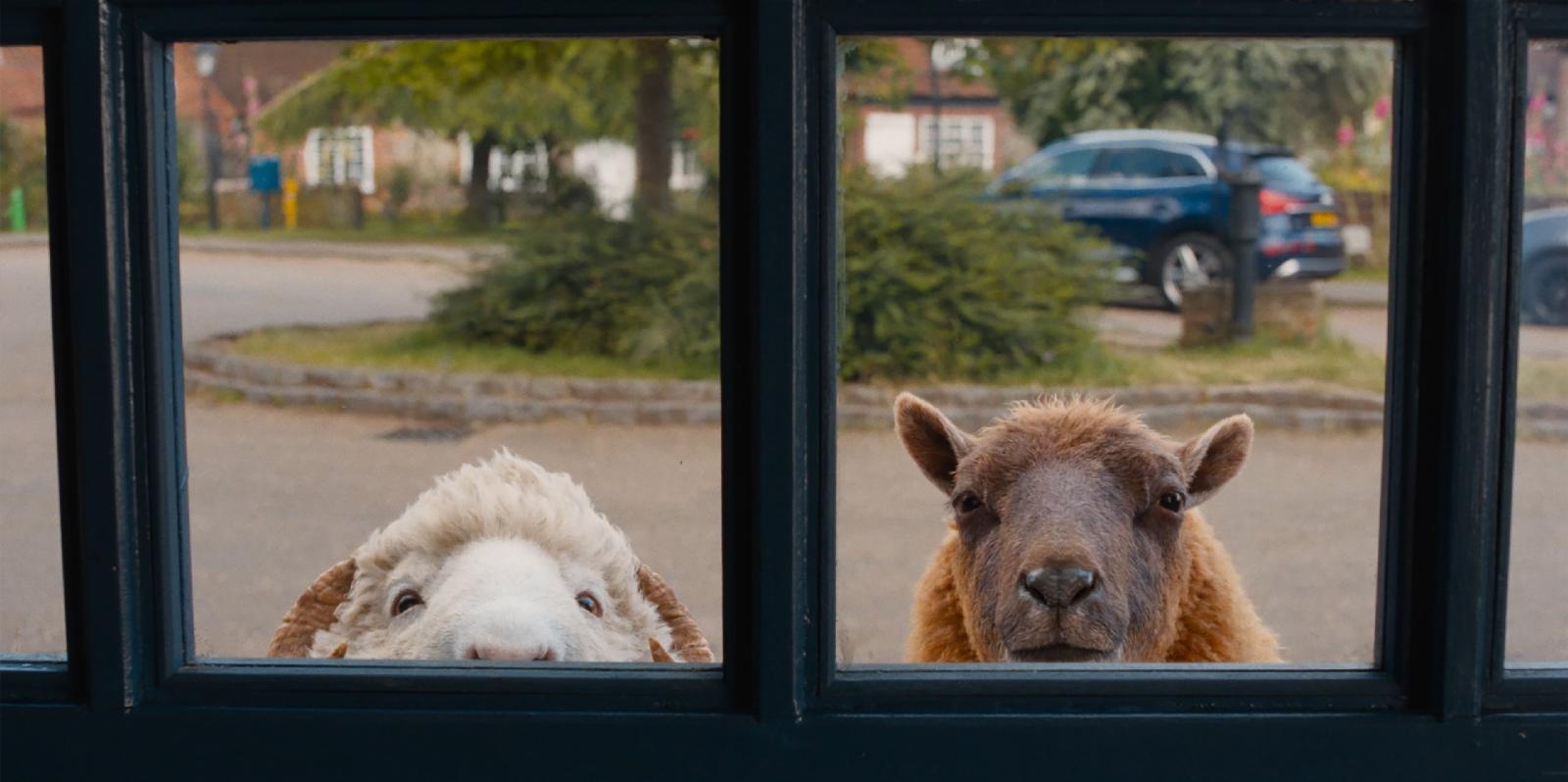
Points if you had espionage on your bingo card for this movie, with sheep sneaking around town and committing minor crimes to find out the truth.
The same false ear shows up in smaller places: a police car that looks bafflingly unlike a modern British police vehicle, made stranger by a much more convincing one appearing later, and an animal charity called the Society for the Protection of Animals, which sounds like someone half-remembering the RSPCA and deciding that was close enough. These details would be minor in isolation. Here, they belong to the same pattern. The film borrows the signs of English rural life without understanding their weight.
That falsehood sits between the viewer and the story. The village, the voices, the strangely loose handling of livestock, the way humans tolerate sheep wandering through spaces where someone should be moving them, penning them, or at least reacting to them as animals: it all wears down the comic contract. The sheep can think they are detectives. The humans should still think they are sheep. Too often, the film lets the flock become tiny woolly citizens, and the joke blurs in the wrong direction.
The Sheep Detectives will probably play better to American audiences, international viewers, or anyone less attuned to English rural life. They may see only a charming, odd, cosy mystery with a clever animal perspective. I saw that too. I laughed often. I admired the structure. I loved the sheep. I liked Tim. The emotional payoff is stronger than expected, and the final ideas about memory, naming and flockhood have a grace that sneaks up on the film.
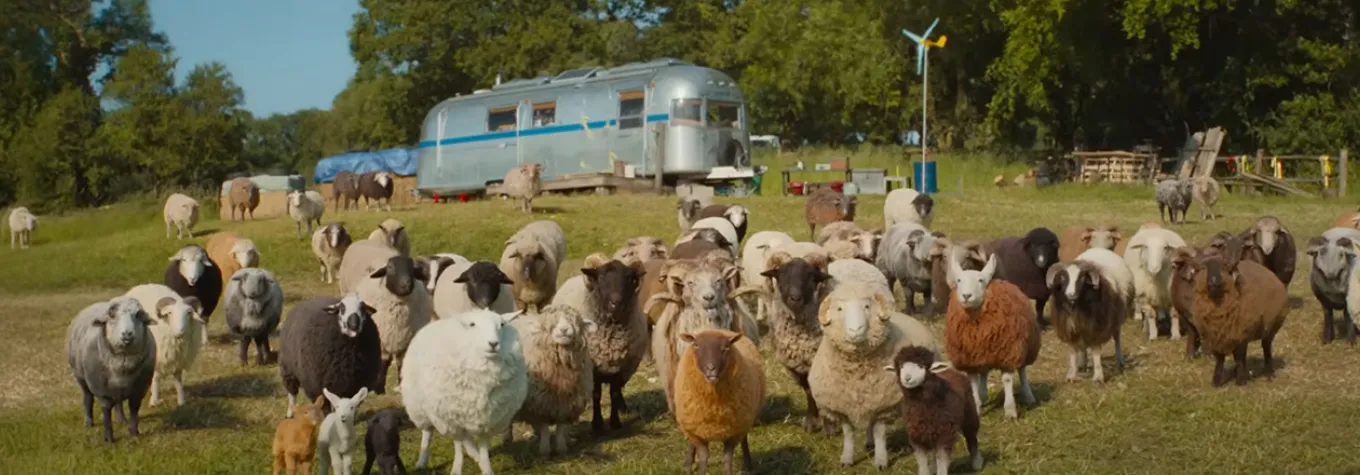
Despite everything, the flock oozes charm, and you cannot help but root for them.
But I could never get past the false England it was built on, because that false England is not decorative. It is the floorboards. Somewhere inside The Sheep Detectives is a terrific comic mystery about death, memory and justice, told by creatures barely intelligent enough to misunderstand all three. In many respects, that film made it to the screen. In one crucial respect however, the respect that gives the whole thing a world to stand on, it did not.



No Comments