Superman (2025): A Good Man trapped in an uneven film – A Review
This film review contains moderate spoilers.
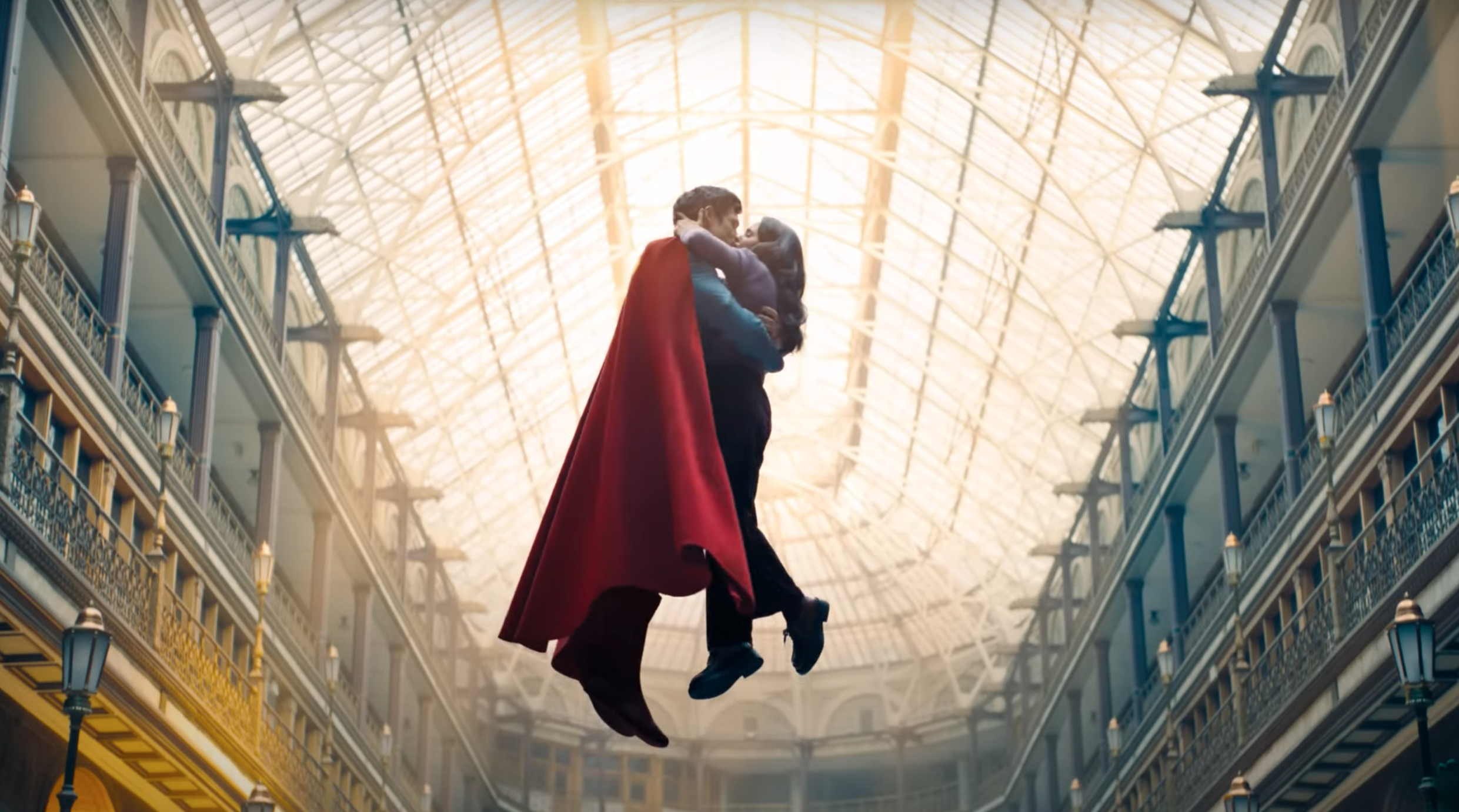
The frustrating thing about James Gunn’s Superman was how much of it worked. Its best moments gave shape to the film I had been waiting for, and every time they appeared, the weaker choices around them became harder to ignore.
I enjoyed it. I liked it, even. There was real relief in watching a Superman film with colour in its face and silliness in its bones, especially after years of the character being treated as a problem to solve, a god to fear, or a symbol too heavy for the film around him to carry. Gunn dropped him into a world that actually felt like a comic book. Metropolis looked alive again. The Fortress had robots fussing around like staff in a cosmic hotel. Other heroes already existed, and somewhere in the middle of it all was a flying dog with no instinct for steering. The film never seemed embarrassed to be Superman, and that counted for more than I expected.
Its very first move was brilliant. The title cards ticked down from three centuries since meta-humans appeared to three minutes since Superman lost a battle for the first time. In a handful of lines, Gunn made the world feel old, political, wounded, and already in motion. That was exactly the kind of economy a new Superman film needed. It skipped the familiar origin march and trusted us to arrive after the myth had already begun.
For a while, that confidence carried over. Gunn’s usual texture was there: the emotional bluntness, the jokes covering damage, the sense of a world that had been moving for years before the camera arrived. The looseness suited Superman more than I expected. It gave the film life around the edges, as if he had simply flown into one chapter of a much stranger, wider story. It was goofy, and it knew it was goofy. It let comic book absurdity breathe again.
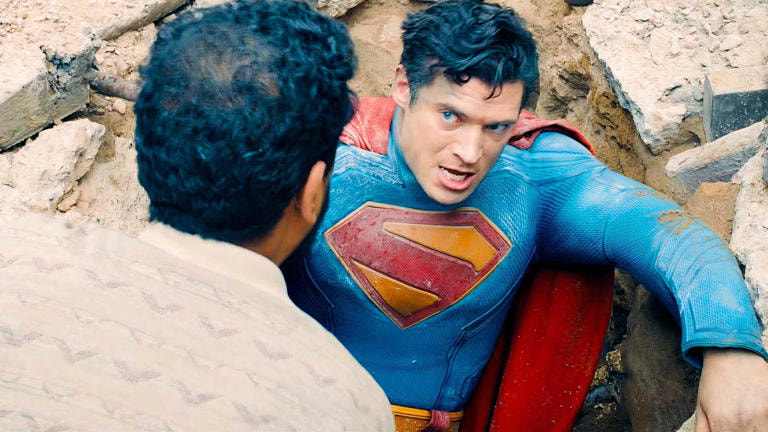
Superman is at his best when he is one of the people.
The problem was that it often understood the world around Superman more clearly than it understood the myth of Superman himself.
David Corenswet was brilliant in many of the ways he needed to be. He had the warmth and decency, the slightly awkward sincerity, and he sold Clark beautifully. There were moments where you could see the Superman film I wanted sitting inside his performance, waiting for everything else to catch up. He personified him well, maybe too well, because while this very human Superman gave the film a tenderness I did appreciate, I still wanted more aura and more gravitas, that strange quality where he entered a scene and the room changed because Superman was there. Corenswet’s naturally croakier voice suited the vulnerability of this version, especially in the quieter moments, but it left him slightly short of the Man of Steel quality. He was deeply likeable, and I wanted him to feel a little more impossible.
The film-making kept running into the same ceiling. It knew the iconography, and sometimes arranged it beautifully, yet the craft kept cutting across the awe. After that sharp opening, the film became less elegant about its world-building. The robots had flashes of charm before drifting into exposition, telling us what the film needed us to know rather than letting the world reveal itself with the same confidence those title cards had promised. For something this colourful, that clunk really showed.
The flying should have been where everything lifted. Superman’s movement should have felt clean and enormous without ever seeming laboured, as if the sky was not an arena but his natural element. Here, it often felt video-gamey, with too much digital drift and too little majesty. The film could look striking, sometimes genuinely so, but the action was messier than it should have been. At points it had that Bourne trilogy feeling, where motion started replacing clarity and the image became harder to follow. That suited a panicked spy fight in a corridor, but it felt wrong when the person moving through the frame was Superman. If anyone should have made action readable, it was him. If anyone should have made flight feel like wonder, it was him.
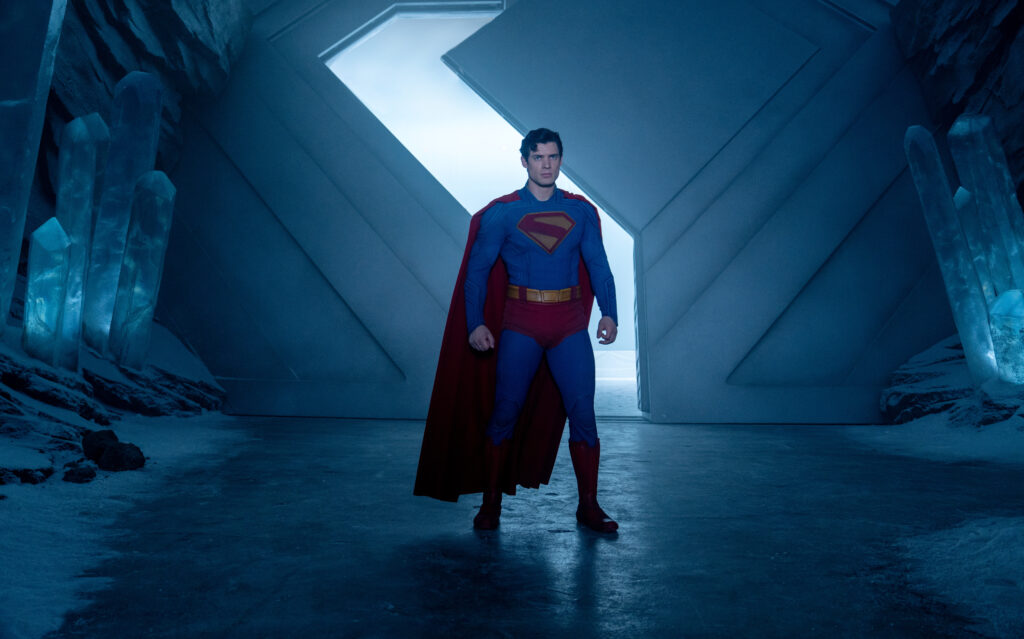
Superman in the Fortress of Solitude.
The dialogue stumbled in a similar way. Gunn could write sharp, funny, emotionally direct exchanges, and there were flashes of that here, but Superman was a dangerous character to write because sincerity had nowhere to hide. If a line was too cute, you felt it; if the moral point landed too bluntly, you felt it; if the emotion tipped into speechifying, you really felt it. This film had a big heart, but it kept tripping over the words.
Then there were the moments where it found itself completely.
The kid with the flag was the one I kept coming back to. That was Superman to me. It was obvious in the way Superman sometimes has to be obvious: a child looking up and believing in something better. That image was the character, the height the film reached for, and when it reached it, it soared. The same went for the music, because the score knew the shape of the myth, sometimes more clearly than the film around it. There were moments where the music made me feel more than the scene had earned, which was a strange compliment and a real criticism at the same time.
The score got to Superman before the film did.
I respected the Boravia and Jarhanpur allegory, even with the Israel-Palestine parallel landing about as subtly as a brick through glass. Fair play. The film allowed Superman to step into a political mess and behave with almost embarrassing moral plainness, as if saving people mattered more than whatever clever excuse the world had found to delay compassion. It was clumsy, but I would rather have had clumsy conviction than no conviction at all. Goodness that clean should have been annoying. Superman should have made people uncomfortable.

AJ Bernard smashed this small but powerful moment in the movie.
Krypto became the clearest version of the film’s larger problem. The charm was obvious, and so was the drag. Every time the story bent around him, I could feel a tighter version underneath it. That was the frustration of the whole thing: so much worked, yet the film kept reaching for more clutter when the thing I wanted most was already there in the image of Superman as someone decent enough to make cynicism look small.
A tighter film, one willing to trim Krypto and some of the surrounding busyness, would have breathed better. More importantly, it might have allowed its strongest instincts to gather momentum instead of arriving as isolated flashes. There was a Superman film in there that understood him completely, and every time it appeared, even briefly, I was glad this one existed.
I wanted awe. I wanted the room to change when he walked in, and I wanted the flying to lift the film instead of just move it. More than that, I wanted the film’s kindness and conviction to feel like its natural state, rather than something it had to keep rediscovering in its best moments.
This was a good Superman film. I wanted a great one.


No Comments