
Masters of the Universe Dives into The Toy Box- A Review
This review contains no spoilers
Masters of the Universe is at its best when it turns a childhood toy box into an entire universe and refuses to tidy any of it away. Travis Knight’s film is colourful, kitschy and gloriously unembarrassed by the absurdity of He-Man. Warriors stride around in ornamental armour, robots dispense sarcasm and spaceships appear to have been designed by children arguing over which one would win in a fight. It occasionally resembles a fan film handed an enormous budget, its seams still visible beneath the spectacle. That only adds to its charm. Everyone involved seems delighted simply to have these characters and contraptions sharing a screen, and their excitement proves infectious even when the story struggles to make any of it matter.
I knew almost nothing about He-Man before watching and expected to begin on Earth before gradually discovering Eternia. Instead, the film throws open the toy box immediately, greeting its audience with the kind of unabashed introductory exposition that blockbusters once delivered without fear. Names, kingdoms and magical objects arrive in quick succession as though we ought to have spent the past forty years memorising them. The confidence is refreshing because it establishes exactly what sort of film this will be. Masters of the Universe wants its colours brighter, its weapons larger and its mythology delivered with all the gravity that a world containing characters called Skeletor and Fisto can muster.
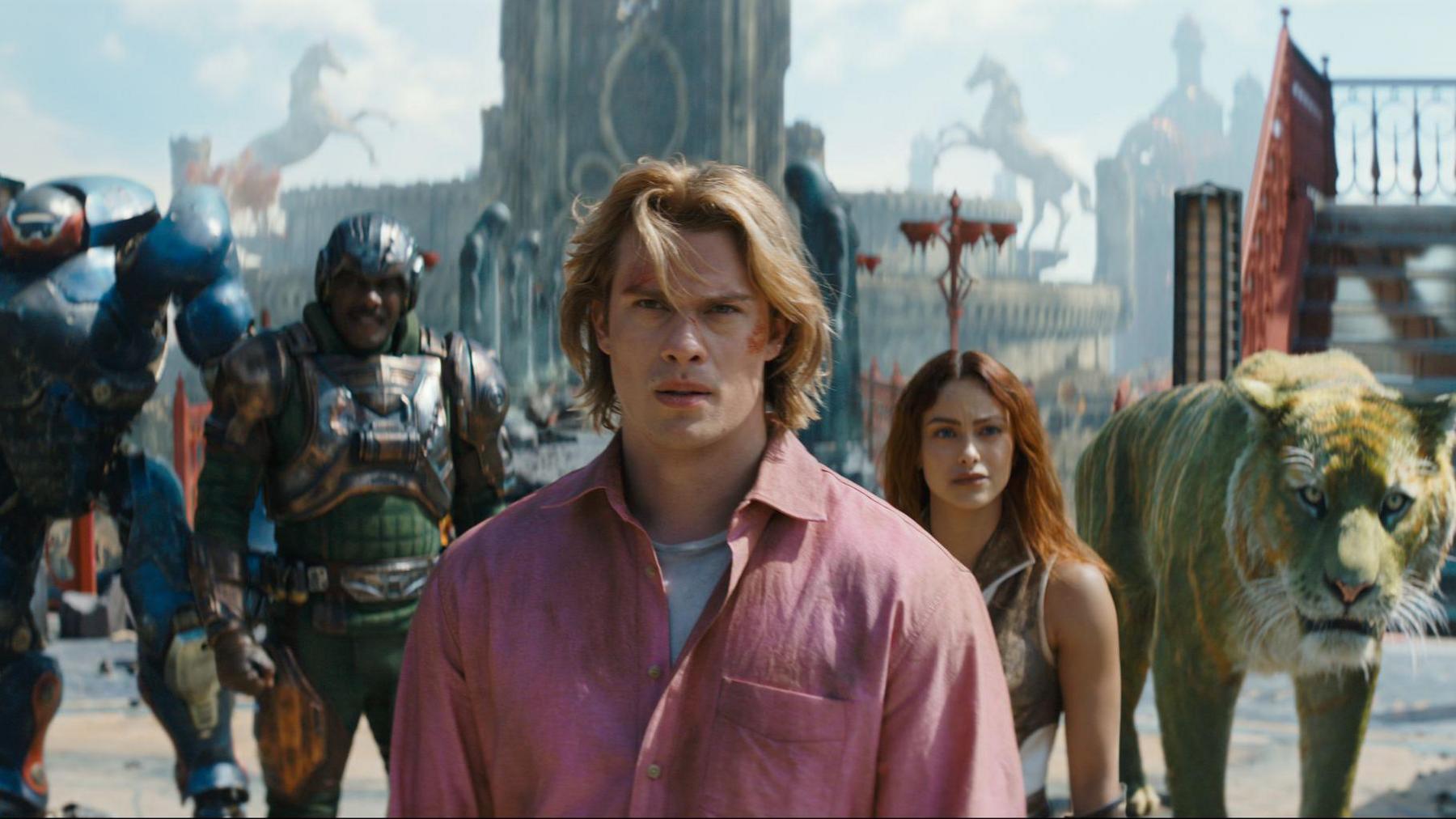
The design carries much of that confidence. Eternia is gaudy and abundant, packed with costumes that appear to come with three accessories each and machines whose functions are inseparable from how much fun their toys would be. The ships are particularly imaginative, extending the logic of plastic play sets into elaborate weapons while preserving the pleasing simplicity of the original idea. Believability here comes from abundance. Every corner holds something a child would immediately want to pick up, crash into something else and argue about for the rest of the afternoon.
The digital execution cannot always match that imagination. Environments frequently feel green-screened, while Camila Mendes is photographed with such a smooth, airbrushed sheen that Teela sometimes appears less tangible than the scenery behind her. The effects keep the world moving without giving it much physical presence, and all that abundance can become weightless. The palette and design still give Masters of the Universe an identity that many more polished blockbusters lack. Its artificiality belongs to a particular vision rather than the anonymous digital haze into which so many fantasy worlds disappear.
Nicholas Galitzine supplies the heart holding it together. His Adam is sincere, noble and wonderfully dorky, played with the enthusiasm of somebody who has spent years waiting for the rest of the world to catch up with him. The comedy grows from Adam’s absolute conviction, allowing the film to laugh with He-Man instead of reducing him to the punchline. When Adam is finally asked to embody the heroic ideal he has carried within him, Galitzine finds the exhilaration of power suddenly becoming real. He sells the strength, the instinctive command of it and the boyish disbelief that it could belong to him.
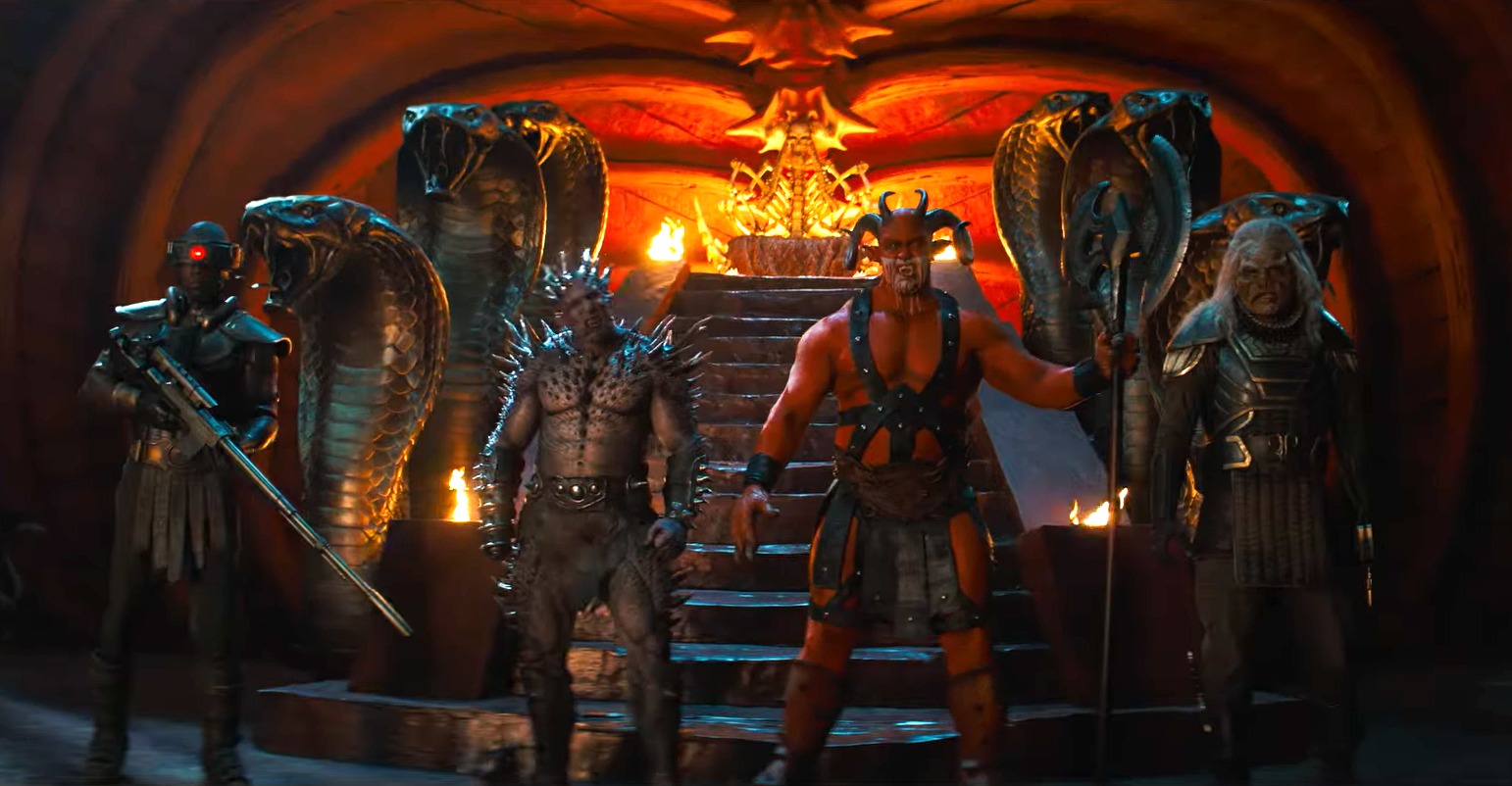
The surrounding cast is less consistent. Mendes gives Teela the required resolve, although the writing burdens her with a familiar family grievance and returns to it until the feeling wears thin. Idris Elba brings an amiably exhausted comic presence to Duncan, delivering the sort of formidable-warrior dialogue in which a larger enemy army merely means more available targets. The part leaves little impression beyond the jokes, but Elba’s timing makes it an enjoyable showcase for a comic instinct he should use more often. Roboto operates on a similar frequency, surveying the surrounding chaos with the weary sarcasm of the only person who has noticed how exhausting everyone else is.
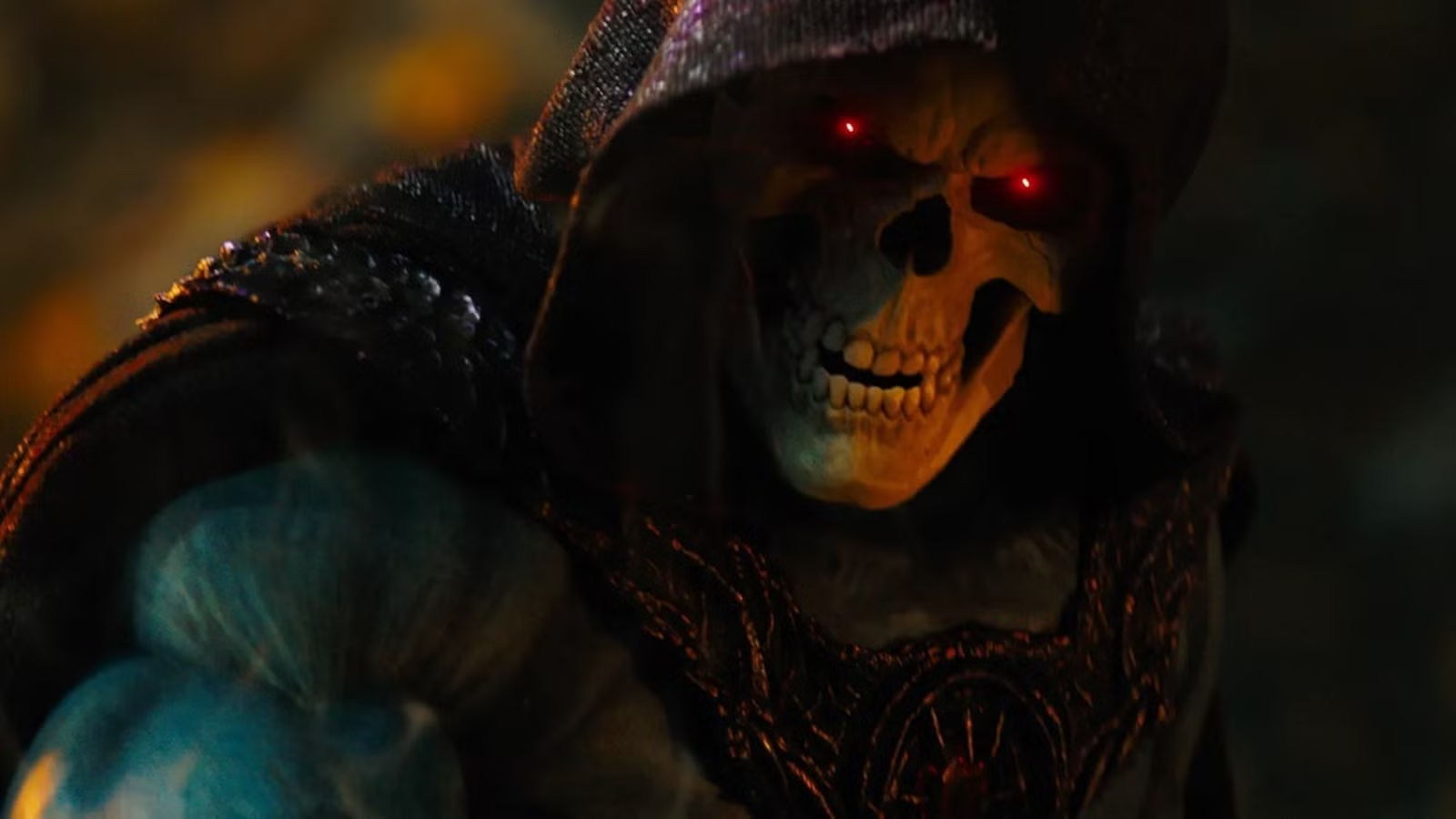
Jared Leto’s Skeletor is the film’s greatest success. His voice is almost unrecognisable, rich with theatrical contempt, and his delivery is often very funny. Skeletor is an entirely unrepentant villain, a magnificent skull-faced fiend savouring every insult and having the time of his life. Leto finds exactly the right pitch of excess, turning him into both a genuine threat and a creature of glorious pantomime. The tiny points of light within his eye sockets brighten and darken with his emotions, giving an otherwise fixed face remarkable expression. Whenever Skeletor appears, the film’s combination of schlock, spectacle and absolute conviction feels perfectly calibrated. By the end, I was perilously close to rooting for him.
That conviction repeatedly deserts the film elsewhere. The writing leans too heavily on characters acknowledging whatever ridiculous thing has just happened, inheriting the self-conscious comic rhythm that Marvel exhausted years ago. No amount of earnestness could give He-Man true gravitas, but it could make Eternia matter. Instead, the jokes keep puncturing moments that need to reach sincerely for grandeur, leaving armies, endangered worlds and heroic victories curiously weightless. The music occasionally catches fire and the action produces several rousing flourishes, though each moment begins to evaporate as soon as the film congratulates itself for having pulled it off.
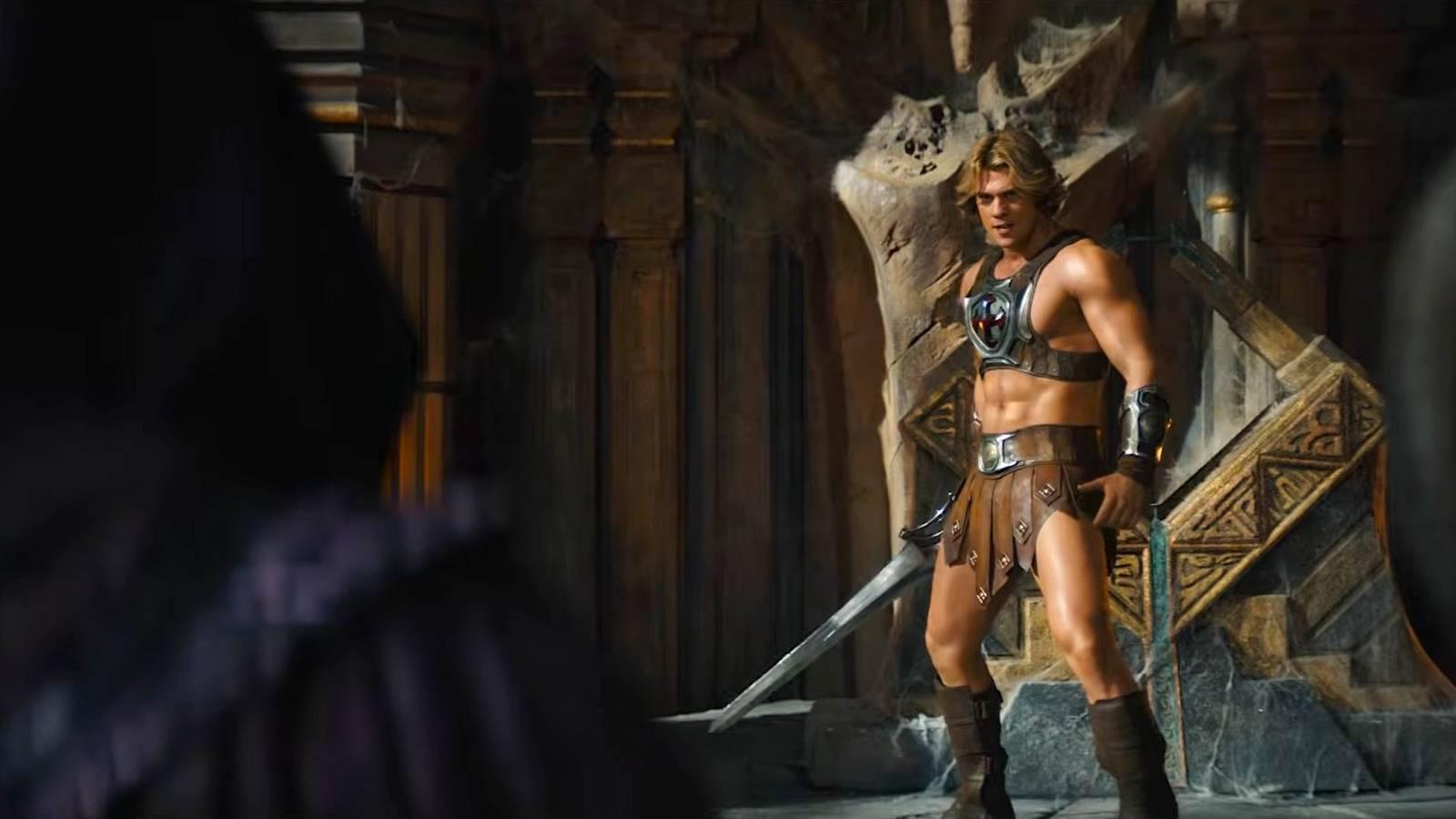
Those raised on He-Man will bring decades of affection to names and images that passed me by. Coming to it cold, I cared less about recognition than the sheer pleasure of watching its gaudy machinery spring to life. Masters of the Universe never gives that spectacle enough consequence to become a grand fantasy adventure, but it has colour, personality and a disarming fondness for its own ridiculous world. While the toy box is open, everything clashes together in a bright, noisy burst of imagination. Sometimes that is power enough.


No Comments