

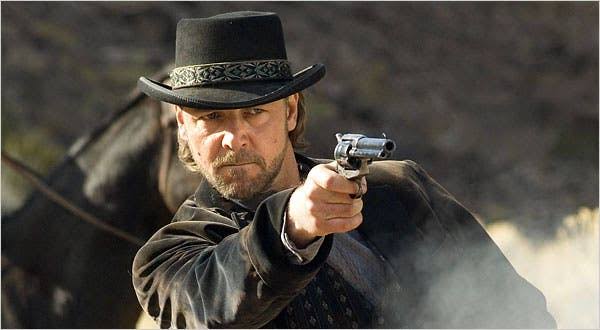
Crowe and Bale are at their best in 3:10 to Yuma – A Review
This review contains spoilers for 3:10 to Yuma (2007).
Ben Wade spends much of 3:10 to Yuma in chains, but Russell Crowe never lets him look like a prisoner. He watches every room with the mild amusement of a man who has already found the exits, judged the company and decided how difficult each of them would be to kill. Even surrounded by rifles, he seems to be there by choice. The question is not whether Wade can escape, but what might persuade him not to.
That quiet imbalance runs through James Mangold’s Western. It has gunfights, ambushes and a final charge through streets crowded with armed men, but it rarely feels impatient for them. Its attention stays with character: the turn of a conversation, a glance held slightly too long, the change in Wade’s expression when Dan Evans refuses another chance to walk away. The film is full without being flashy, built from dusty stillness and a cast who seem entirely at home in the world around them.
Crowe fits Ben Wade almost too well. He is calm, sharp and oddly charming, with the confidence of someone who knows that violence is most useful when it does not need to be shown. He sketches, quotes scripture and speaks softly enough that kindness can seem possible, right up until it is not. His charm never feels like a mask that can simply be removed. It is part of the danger, perhaps even part of the man, which makes every flicker of sincerity difficult to trust.
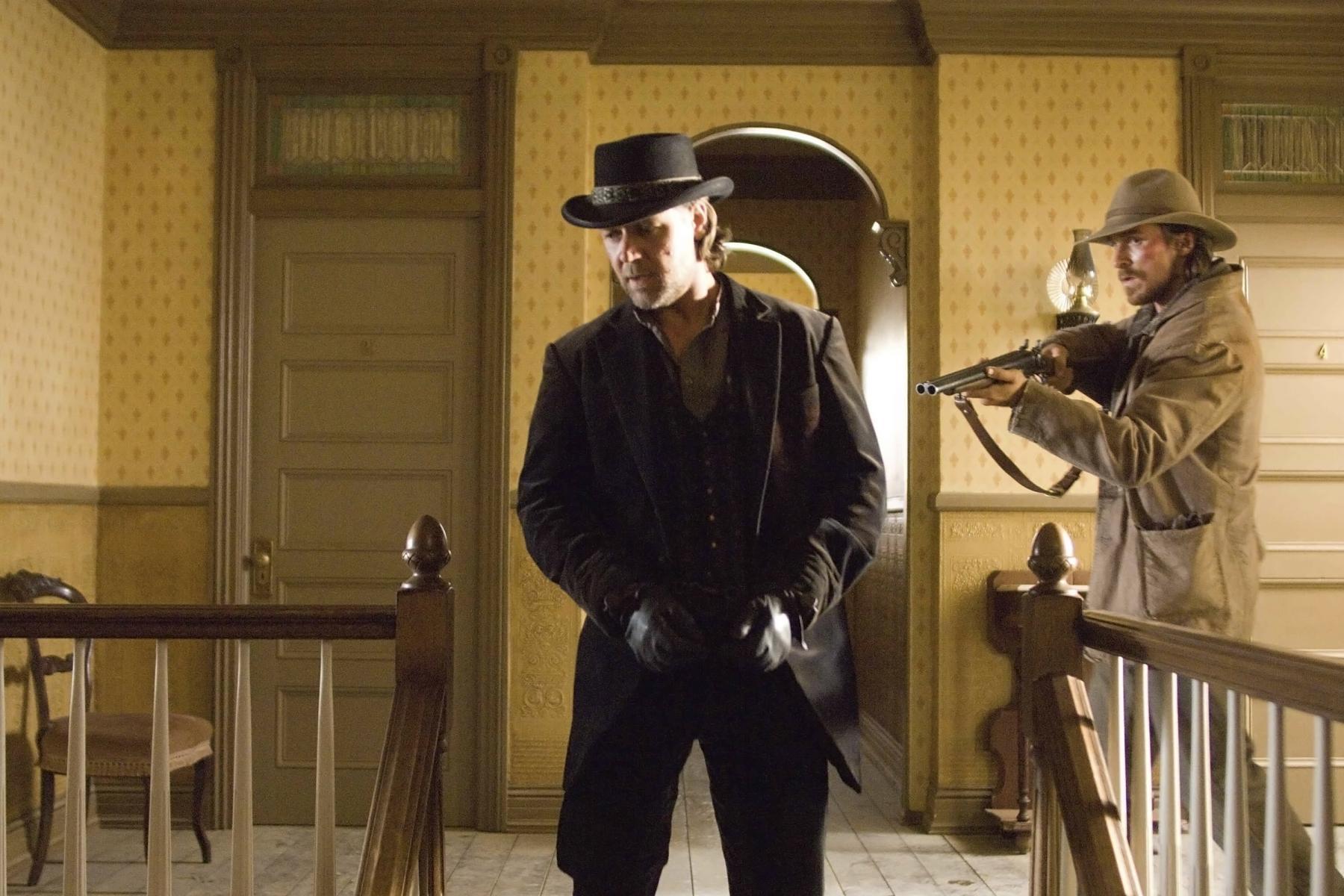
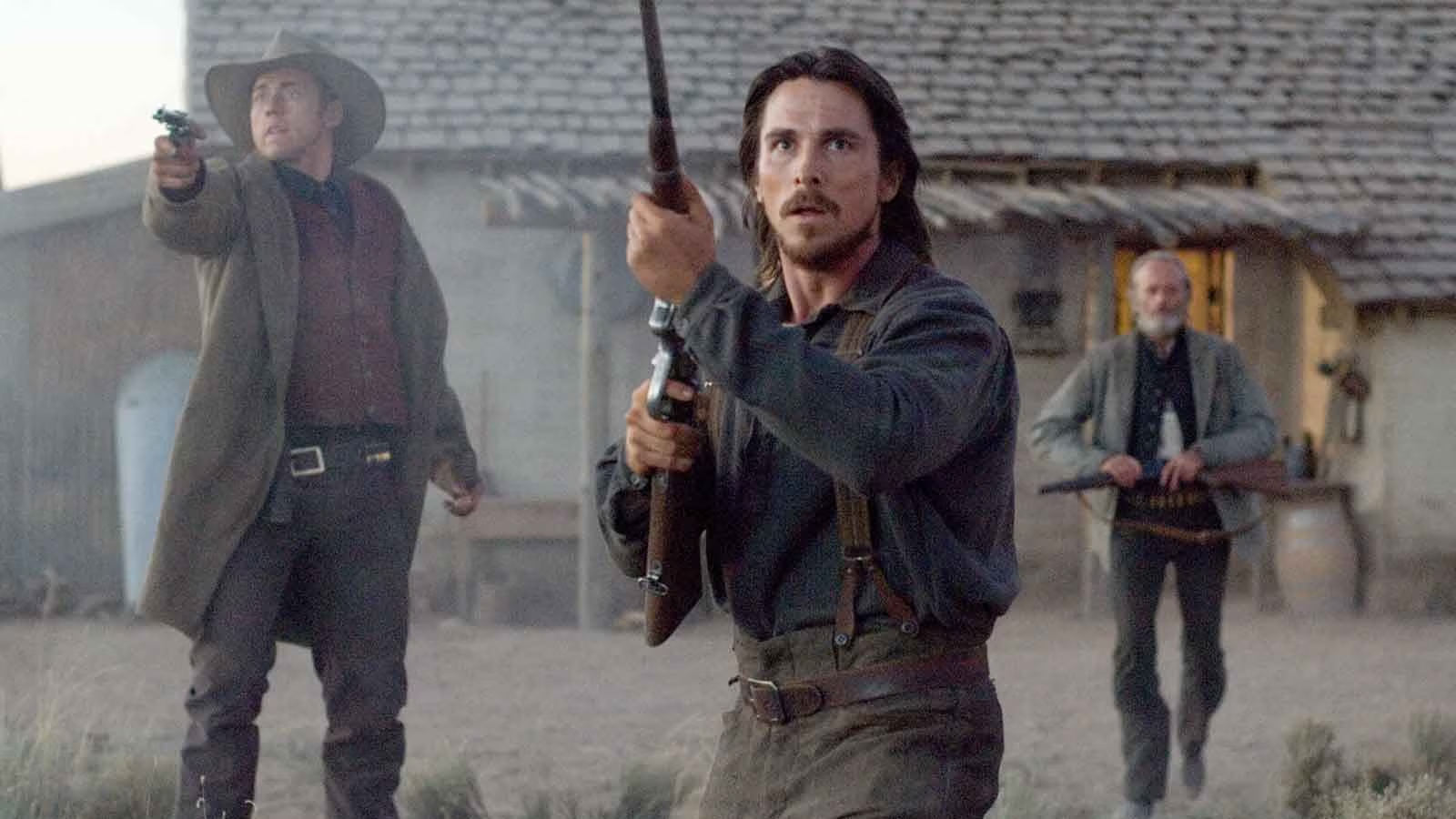
Christian Bale gives Dan a more visible kind of wear. Debt, drought and humiliation have settled into his posture, and his missing leg has become one more thing the world uses to tell him what he is worth. His eldest son, William, sees a man who has failed to protect his land and family, while Dan has begun to fear the boy may be right. Bale never turns that shame into self-pity. He lets it sit beneath Dan’s stubbornness, giving his decision to join the escort a desperation that the promised money cannot quite explain.
Dan wants the two hundred dollars, but he also wants to recover some control over the story of his own life. Getting Wade onto the train becomes proof that hardship has not said everything there is to say about him. His motives are tangled with pride, fatherhood, fear and wounded dignity, which is why his courage feels human rather than polished into legend. He does not continue because he is untouched by doubt. He continues because he is running out of things that cannot be taken from him.
The scenes between Crowe and Bale carry the film. Wade keeps probing for the point at which Dan’s principles will give way to money or fear, and Dan gives him plenty of reason to believe they might. Yet every time the escort loses another man, another advantage or another sensible reason to continue, Dan remains. Wade does not suddenly admire goodness. What catches his attention is the persistence of someone he had already measured and dismissed.
Ben Foster’s Charlie Prince makes that change easier to see. Prince’s loyalty to Wade has the fervour of worship, but he loves the legend more than the man. He is all appetite and violence, a younger and less complicated version of the outlaw Wade may once have been, without the humour or curiosity that now leave Wade looking faintly estranged from his own gang. Foster gives him a coiled intensity that makes every appearance feel dangerous.
Mangold’s patience earns its place once the escort reaches Contention. The open country has given Wade and Dan room to study each other, but the town closes around them. Hotel rooms, staircases, alleys and rooftops replace the wide landscape, and the final run to the station becomes a gauntlet the moment Wade’s gang places a price on Dan’s death. By then, the job has shed nearly all practical sense. Dan knows the money may not save his ranch. Wade knows Yuma has failed to hold him before. Still, they head for the train.
Wade may be tired of his gang, tired of Prince or simply curious to see whether Dan can finish what he started. Helping him does not make Wade good, and climbing aboard does not mean he has surrendered to the law. It is something more private between them, an acknowledgement that Dan has earned the right to complete the task after its reward has become almost meaningless.
The ending is tragic without being surprising. Dan has been walking towards it for some time, and Bale plays those final moments with fear still visible. Prince kills him only seconds after he succeeds, leaving William with the proof his father wanted him to see and the loss that came with it. Wade guns down Prince and the rest of his gang before boarding the train Dan died to reach. His final whistle calls for his horse, and any clean idea of redemption disappears with it. Wade has not become another man. He has simply allowed Dan Evans, for a few minutes, to matter more than his own freedom.



No Comments