
A Bad Day in Suburbia: The End of Oak Street – A Review
First the street feels wrong. Then it feels empty. Then the dinosaurs arrive and everybody’s decision-making goes to the doghouse. It is, as you might expect, delightful. Director David Robert Mitchell takes a family comedy, drops it into prehistoric chaos and keeps tightening the screws until every doorway, car and patch of open ground looks like a terrible idea. The End of Oak Street moves quickly, hits hard and understands the exact point at which tension becomes absurdity. Most importantly, it knows when the absurdity is funnier.
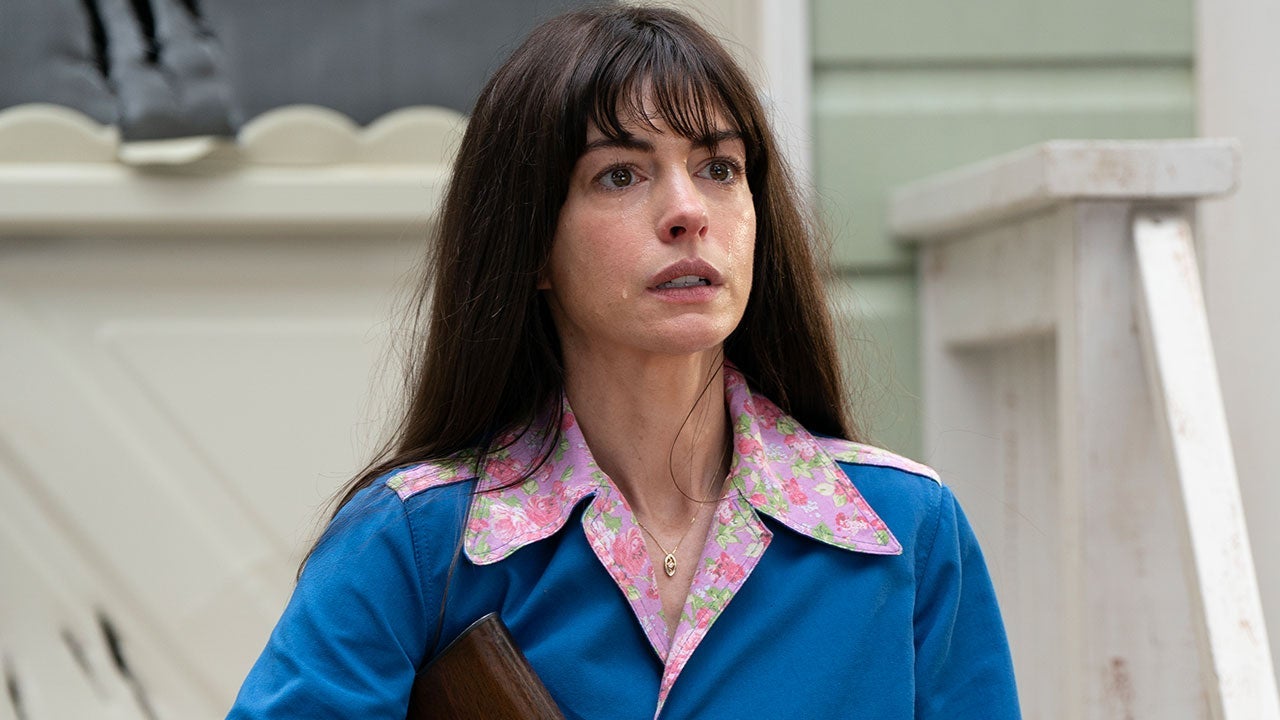
Before anything prehistoric appears, the Platts are halfway through a domestic comedy whose jokes have gone sour. Greg and Denise ration honesty while Audrey and Brian keep secrets of their own, leaving every conversation waiting for the sentence that might finally rupture the household. Anne Hathaway and Ewan McGregor play irritation as muscle memory; even their silences feel rehearsed. Maisy Stella is stronger still as Audrey. During a scene in which she cries inside a car, the camera stays close enough to register every attempt to contain the emotion. Stella lets those attempts fail gradually. Nothing is announced, and the scene hurts more for it.
Oak Street changes by losing things: traffic, neighbours, reassurance. The Platts seem to be the only people willing to step outside and ask what has happened, which stretches the neighbourhood’s obliviousness beyond credibility. The silence itself works. A familiar street stripped of its ordinary noise becomes difficult to read, and every new sound arrives without context.
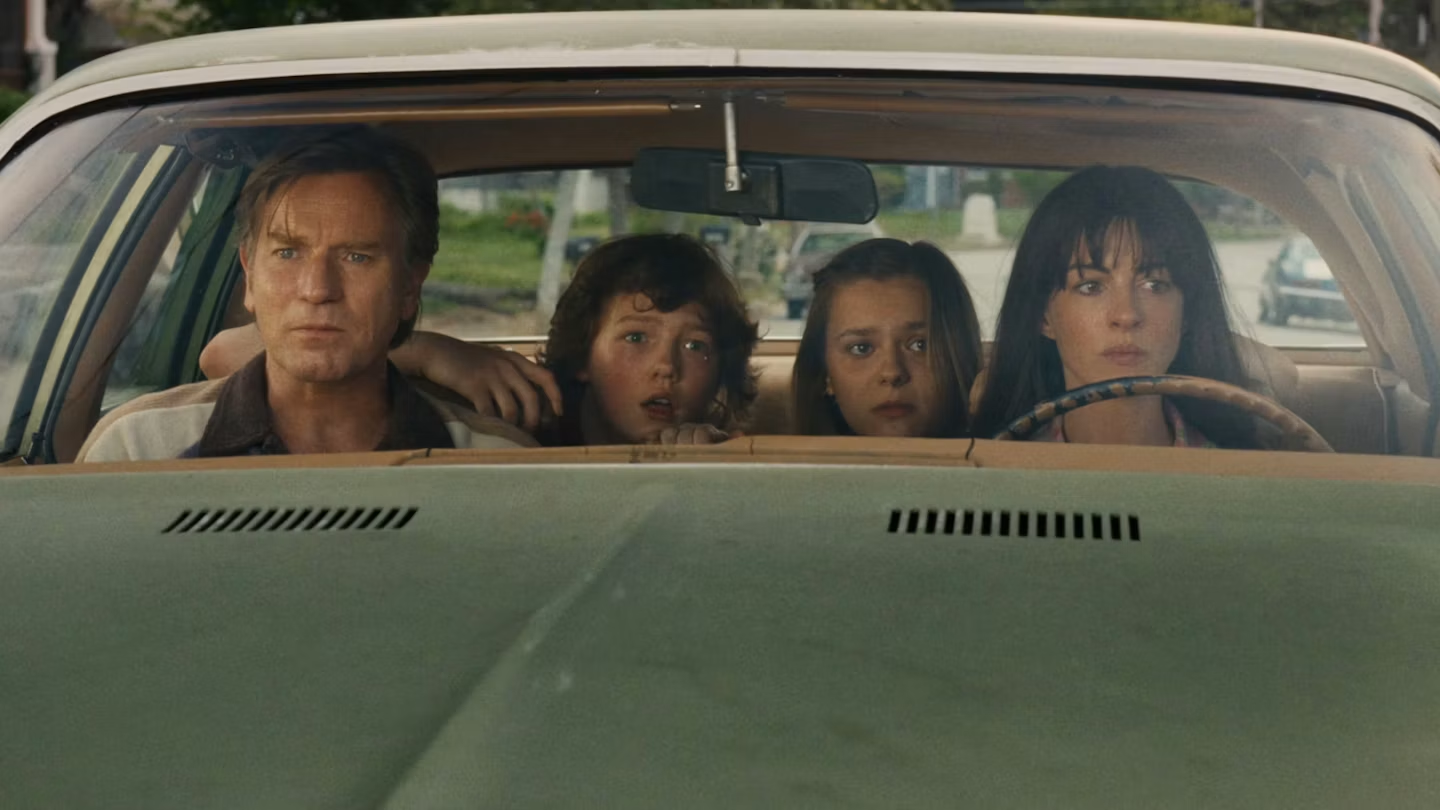
The Platts (left-right): Greg (Ewan McGregor), Brian (Christian Convery), Audrey (Maisy Stella) and Denise (Anne Hathaway).
Inside the house, panic refuses a single focal point. Michael Gioulakis uses split-diopter shots to hold one face in an intense foreground while another remains sharp behind it. As the Platts discuss being trapped in the past and the possibility that they may die there, fear passes through the whole frame without settling on one person. The sound design opens another space beyond the image. A distant cry turns Oak Street into a tiny clearing within something vast; movement nearby makes the walls feel decorative. The anticipation may break through a scare, an impact or a laugh. Sometimes Mitchell lets it remain unbroken.
Once the dinosaurs arrive, one emergency replaces another. Plans expire quickly, information arrives late and Brian repeatedly chooses the option most likely to end inside a dinosaur’s stomach. The local bullies first appear on bicycles in a shot that asks them to project menace. These particular boys simply look comical. Later, one catches Brian and resumes beating him amid the prehistoric chaos. His younger brother has to remind him that there are dinosaurs. It is a perfect collision between school playground stupidity and a world which has rendered it irrelevant.
The film is far more observant about what follows an impact. Cinema often treats unconsciousness as an off switch: one blow removes somebody until the screenplay wants them back. Here, people crumple, remain stunned for a few seconds and return disoriented. Dinosaurs recover the same way. During one desperate confrontation, an enormous animal is knocked flat and rises moments later, turning victory into borrowed time. Nobody receives a convenient coma. The scene remembers every body still lying within it.
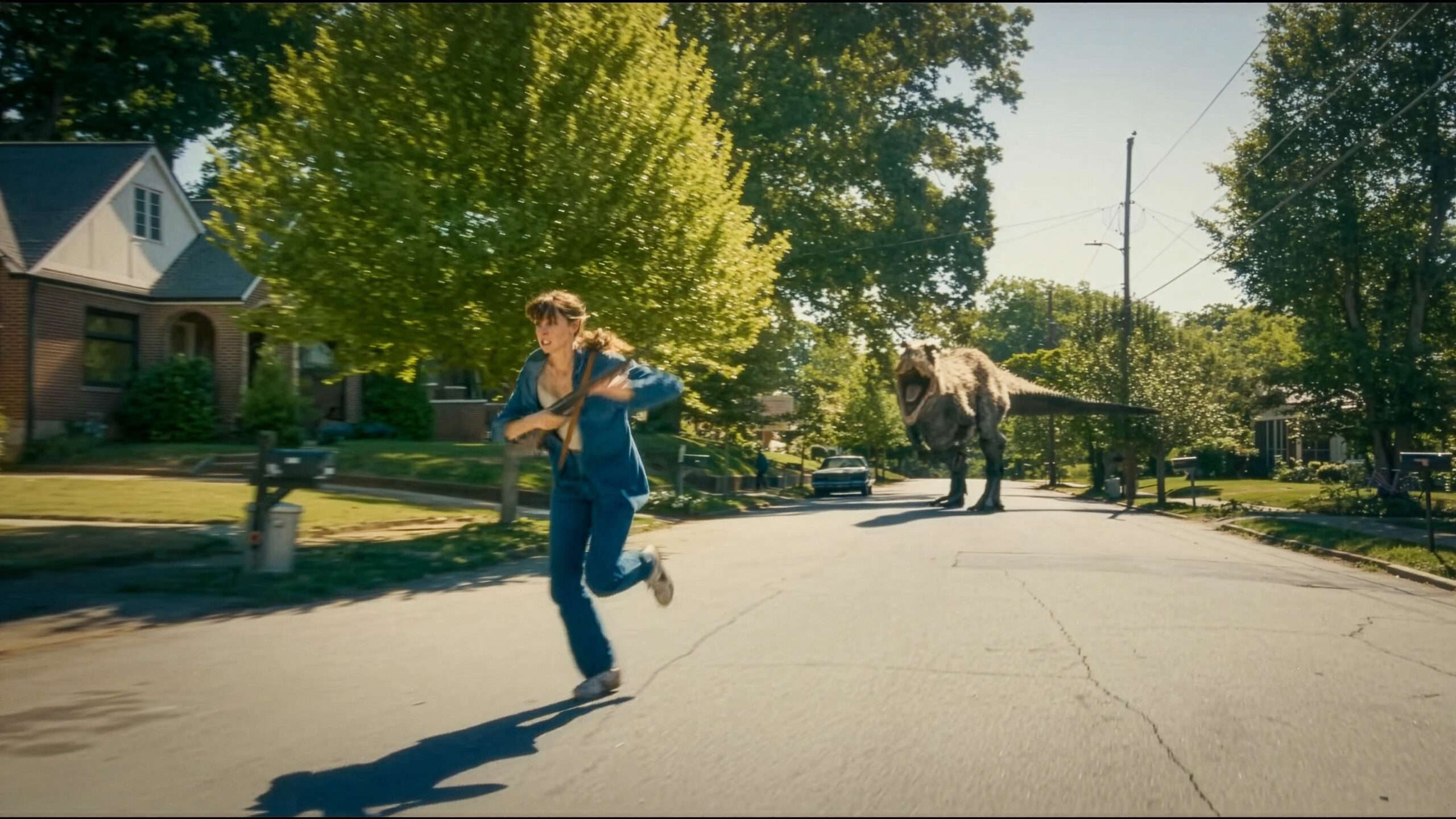
An Allosaurus chasing Anne Hathaway’s Denise down the road.
That physical continuity extends into the dinosaurs’ behaviour. One predator gives chase, then simply stops caring. Others hesitate, become distracted or follow impulses unrelated to the Platts. The creatures do not pursue people out of narrative duty; they decide whether the effort remains worthwhile. That small uncertainty changes every encounter. A predator capable of abandoning the chase feels more dangerous when it keeps coming.
It also becomes much funnier when something else captures its attention. Several of the film’s best releases come from animals following instincts which have nothing to do with frightening the audience. Mitchell can make a creature terrifying, ridiculous and strangely mundane without changing what it is. The CGI shows its construction in a handful of shots, though the behaviour keeps the animals present when the polish slips. Personality carries an effect further than perfection.
Michael Giacchino goes broad where the sound design goes close. His score gives the film the sweep of a proper family adventure; the mix supplies breath, impact and the terror of something moving just beyond sight. The single use of the film’s strongest language follows the same balance between scale and restraint. It arrives once, at exactly the right moment, and quoting it would ruin the pleasure.
The neighbourhood logic develops holes, Brian’s recklessness strains patience and several supporting performances struggle beside the central family. The final act also makes a sentimental choice I would usually resist, but Mitchell earns it through complete sincerity. The film has never been embarrassed by caring about the Platts, and it refuses to become embarrassed at the moment that care matters most.
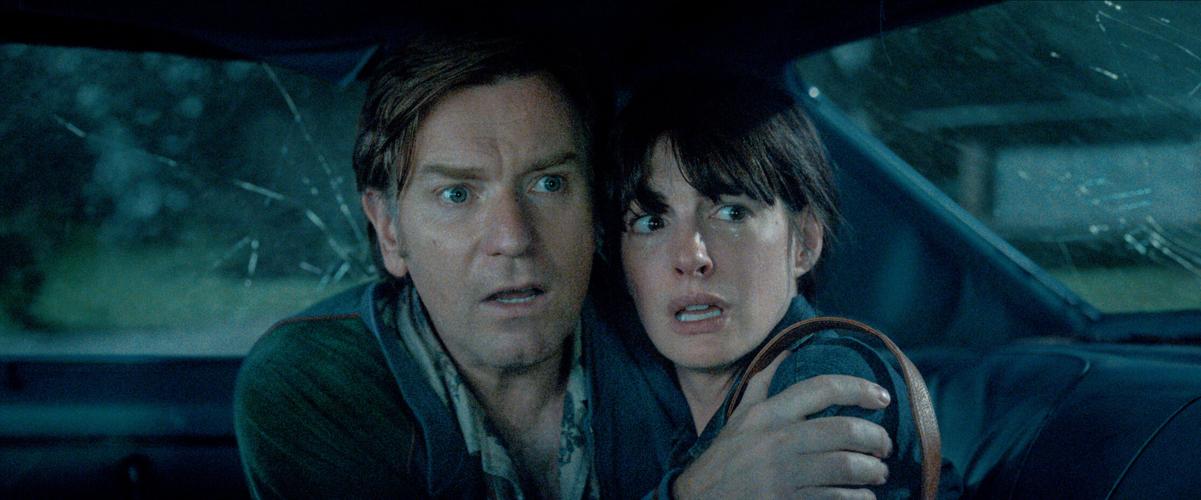
Greg and Denise taking refuge from the dinosaurs in crashed car.
At 99 minutes, The End of Oak Street makes the average modern blockbuster look faintly embarrassed. Its premise is simple enough for a child to pitch and its execution precise enough for a cinema. People and dinosaurs fall, recover and keep moving. The story does the same, finding a new problem whenever the last one has finished and stopping before the fun can thin out.
Twenty years ago, this thing would have spent weeks owning the summer. Today it feels almost rebellious: a self-contained adventure which knows exactly what it wants to deliver and mostly excels at delivering it.
Beyond that; it’s fun.


No Comments