


We Bought What They Were Selling, A Defence of Digger – A Review
This review contains no spoilers for Digger (2026).
The more volatile the response to Digger became, the more I needed to see it.
By opening night, critics and early audiences were calling Iñárritu’s film everything from a masterpiece to an insufferable disaster to the death knell of modern cinema. Whatever had upset everybody this much was worth an evening at the very least.
Cruise plays Digger Rockwell, a Texan oil baron whose company has drilled into the Arctic with catastrophic results. A vast mass of ice is moving towards Europe, governments are panicking and Digger has decided that the man responsible for creating the crisis is naturally the only person capable of solving it. Saving millions of lives would be good. Saving his reputation at the same time would be greater.
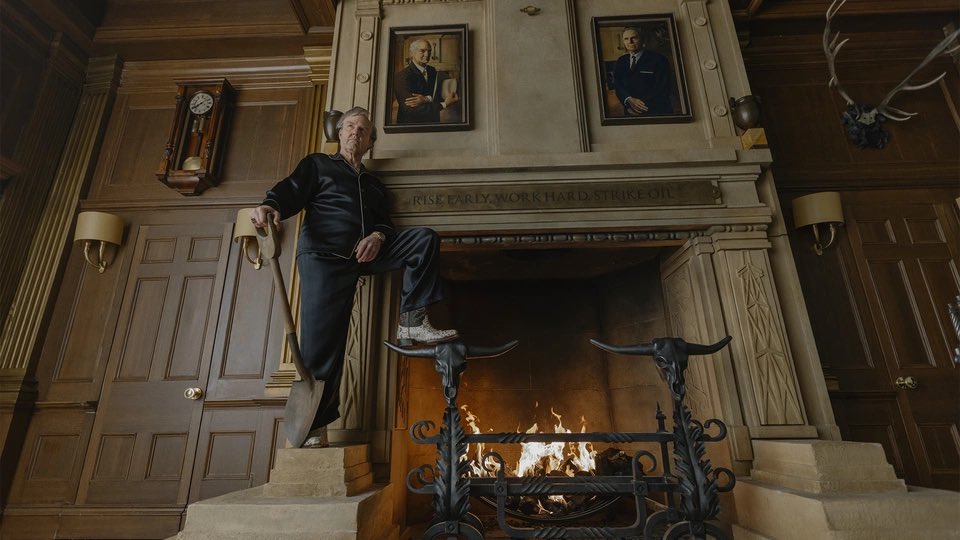
The film makes no attempt to disguise its targets, with the Paris Agreement and COP30 named outright fairly early on while the US government cares solely about looking for somebody else to blame. John Goodman’s President Compson entertains nuclear solutions with an enthusiasm that is hilarious until you remember how little exaggeration the joke requires. This film is hardly subtle, but neither are the people (and systems) being satirised.
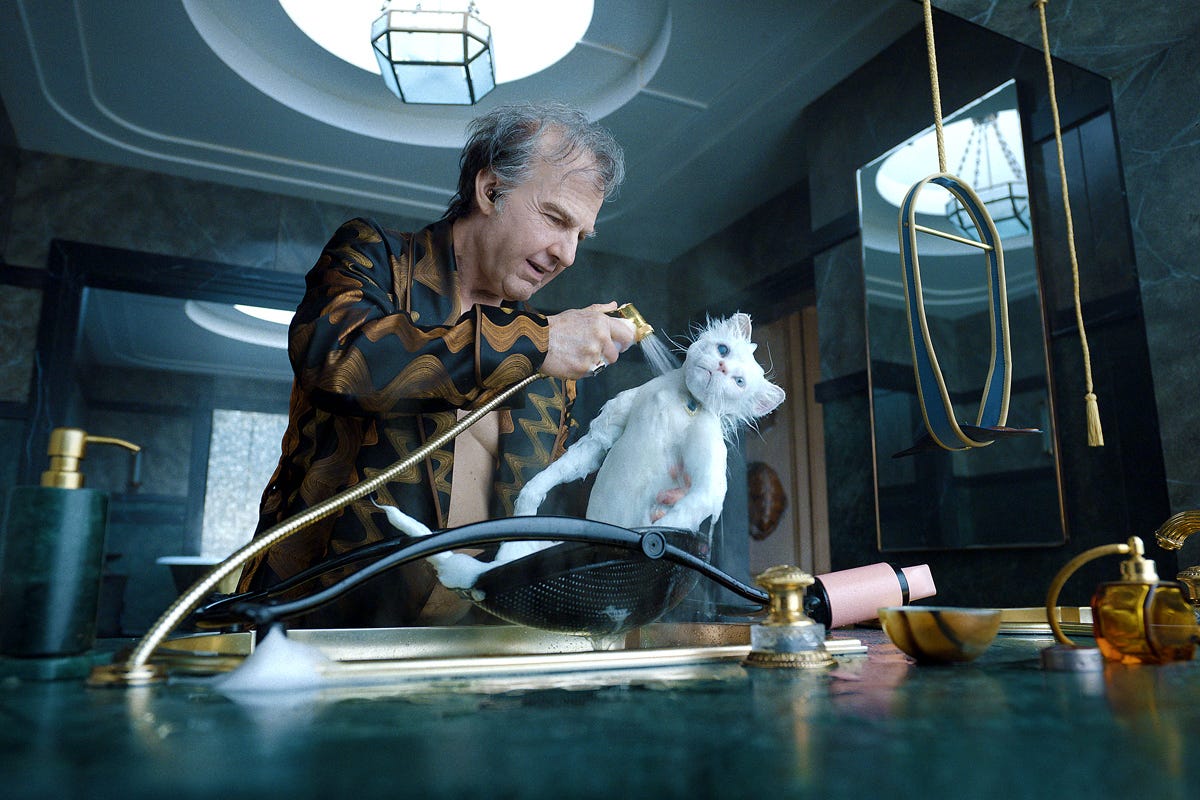
What I had not expected was to spend so much of it laughing. They have made Tom Cruise fat, given him a cat and allowed him to be an absolute nightmare. The transformation is hilarious, but its real achievement is how quickly it settled in. His physical control is extraordinary, and his delivery allows Digger to be ridiculous without ever conceding that he is. Cruise takes Digger Rockwell sincerely enough to make his self-importance funny, chewing through scenes while remaining completely believable as somebody who thinks the scene ought to belong to him. Because it does.
Then there is Maggie. A grotesque, artificial creature from hell being fussed over by Tom Cruise is already a promising use of a production budget. The more affection he gives her, the more appalling she looks and acts. As an animatronic puppet, Maggie is amazing. As a character, she is viscerally unappealing. I loved that so much care had gone into making something so little that added so much.
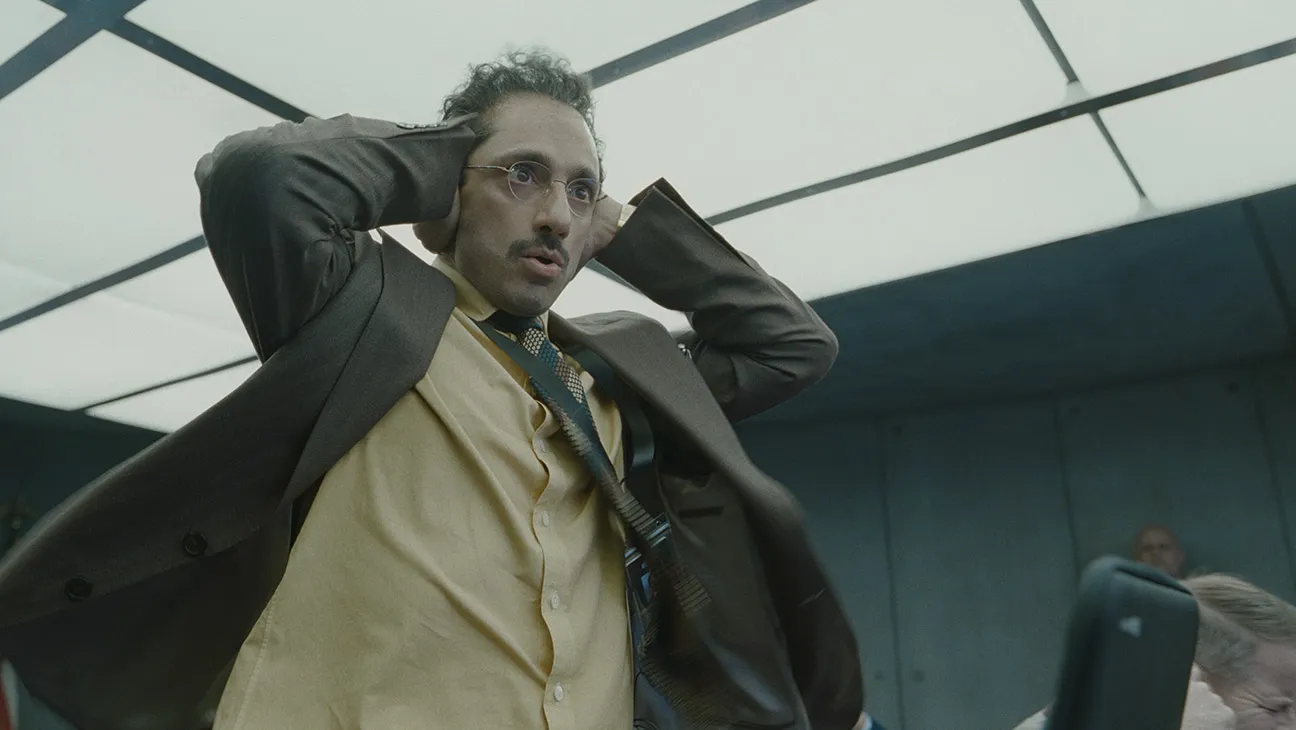
Turning our attention back to the human cast, Riz Ahmed gives Cruise rather more competition. There are several exchanges where, despite everything Cruise is doing, Ahmed becomes the person I cannot take my eyes off. Their scene on the plane is particularly good, and watching Ahmed get the better of a performance I already thought was exceptional was a pleasure in itself. For a moment, my entire critical response was simply: bloody hell.
Goodman has already set a high standard for derangement, but Stephen Wight’s Reverend Moore is somehow even more unhinged. Both ought to feel more exaggerated than they do. I was delighted by Emma D’Arcy, whose comic timing left me wishing they had more to do, and Sandra Hüller is another pleasure in a cast that hardly seems fair on other films. Then of course Jesse Plemons turns up and reminds me how little screen-time he needs to make a lasting impression. Whenever you see him you know he’s up to something, and he doesn’t disappoint. None of the cast did. There is a tremendous amount of talent on display, and Iñárritu gives them room to misbehave.
And boy do they have some gorgeous places to misbehave in. Dennis Gassner’s sets look like an incomprehensibly detailed West End production whose designer was never told to stop spending. I mean that as an enormous compliment. Their intricacy invites you to look beyond whoever is speaking, and I repeatedly wanted more time simply to examine them. For a film so concerned with ugliness, Digger gives us an extraordinary amount of beauty to enjoy.
The extravagance carries into Cosmo Sheldrake’s score, which is offbeat, sometimes almost jazz-like and occasionally gloriously loud. I did struggle at times to catch some of the dialogue, partially for the accents and partially down to mixing, but it didn’t noticeably hamper my experience.Neither could I always put my finger on what the music and sound design were doing, but I loved how much stranger they made an already ridiculous film.
Cruise’s great public address is where I stopped worrying about how to describe it and simply watched in awe. The long takes let him carry the speech through an astonishing piece of choreography, sustaining its force while negotiating movements that must have been a nightmare to get right. Delivering a speech sounds positively modest beside the things Cruise is known for doing at this point. Though I found this complex bit of scene manoeuvring far more impressive than many of his more ambitious stunts. It is a career highlight for both him and Iñárritu, and that scene alone deserves a number of Oscar nominations.
What comes out of his mouth however, is harder to applaud comfortably. Digger goes after a world that wanted everything he sold and would now like to pretend it never placed an order. Politicians approved the drilling, businesses took their share and consumers kept demanding more. Having somebody this awful to blame makes the reckoning considerably easier for everybody else. Digger keeps drilling because people keep asking him to.
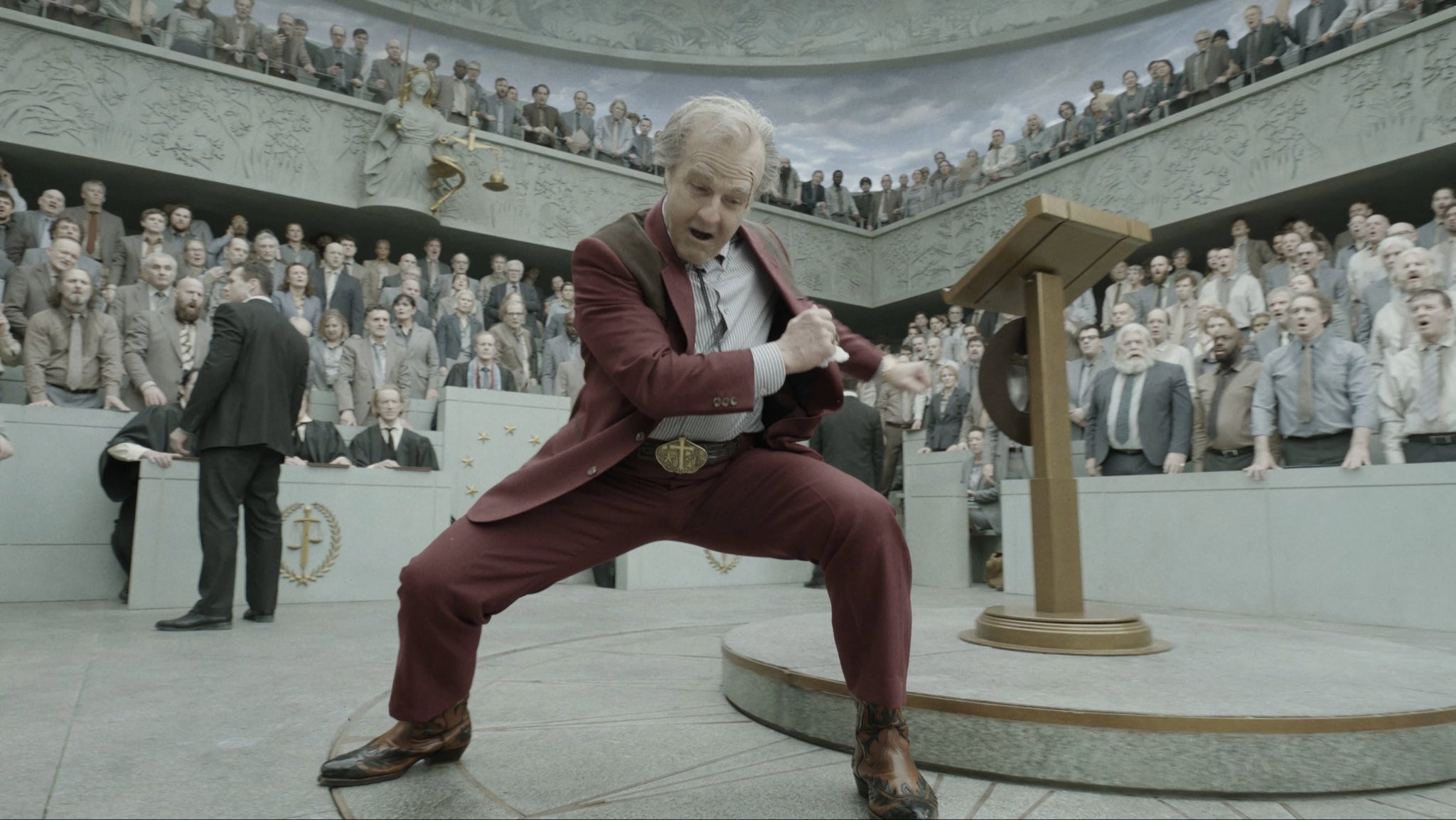
I loved how long the film let him pursue that accusation. Knowing who the bad people are has become a remarkably convenient substitute for doing anything about them, and he is merciless towards the satisfaction we take in it. We bought what they were selling. Now we would like credit for recognising the damage. Cruise makes the speech funny enough to enjoy and persuasive enough to resent. Making a monster ridiculous had done nothing to diminish my appetite for his company. Give him Cruise’s charisma, let him be this funny and hand him the speech everybody will remember, and his reputation might survive the ridicule rather well. Iñárritu has made condemning him enormously entertaining.
It certainly gives us plenty to argue about. “Oh, but should we really be making light of something so serious?” Get over yourselves. The world is falling apart and people are still bickering about whether somebody has made the wrong sort of film about it. You’re so busy arguing about what counts as a useful response that having the argument apparently counts as one. What a productive evening. What has it changed? Nada.
Digger understands how much you can get away with while telling the truth. Being right about everybody else is a convenient way of avoiding a conversation about yourself. An accusation can double as an excuse; an apparently generous gesture can purchase the right to tell the story. Control the narrative. Iñárritu keeps asking whose interests an argument serves, even when the argument holds. You can agree with somebody and still ask what they want from you.

And what they want, judging by a lot of the coverage, is for this “garish, cloth-eared and sanctimonious” “epic indulgence” to be buried. But that indulgence is the point. That is the entire point of Digger. The film makes a spectacle of catastrophe and questions our appetite for it, including my own satisfaction in watching it hold a mirror up to the audience.Iñárritu implicates himself in that same transaction. Treating that excess as grounds for dismissal without engaging with what it is doing is criticism in bad faith. Critics who do that should be ashamed of themselves.
What frustrates me is watching its commercial failure become another spectacle to enjoy. Entertainment Weekly announces a “historic box office bomb”; TheWrap introduces Cruise as the face of “one of the biggest blunders in recent memory”. The humiliation supplies its own entertainment, and the film becomes something to have an opinion about without troubling yourself to watch it. Repeat the loss often enough and “failure” stops needing a qualification. Financial reporting has done the work of an artistic verdict.
You wanted original cinema. You wanted film-makers to take risks. Now somebody has spent a fortune on something this peculiar, and everybody has turned up with a calculator to explain why he should never have been allowed. This eagerness to declare ambitious cinema a waste of money makes me wonder how many of its professional spectators we must be deferential to actually like the art form. What sort of risk were you expecting? One with a guaranteed return?

Warner Bros. facing a substantial loss, however, is something I can cheerfully live with. After years of decisions that have earned it my contempt, its absorption into the Ellison-controlled Skydance gives me no reason to start fretting over its finances. Corporations are not your friends. These owners paid for a masterpiece and stand to lose a fortune. Good. My disappointment is that so few people have seen what they paid for. More people deserve the chance to discover this film than its opening suggests will bother.
How often do we get Cruise and Iñárritu given the freedom to make something this strange? The result is totally uncompromising. Why must it turn a profit to justify existing? Investors funded art to create something different and unique. It got made. That should be it. Art for art’s sake goddammit. We shouldn’t look at the final result and agree the money was wasted.

There is something miserable about watching a film this alive acquire the reputation of something already dead. Go and see it for yourself. Cinema like this deserves an audience willing to make up their own mind rather than steal a borrowed verdict. Who’s right?
You decide which.


No Comments