

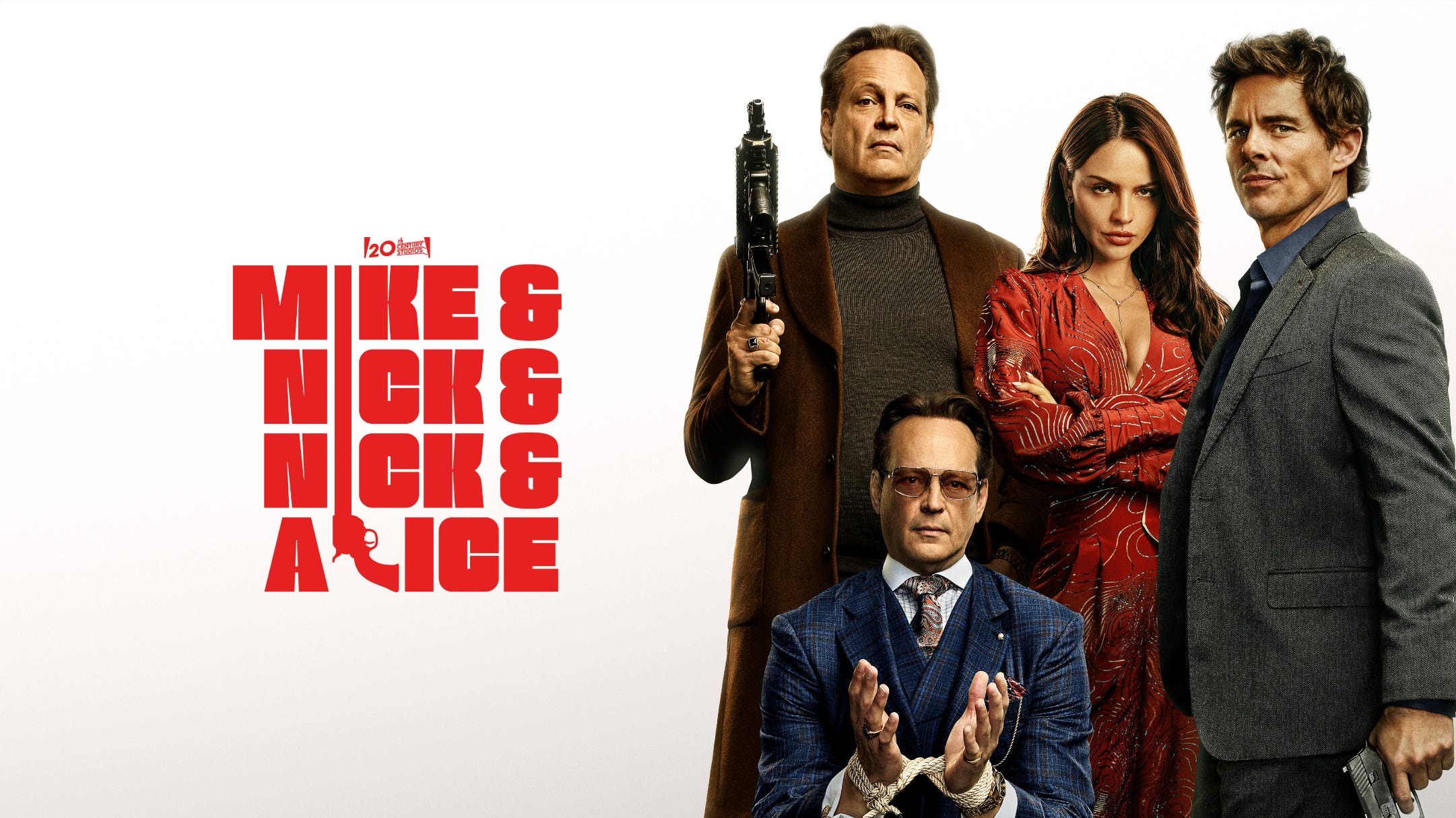
Mike & Nick & Nick & Alice Is the Right Kind of Too Much – A Review
Four armed criminals are trying to decide which of the boyfriends in Gilmore Girls was best. A time machine has dropped one Vince Vaughn into the life of another, a cannibal is on his way to eat James Marsden, and everyone has become deeply invested in the romantic future of a fictional teenager from Connecticut.
They are not discussing Lorelai. The question is Rory.
For a few lovely minutes survival can wait. The guns remain in sight, but the room has moved to Stars Hollow. They argue with the weary conviction of people who have done this before.
Mike & Nick & Nick & Alice keeps finding these little side doors. A scene enters carrying exposition and wanders into a discussion about thick drinks. A gangster arrives with a ridiculous name and leaves behind the suggestion of an entire criminal career. Keith David begins telling a story that seems designed to explain Jimmy Boy and somehow makes the boy less explicable with every sentence. The plot is moving. It just keeps getting distracted by people.
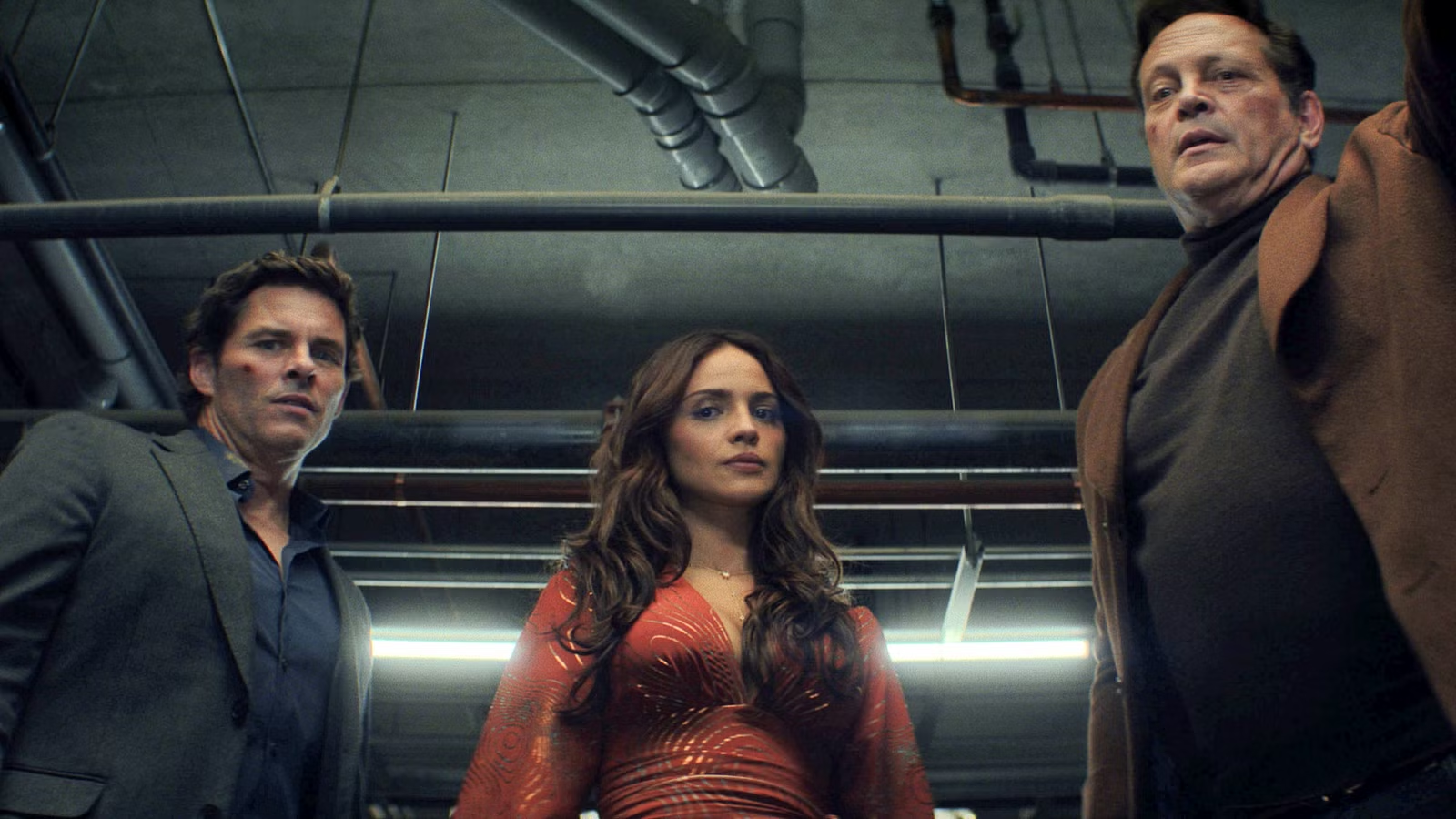
Quick Draw Mike (Marsden) wants to leave organised crime. Unfortunately, he is also sleeping with Alice (Eiza González), the wife of his best friend Nick (Vaughn), while their employer believes somebody has betrayed his spectacularly stupid son. Then another Nick arrives from six months in the future carrying several regrets, a plan of questionable quality and the knowledge that Mike will not survive the night without him. The time machine could have swallowed the film whole. Grabinski gives it just enough logic to cause trouble, then turns it into something far more humiliating: a man meeting the version of himself who already knows where all his worst instincts lead.
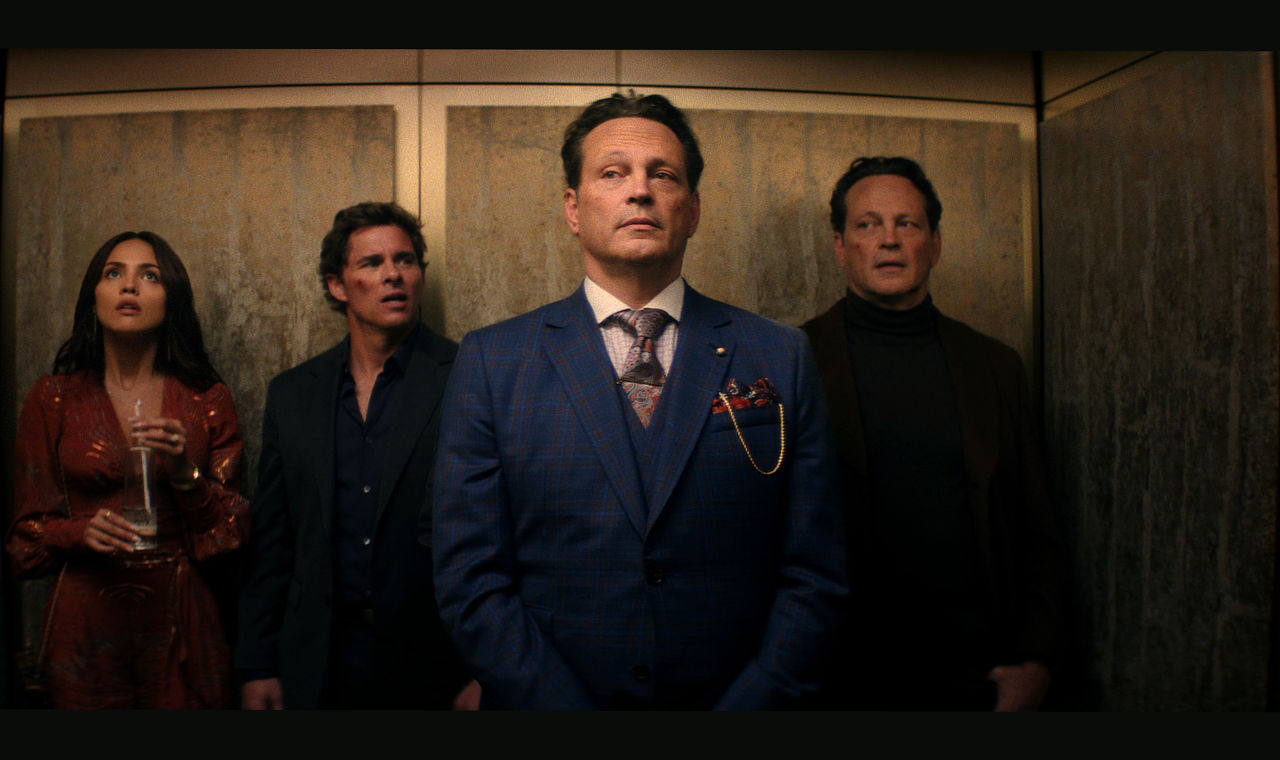
Vaughn plays the distance gently. Both Nicks talk in the same rolling rhythm, circling a point until resistance becomes more exhausting than agreement. The younger one still enjoys the performance. He leans into rooms, fills silences and assumes momentum will carry him through. The older Nick has learned where that momentum leads. His words arrive with less bounce, his body has settled and the charm now looks like something he has to pick up and dust off before using.
Marsden gives all that noise somewhere to land. Mike is tired before the film has properly begun, wearing the expression of a man who has already heard the first half of every argument and knows the second will be worse. His smallest reactions keep finishing other people’s jokes. González meets both men with less patience than either deserves. Alice is compromised and angry, but never reduced to the prize waiting at the end of their friendship. She often understands the room several minutes before the men filling it.
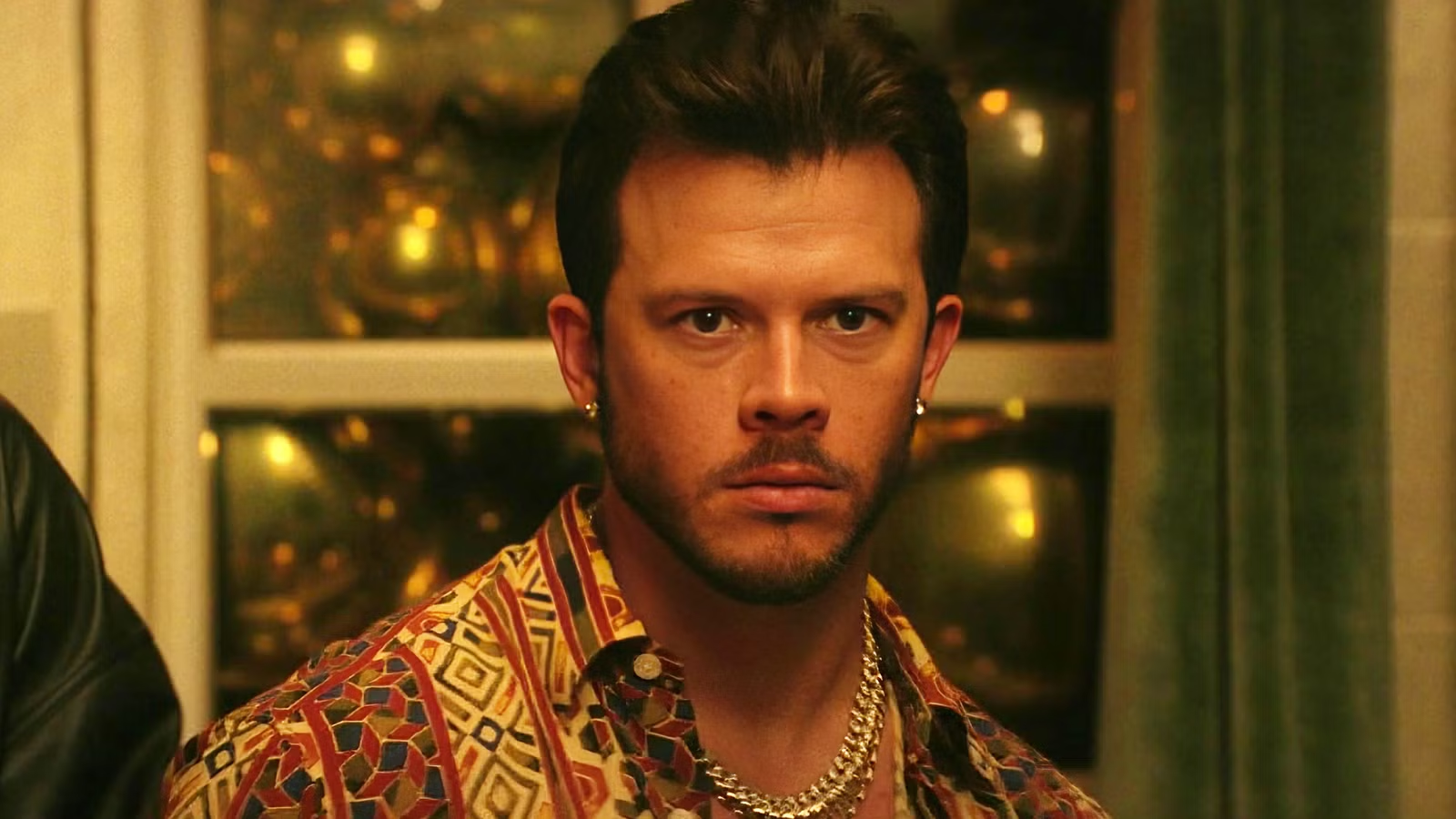
Then there is Jimmy Boy. Oh Jimmy Boy…
Jimmy Tatro plays stupidity with extraordinary concentration. Jimmy Boy guards the “Boy” in his name as though it were an inherited title. Each attempt to assert himself reveals another empty room where a thought should be. Around him, Keith David’s Sosa carries the solemn disappointment of a father who found a baby under a dumpster and has been trying to explain the result ever since.
The film looks loose because everybody inside it is allowed to behave strangely while the camera is watching closely. Larry Fong keeps several characters alive within the frame, letting reactions and half-understood information move through the background while somebody else controls the conversation. Both Nicks can occupy the same shot without the film stopping to admire the effect. Tim Squyres’ editing is equally relaxed about the complication. Two identical men, several competing plans and a time-travel explanation move through one night without requiring a diagram.
That clarity carries into the action. Grabinski and his stunt team planned the larger sequences through three-dimensional models and a full-scale rehearsal space, but the finished film never turns the preparation into homework for the audience. The fights move quickly, the jokes remain visible and a crowded room never becomes a meaningless blur of bodies and cuts. The filmmaking joins in with the comedy an has fun doing it.
I could have lived without the frame-skipping. The action repeatedly breaks into a stuttering approximation of slow motion, recalling the step-printed movement of older Hong Kong cinema. At first it gives each impact a nasty little jolt.
Then it happens again. And again. By the final fight, the effect is arriving before the punch.
The music is just as unruly, but far more charming. The film opens with Billy Joel’s “Why Should I Worry?” from Oliver & Company, because apparently that is how this film wants to introduce itself. Later songs charge in from different decades with no interest in smoothing the transition. Some land perfectly. Others land like somebody has thrown a jukebox down the stairs. I enjoyed the noise either way.
There is a tighter film hiding inside this one. The middle lingers after everyone has understood the situation, Mike and Alice never become quite as convincing together as Nick is when faced with losing them, and the final reveal opens a door the ending would have been stronger closing.
I am not convinced I want the tighter film.
The conversations that run too long, the songs chosen on a dare, the criminal legends attached to people we barely meet and the visual tricks pushed past good taste all belong to the same enthusiasm. Remove everything irritating and something living would go with it. Mike & Nick & Nick & Alice would become cleaner, shorter and much easier to forget.
Instead, I finished it wanting to spend more time with these morons. I wanted another Sosa story, another Jimmy Boy misunderstanding and another completely unsuitable song crashing into a gunfight. More than anything, I wanted to have seen it in a cinema, surrounded by people discovering together that the night’s most urgent question was never the time machine.
It was Rory’s boyfriends.


No Comments