
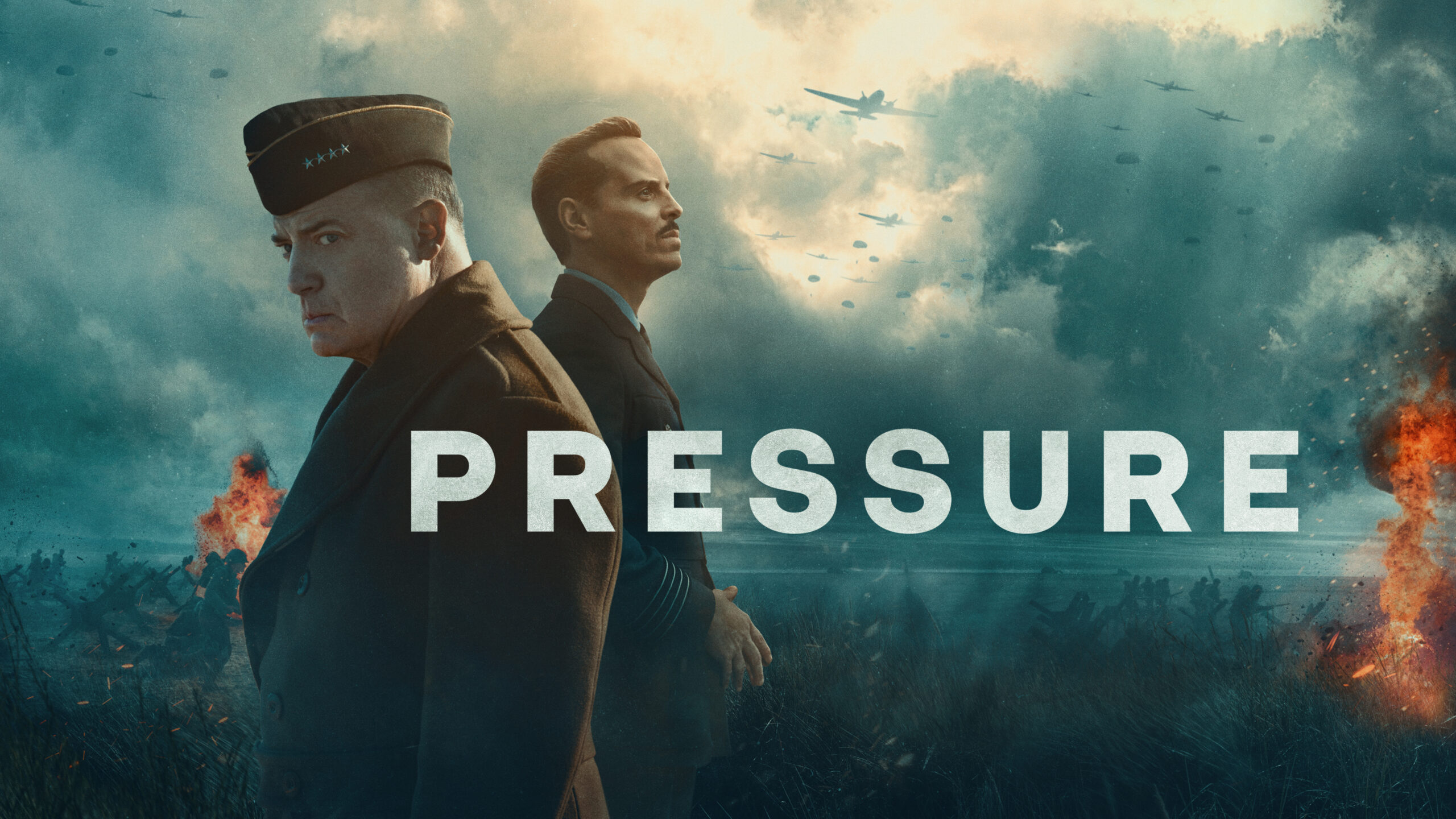
Pressure Makes Grand Cinema Out of Men Arguing About Clouds – A Review
This review contains no spoilers.
War likes to remember itself as a contest between men. Pressure gives the final word to the sky. Generals have assembled armies, ships and aircraft for D-Day, but all that power waits beneath clouds no rank can command and no plan can force aside. The film first makes the cost of that uncertainty visceral and human. Everything that follows happens beneath its shadow. James Stagg must read what is coming and make certainty from a system that promises none.
Andrew Scott plays him with the impatience of a man who has mastered his subject only to discover that expertise cannot make the weather obey. I love a competency montage, and Pressure understands that expertise has its own momentum. Reports are compared, patterns argued over and separate observations drawn into a forecast while Volker Bertelmann’s strings gather beneath them.
Scott’s no-nonsense manner makes the work compelling, particularly when his concentration is interrupted by a conclusion he cannot respect. His reactions are funny because they remain completely serious. He looks at people as though they have wasted a portion of his life, then returns to the charts. The frustration eventually bursts out when he calls Irving Krick’s forecast “pure, unadulterated horseshit” in front of everyone. Later, Stagg loses control altogether. His anger is justified, but the crack in his voice gives the scene its force.
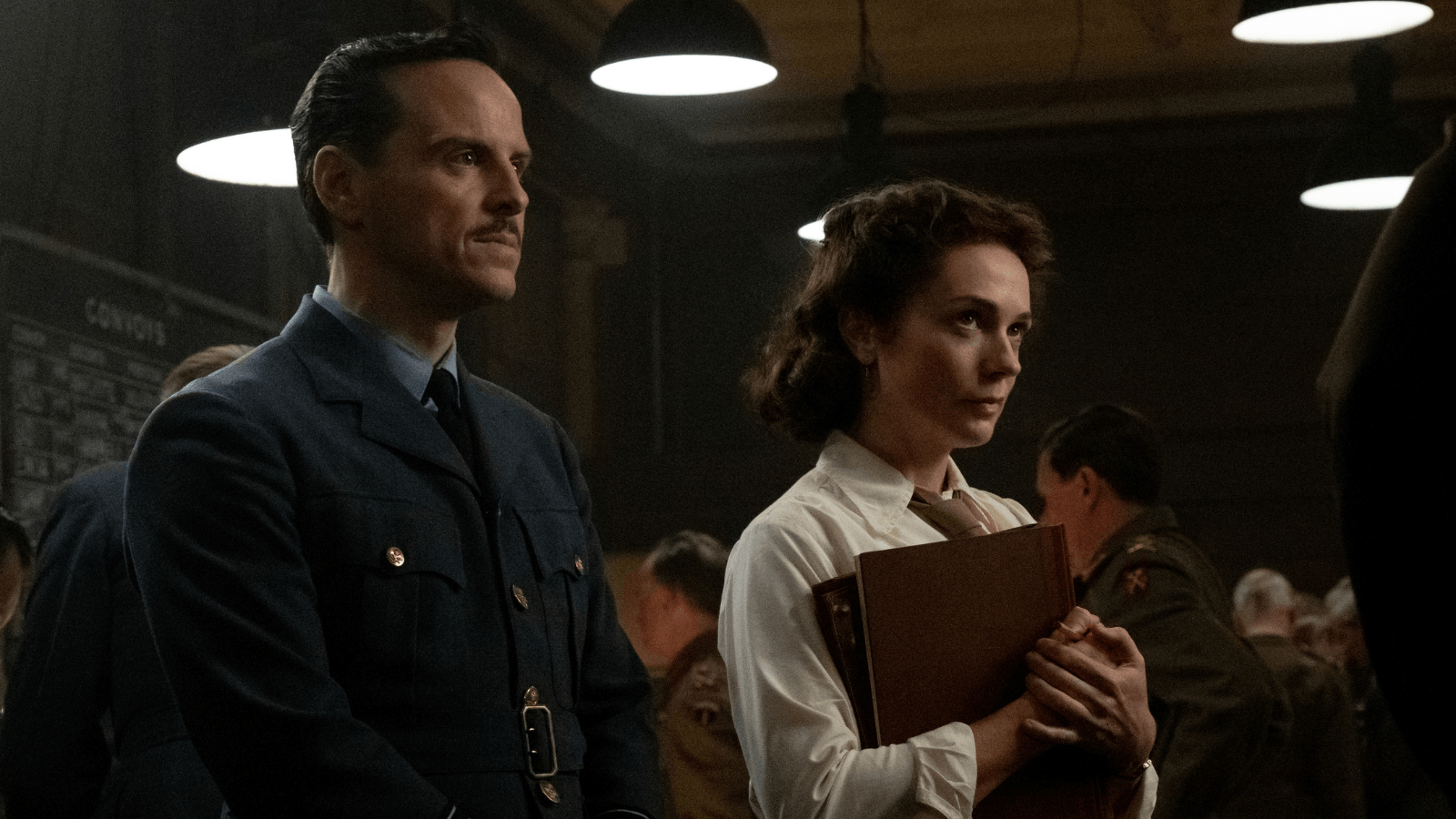
Everyone is grand in it. Chris Messina’s Irving is every bit as convinced as Stagg, while Damian Lewis is clearly having a wonderful time as Montgomery. That variety matters in a film built from argument. Scott cuts through the room, Messina holds his ground and Lewis enjoys every ounce of Montgomery’s authority, while Eisenhower lets the noise spend itself before deciding.
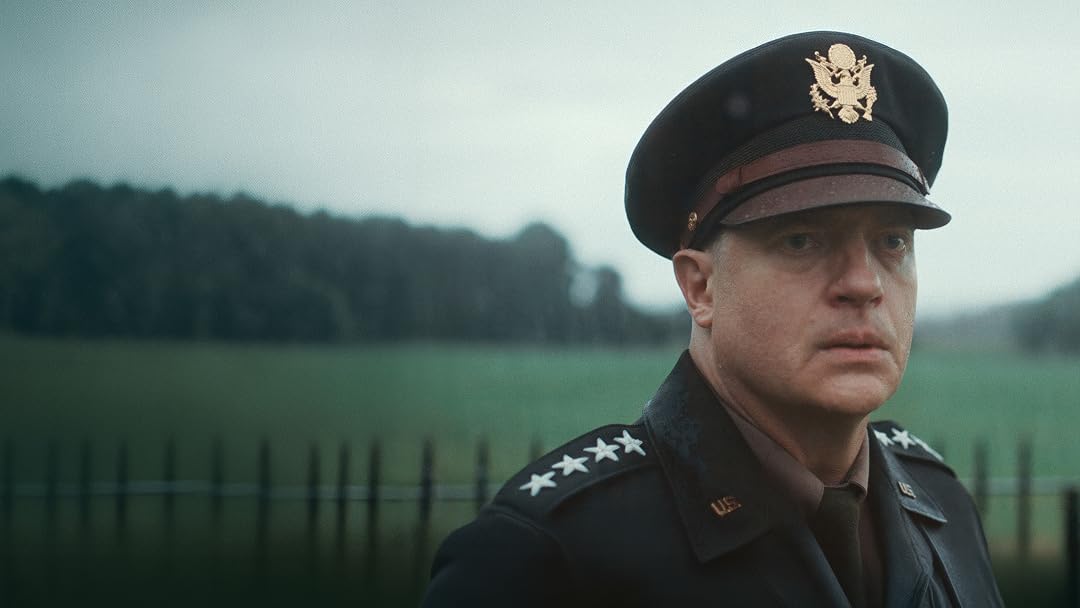
Brendan Fraser is basically himself but in uniform. He does not sound or act like Eisenhower, and I noticed it almost immediately. It soon stopped being important. Fraser finds Ike in the exhaustion of a man surrounded by experts who can defend their own conclusions but cannot make the decision for him. The others can make their cases. He must turn one forecast into an order. Irving eventually tells Stagg to call Ike rather than doing it himself. There are few things more satisfying than watching capable men get over themselves and begin working together.
Anthony Maras directs with a control that never advertises itself. Jamie D. Ramsay’s cinematography is pristine, intentional and entirely conventional. There is not a remotely adventurous shot in the film. Its most evocative images are often its emptiest, leaving the immaculate rooms for clouds, rain and stretches of nature. Those pauses clear the air after the arguments and return attention to the thing outside every room. They also keep the weather physical. Charts reduce it to lines, numbers and projections; the empty skies restore its size.
Bertelmann’s music gives those images their grandeur. The strings are beautiful, gathering beneath the dialogue and lending scale to forecasts delivered across desks. The sound design is just as restrained. Voices fill the rooms. When weather or radio breaks through, the atmosphere changes immediately. Pressure is grand without becoming showy. I only discovered afterwards that it was adapted from David Haig’s stage play. That surprised me. In retrospect, its origins survive in the extended confrontations and the amount of authority that can pass from one person to another within a single exchange. It carries the confidence of British cinema at its most dependable: give dramatic actors substantial material and let them do what they do best.
Once the decision has passed beyond their control, the arguments fall away. The men gather around a radio with nothing left to calculate, persuade or command. Having spent the film insisting upon what will happen, they must now wait for it to become fact. Every earlier rivalry remains inside the silence, but nobody has another forecast to offer. Maras uses very little archival footage, and its arrival changes the scale of the film immediately. Its rougher texture breaks through the pristine images that have preceded it, replacing charts and professional rivalries with real history for a few brief moments. Eisenhower’s speech follows, carrying the human cost of the opening back into the film. Then Pressure narrows that history to something private.
After giving the sky the final word over war, it lets one ordinary sentence have the last.


No Comments