Christopher Nolan Triumphs in The Odyssey – A Review
This review contains moderate spoilers for The Odyssey.
Christopher Nolan has done it again. Like most people, I knew The Odyssey long before I ever encountered it as a whole. I had never read Homer’s poem, but the Trojan Horse, the Cyclops, Circe and the long voyage home had travelled so far beyond it that they seemed to belong to culture itself. Nolan draws those scattered landmarks back into one story, revealing beneath the gods and monsters an account of civilisation cracking open because one brilliant man discovers that trust can be turned into a weapon.
The film calls that trust Zeus’s Law. Hospitality becomes civilisation in miniature, the understanding that a stranger may cross your threshold and remain a person rather than prey. Travel depends upon it. Trade depends upon it. The world remains open because a gift can still be accepted as a gift. Odysseus breaks that understanding with the Trojan Horse, ending a war that ten years of force could not by disguising slaughter as peace. “We violated all that is held sacred between people. It turned a fight into a hunt. To burn the walls of Troy was to burn the world-entire.” His own home is included in that destruction. The Horse succeeds because the Trojans still believe in rules Odysseus has chosen to abandon. Once it opens, every welcome becomes a calculation and every open door a weakness.
The song of the sirens haunts and entices and horrifies Odysseus with thoughts of home
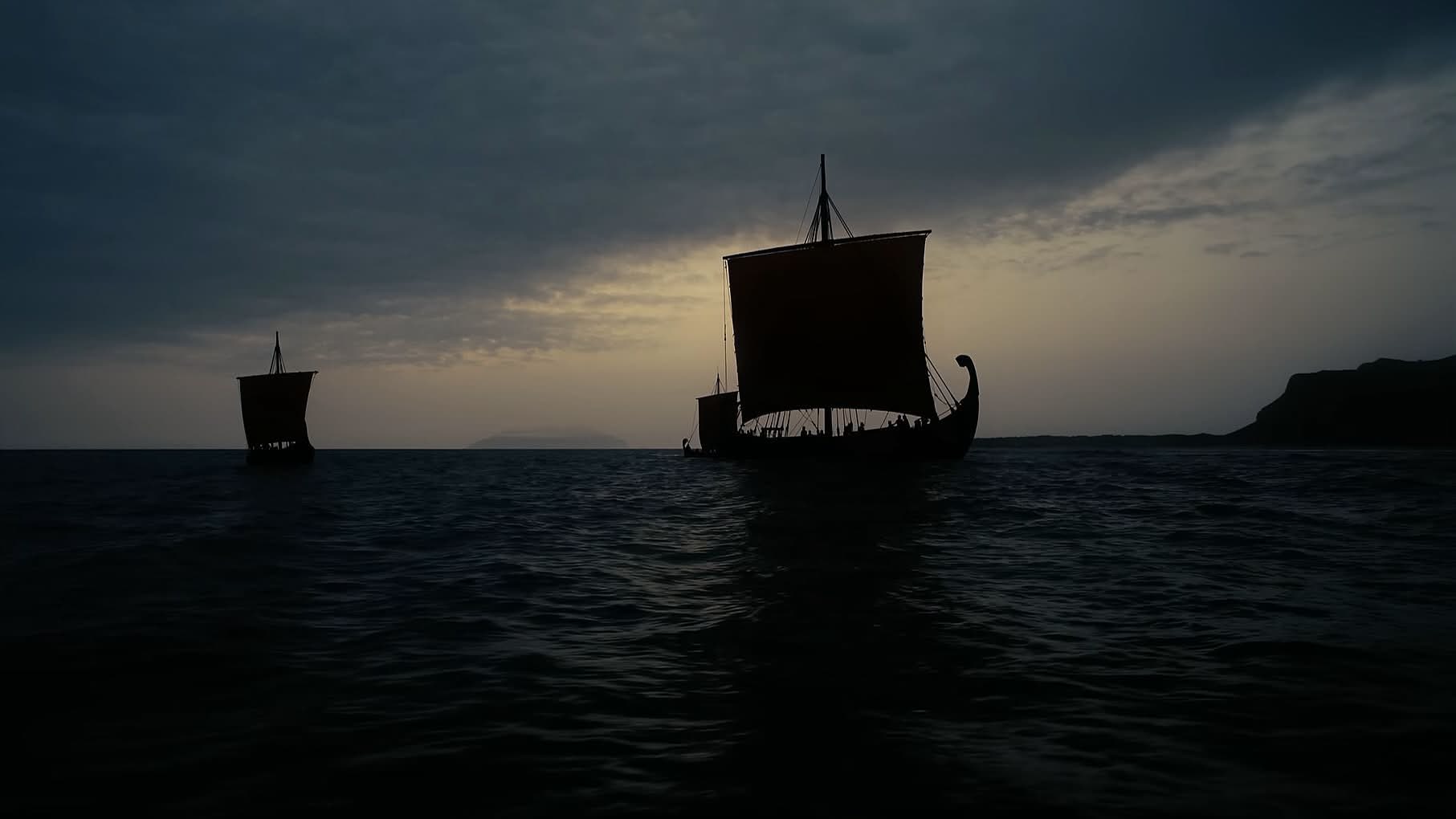
Nolan folds that betrayal into his vision of the Bronze Age collapse. The People from the Sea are spoken of as a terror gathering beyond the horizon, drawing pirates, deserters and the wreckage of failing kingdoms towards something larger and more dangerous. Odysseus appears to be sailing through their destruction until Penelope gives the fear its proper name. He is the People from the Sea. The catastrophe was never somewhere beyond him. It was Odysseus, his fleet and the legend growing in their wake, giving the marauders released by a collapsing world something to gather beneath. He left Troy as the hero who ended a war and became the story people told when warning that the world was getting worse.
In one vital sense, Nolan has made Oppenheimer again. A man uses his intelligence to create a device capable of ending an immediate conflict, receives the glory attached to its success and then discovers that the true consequence lies in what everyone now knows can be done. Oppenheimer cannot uninvent the bomb. Odysseus cannot return warfare to the moment before the Horse, when an offering could still be accepted without fear of the blade hidden inside it. The object was only part of the danger. The greater weapon was the idea.
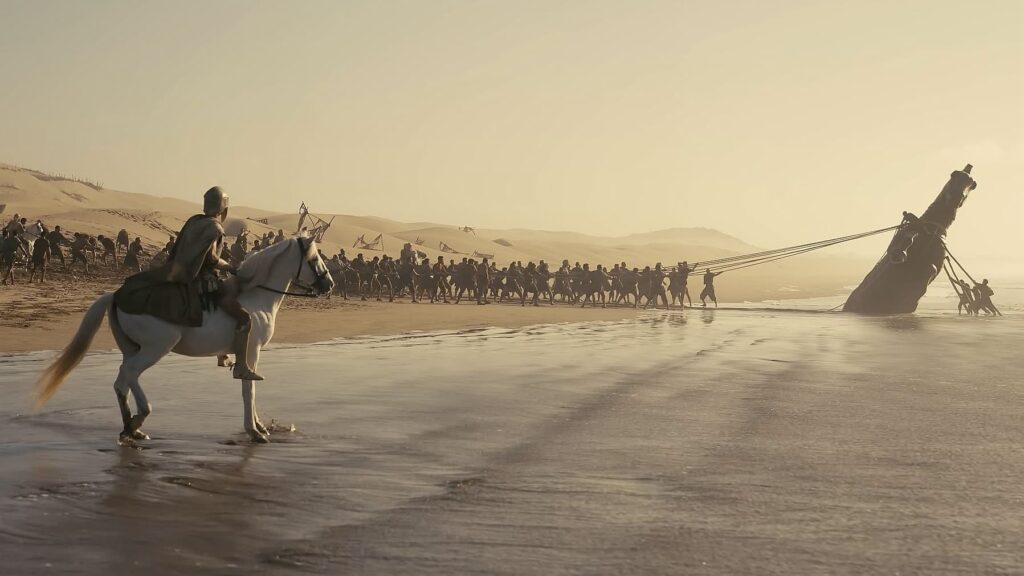
The Trojan Horse, left as a gift for Athena by the Greeks, proves to be Troy’s undoing
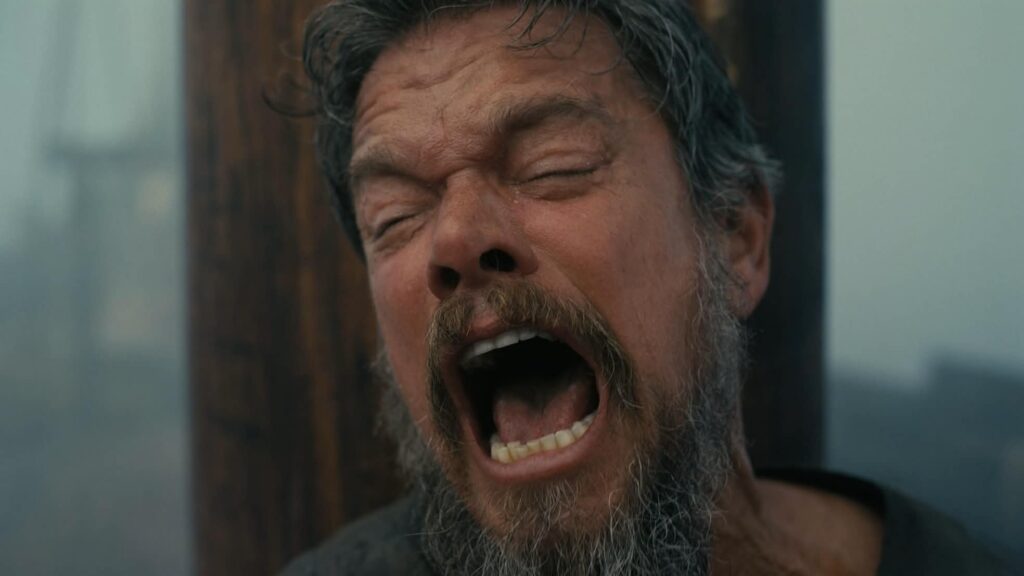
Matt Damon gives Odysseus enough authority for that ruin to matter. He can command men, deceive enemies and think his way through circumstances that should kill him, but each solution carries him further from the man who left Ithaca. The film takes time to gather its full force, then begins moving with the weight of consequence. Polyphemus receives guests by eating them. Circe looks upon what Odysseus’s men have become and turns them into pigs. The transformation is wild, while the Cyclops’s screams tear across the landscape. Gods and monsters possess the same material weight as timber, stone and sea, yet every wonder leads back to Troy. Odysseus is travelling through the world his victory helped make.
That world reaches Ithaca before he does. Penelope has spent his absence watching Zeus’s Law rot within her halls as the suitors consume Odysseus’s food, occupy his home and treat her patience as permission. Anne Hathaway is incredible, giving waiting the strain of active resistance, with anger beneath every calculation she is forced to make. Robert Pattinson is wonderfully slimy as Antinous, every smile carrying the assurance of a man convinced that time will eventually make trespass legitimate.
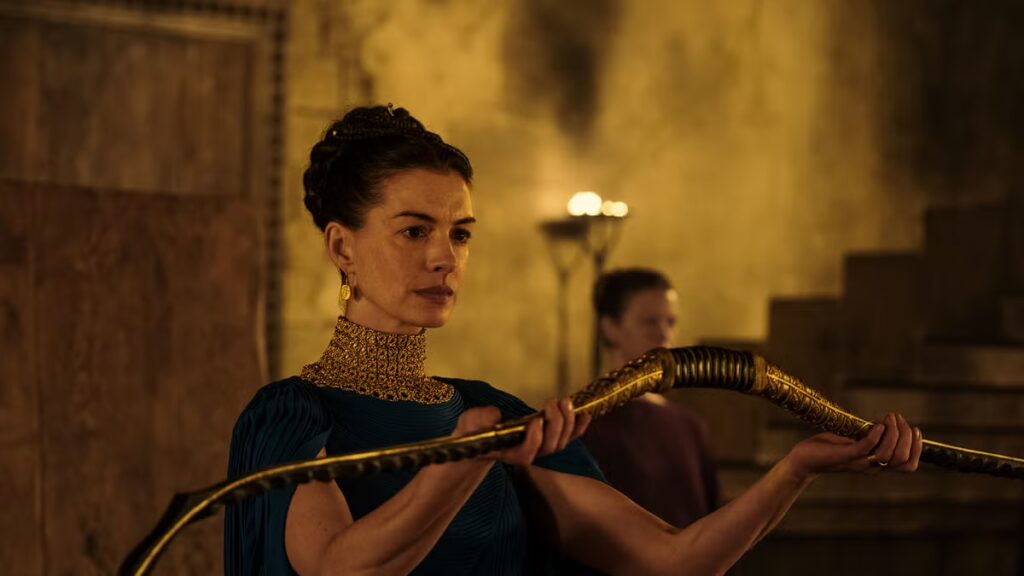
Anne Hathaway’s powerful performance as Penelope captures the steadfastness and cunning of Odysseus’s wife
Tom Holland may be giving the best performance of his career as Telemachus, a son raised beneath the weight of a father whose absence has grown larger than any memory of the man himself. He has spent his life defending Odysseus as a legend while watching the kingdom that legend abandoned being consumed from within. When the man finally returns, Telemachus must reconcile the hero he inherited with the stranger standing before him. Holland gives that uncertainty real hurt. Admiration, resentment and recognition gather gradually around the same face, and the homecoming becomes as much about a son deciding whether he can accept his father as it is about Odysseus reclaiming his family.
John Leguizamo is terrific as Eumaeus, bringing warmth to a film crowded with gods, kings and men trying to out-think one another. His importance lies in the simplicity of what he does. Odysseus returns disguised and Eumaeus welcomes him without knowing who stands at his door. Where greater men have corrupted Zeus’s Law, the swineherd keeps it alive because decency requires no reward. Leguizamo makes that goodness feel instinctive rather than saintly. Civilisation survives because someone, somewhere, still opens the door.
Argos makes the cost of the absence smaller still. The old dog has survived twenty years only to see Odysseus once more. He recognises his master, and in the moments surrounding his death Telemachus finally understands who stands before him. The whole voyage contracts into that moment. Argos sees Odysseus and dies. In a film filled with burning cities and civilisational collapse, the scene lands hardest because it reveals what homecoming really means: finding that something there still remembers who you were before the world changed you.
Odysseus returns as the avenger of the Law he shattered at Troy. The suitors believe they are entering a contest, only to discover that he has turned one more fight into a hunt. He defends civilisation with the same cold intelligence that first taught the world how to break it. As the bow is strung and released in perfect synchronisation with Ludwig Göransson’s score, the violated Law, the long absence and the promised reckoning narrow into one action. Göransson’s work is excellent throughout, though only a handful of cues become truly unforgettable. The music accompanying Odysseus’s departure from Calypso is one of them.
Home does not absolve Odysseus. He leaves the throne to Telemachus and sails west with Penelope, carrying responsibility for Troy beyond the homecoming he spent twenty years trying to reach. Ithaca gives him back the people he loves, but it cannot restore the world before the Horse. His homecoming ends. The reckoning does not.
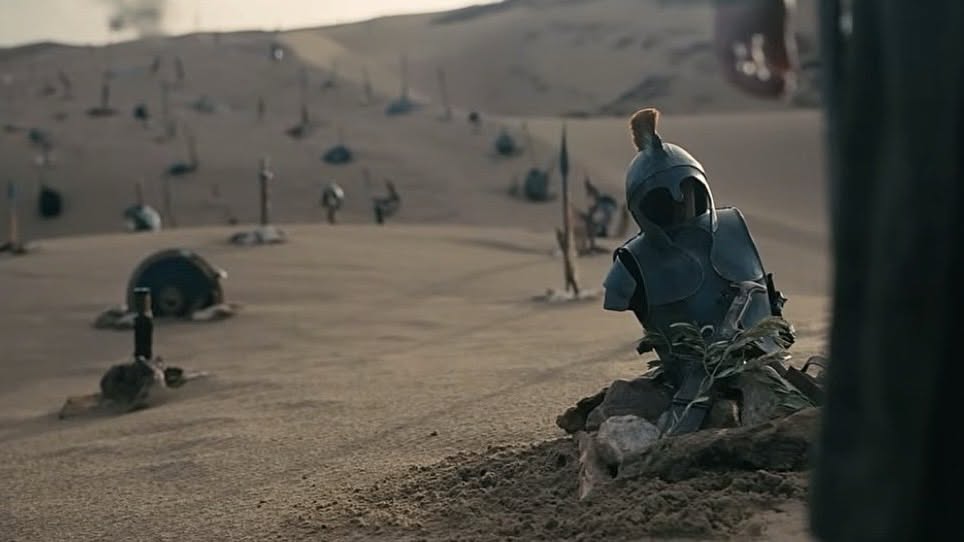
The armour of all the companions of Odysseus stands as a reminder to the cost of breaking Zeus’s Law
That makes The Odyssey a remarkable companion to Oppenheimer. The earlier film looks back at consequences that history has allowed people to forget, or at least to bury beneath the familiarity of the world those consequences created. The Odyssey looks forward towards consequences its characters already understand will be forgotten. Kingdoms will fall, writing will disappear, and the destruction of an age will survive as myth long after the warning inside it has faded. One film excavates a past whose consequences have become ordinary. The other watches the present become a past that later generations will know only in fragments.
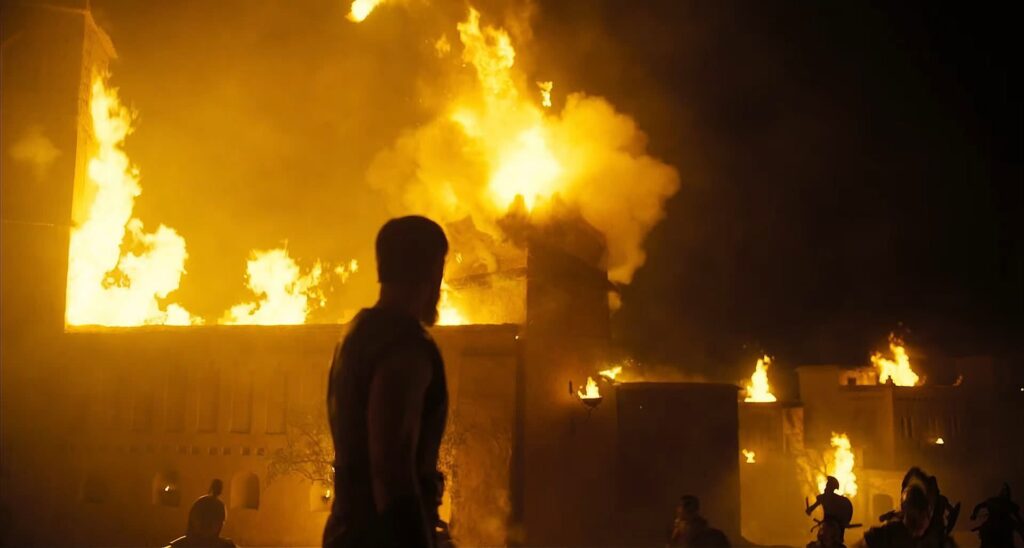
Odysseus overlooks the destruction he architected
Nolan does not drag an ancient story into the modern world. He reveals how little distance there ever was between them. Nearly three thousand years later, The Odyssey remains large enough to contain Oppenheimer, and old enough to make Oppenheimer feel like another echo.



No Comments