
The RoPendices: Sacred Spaces of the Second Age
Tolkien fans fell in love with the Special Feature Appendices included with the Extended Editions of The Lord of the Rings, gaining new appreciation and insight into the monumental task of bringing Middle-earth to life onscreen. In the same spirit, the RoPendices is an ongoing project by Fellowship of Fans that showcases behind-the-scenes stories and production details from The Rings of Power. Through this project, we aim to celebrate the care, creativity, and dedication of the writers, artists, and craftspeople who have poured their talents into this series. In doing so, we hope to invite others to rediscover the enduring appeal of J. R. R. Tolkien.
Sacred Spaces of the Second Age
The Rings of Power reveals the distinct identities of Middle-earth’s cultures through the sacred spaces they build, inhabit, and preserve. Númenor, Lindon, Khazad-dûm, and Eregion emerge as places where the memory and culture of Men, Elves, and Dwarves come under increasing strain.
Númenor and the Desecration of Memory
When we first sail into the harbor of Númenor in Season 1, the island appears to be a civilization at the height of its glory. The architecture is grander than anything seen before, and the booming score reflects this. A towering statue of Eärendil overlooks the harbor, a monument built by the Faithful Númenóreans during the height of Númenor’s power. Yet a closer look reveals a different reality. Statues and buildings show signs of age and neglect. What appears to be Númenor at its greatest instead reveals a civilization quietly drifting toward decline.
This tension between reverence and abandonment becomes clearer throughout the city’s sacred spaces.
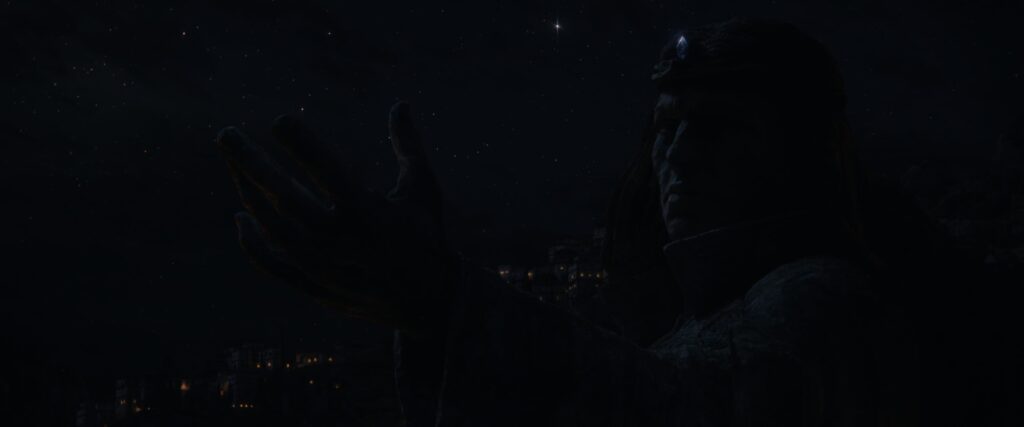
A statue of Eärendil overlooks the Númenórean harbor, his own star shining overhead
In the center of Númenor’s prison stands a statue of Uinen, a Maia of Ulmo, revered by Númenórean mariners for protection and calming the seas. The building itself was once a seminary, where alcoves now used as prison cells served as places of study and reflection. The transformation is striking. A figure once honored is now confined within a space repurposed for punishment, reflecting how reverence for the Valar has faded from Númenórean life.
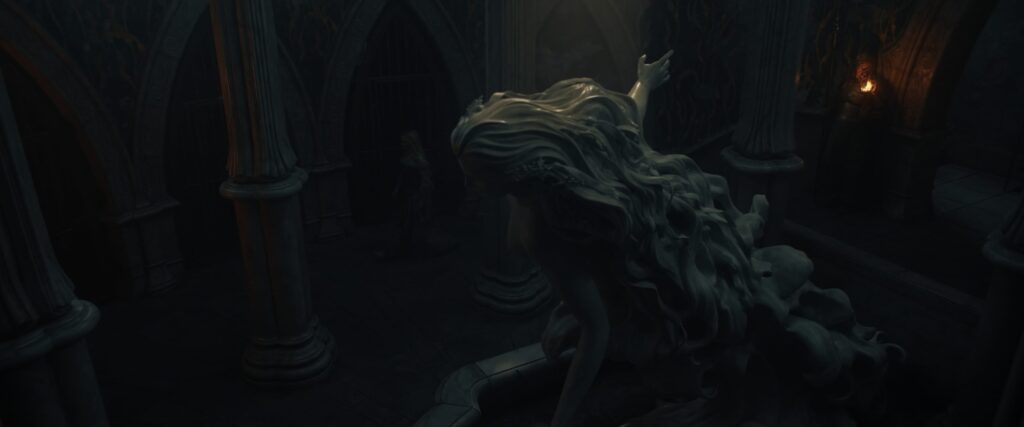
A statue of Uinen faces Sauron’s prison cell
A similar pattern appears in the quieter spaces preserved by the Faithful. Elendil stands before a shrine to Nienna, the Vala associated with mourning, pity, and patience. Tucked away in an alcove beyond the main thoroughfares of the city, the shrine looks to have been a private place of devotion where the Faithful once came to pray. Elendil speaks to Galadriel in Quenya, reminding her that Elf-friends still exist in Númenor, though now on the margins of society.
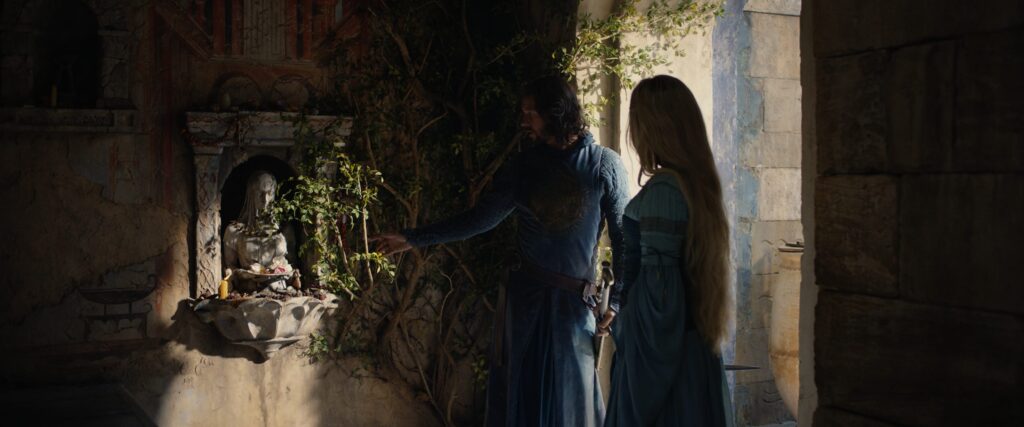
A shrine to Nienna, tucked away in a hidden alcove
Elendil later leads Galadriel to the Hall of Lore, where they stand in front of a tapestry depicting Elrond and his twin brother, Elros, the first king of Númenor. The image recalls the island’s origin as a gift by the Valar to the Men who fought alongside the Elves against Morgoth. Yet this symbol of shared history is hidden from public view. The Hall of Lore itself sits apart from the city of Armenelos, mirroring Númenor’s growing separation from its history and its gradual rejection of its ancient friendship with the Elves.
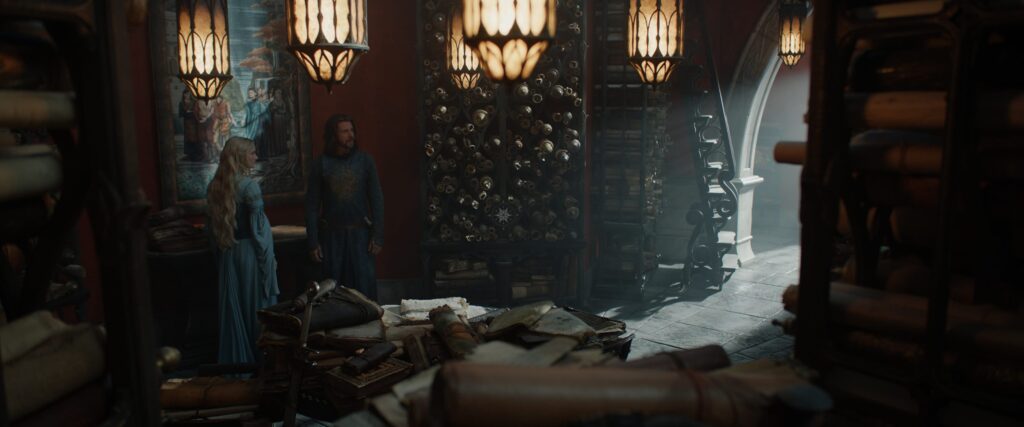
Galadriel and Elendil stand in front of a tapestry of Elrond and Elros in the Hall of Lore
The shrine of the Faithful in Season 2 provides one of the clearest examples of sacred space under threat. A statue of Nienna overlooks the chamber where the Faithful gather in quiet reverence. We first see the temple as the setting for the funeral of Tar-Palantir, where sunlight pours through stained glass behind Nienna’s figure as the king’s funeral vessel awaits in the water below. Later, the same space appears transformed. Night has fallen, and the Faithful move through darkness carrying candles, lighting them before a small figure of Nienna.
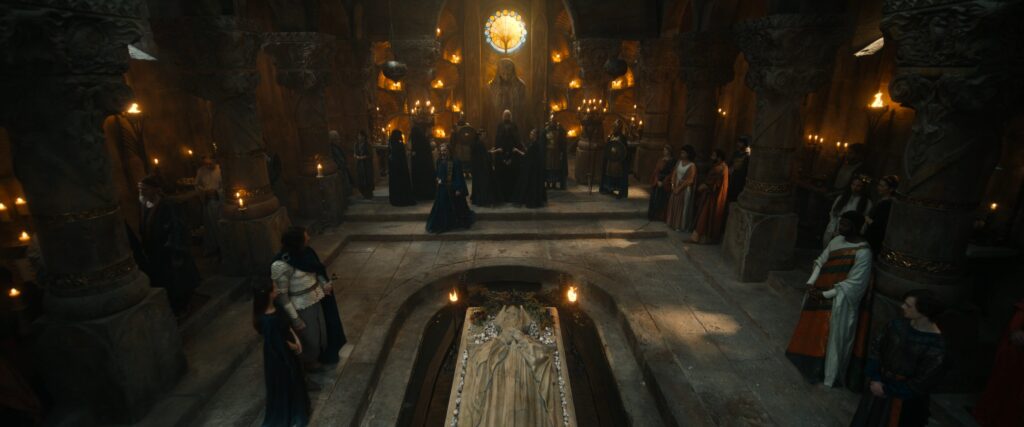
Númenóreans attend the funeral of Tar-Palantir in a Faithful gathering place
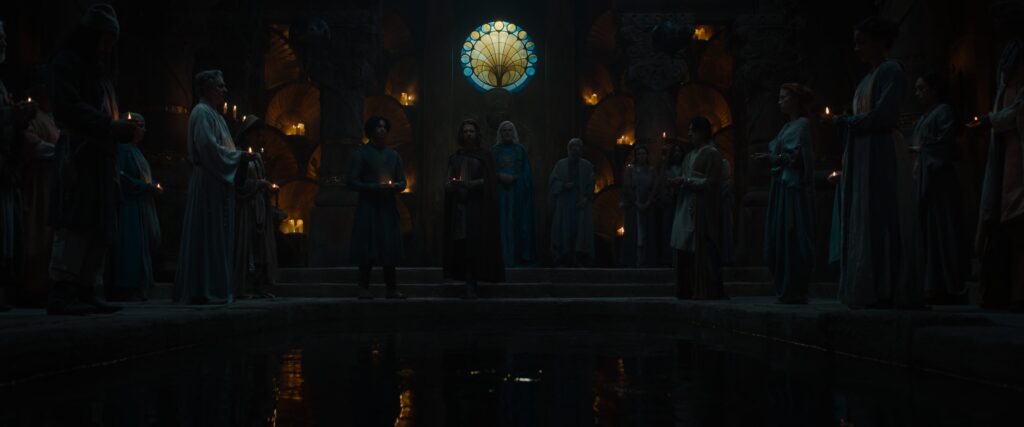
The same gathering place of the Faithful at night
It is here that the sanctity of the space is violently broken.
Kemen enters the temple as an intruder. He seizes the small figure and shatters it. Then, in an act of profound violation, he murders Valandil, washing the blood from his sword in the temple pool. A sacred space reserved for mourning, reverence, and remembrance becomes a site of desecration, reflecting the Kingsmen’s growing hostility toward both the Faithful and the Valar.
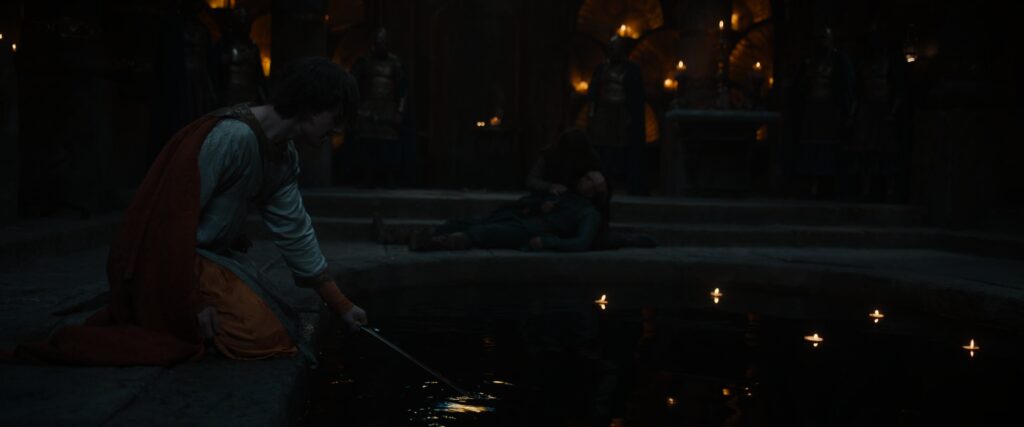
Kemen washes his sword of Valandil’s blood
Nimloth, the White Tree, stands within the palace courtyard as another symbol of Númenor’s sacred heritage. When its petals fall, Queen Míriel describes them as the “very tears of the Valar themselves.” Brought long ago from the Elvish island of Tol Eressëa, located near Valinor and forbidden to Men, the tree represents Númenor’s ancient connection to the West. However, Nimloth now grows amid aging stonework that reflects an earlier, more Elvish style of architecture, surrounded by the remnants of a past the island is increasingly abandoning.
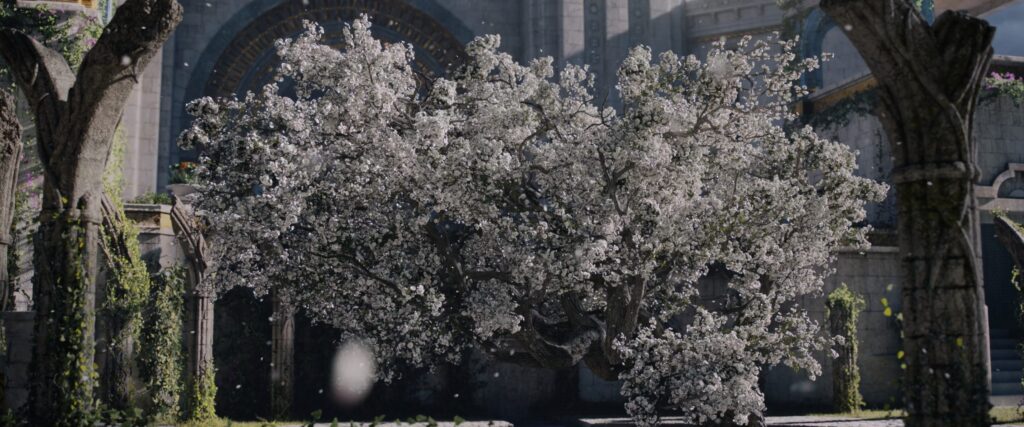
Nimloth sheds its petals among the ruins of aging, Elvish architecture
Even Númenor’s most important ceremonies reveal this erosion of sanctity. During Míriel’s coronation, the ritual meant to appoint the next ruler of Númenor is twice interrupted [Note that we know a monarch of Númenor is technically not crowned, but we don’t have a suitable analogue word in English; ‘sceptrification’ doesn’t really work… —Ed]. First, Eärien publicly denounces the queen and casts the palantír down the steps, accusing her of being a slave to the Elves, one of whom led them to ruin in Middle-earth. Or rather (and even worse), subservient to a mere object of Elvish origin. Then, as the crowd erupts, an Eagle of Manwë appears, traditionally understood as a sacred sign indicating the Valar’s approval of the new ruler.
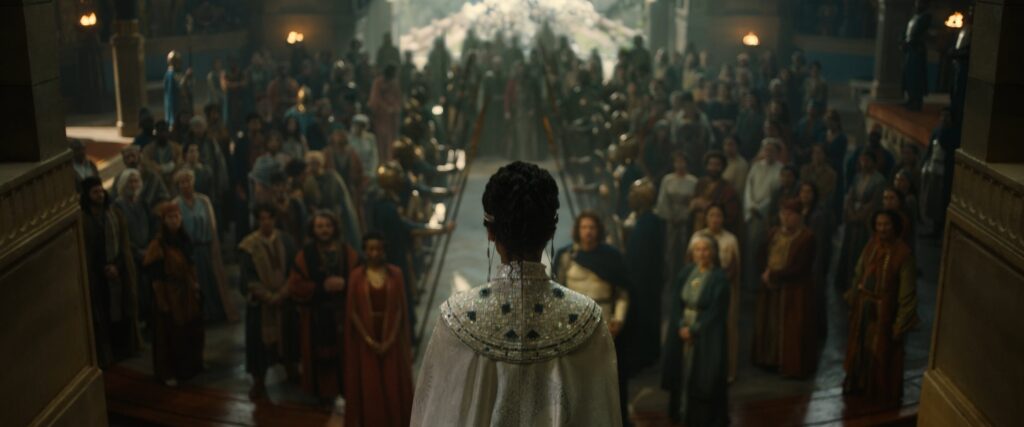
Míriel stands over a crowd at her coronation
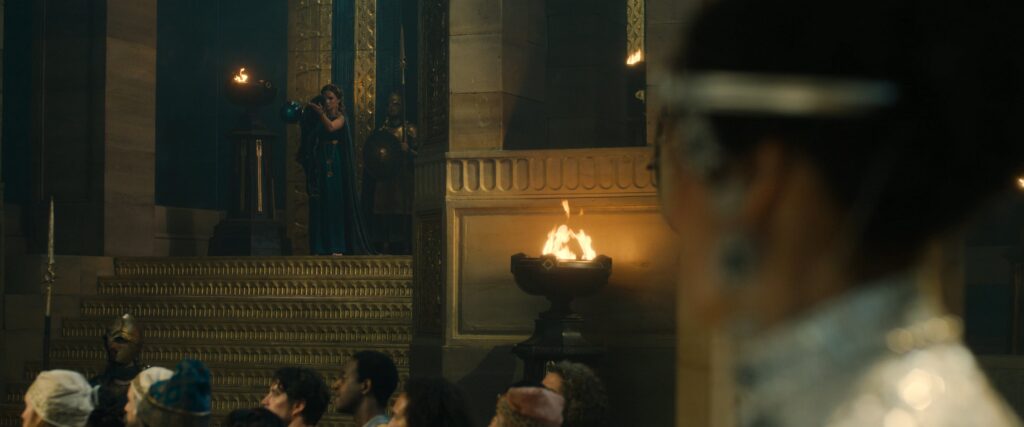
Eärien publicly denounces the queen and casts the palantír down the steps
Pharazôn seizes the moment. Rather than receiving the sign with humility, he approaches the Eagle and claims its approval for himself. The crowd begins chanting his name, transforming what should be a sacred moment into something resembling a political spectacle, almost a parody of ritual.
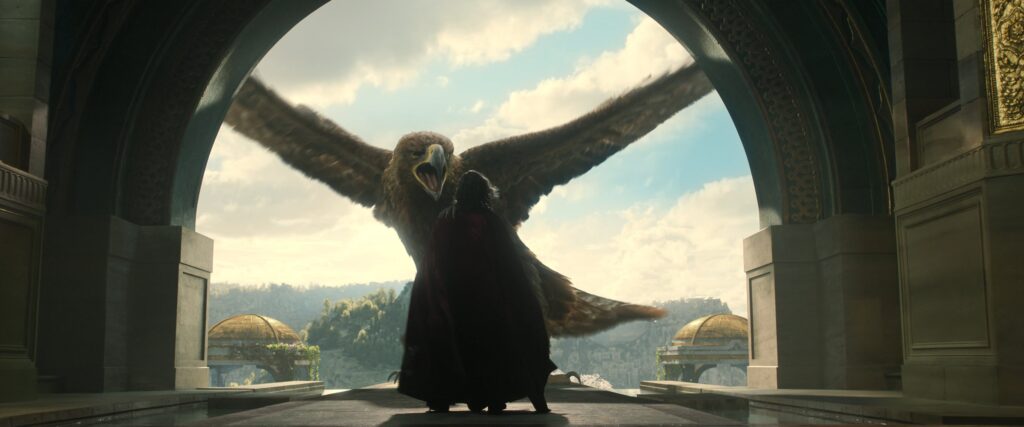
Pharazôn approaches the Eagle of Manwë, who is not having it
The island’s future is foreshadowed from the beginning. In Episode 4 of Season 1, Míriel dreams of a great wave consuming Númenor, a prescient vision of the eventual fate that awaits the island. As the story progresses, Nimloth continues to shed its petals during moments of crisis. When Míriel attempts to send Galadriel back to Middle-earth after denying her help in resisting Sauron, the tree weeps. In the Season 2 finale, petals again fall from Nimloth as the Kingsmen move against the Faithful.
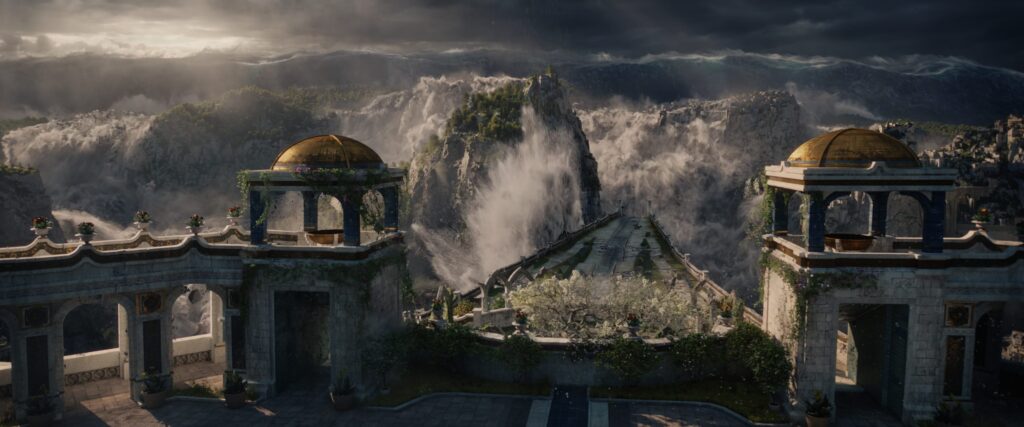
Míriel’s dream of a great wave consuming Númenor
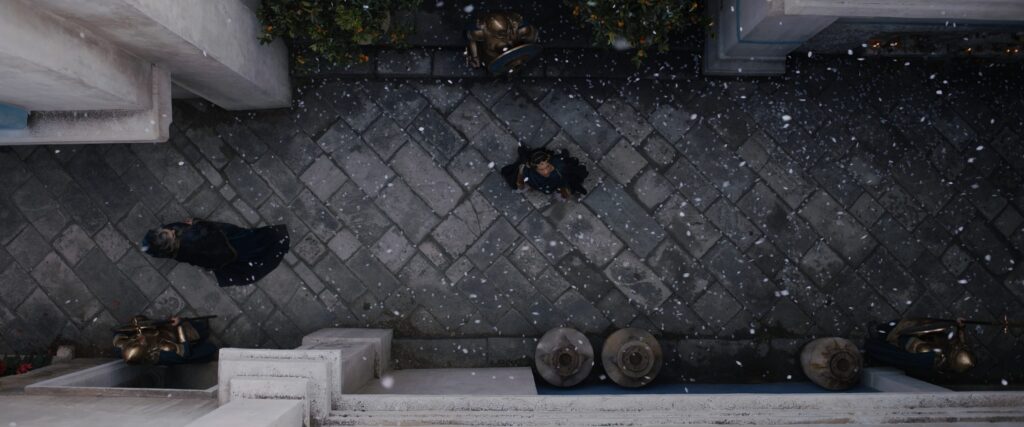
Nimloth sheds its petals
In the final image of the season, Nimloth stands illuminated by a fiery light, foreshadowing the fate that ultimately awaits it. The tree that once symbolized Númenor’s sacred connection to the Valar will become the first sacrifice offered in Sauron’s temple to Morgoth.
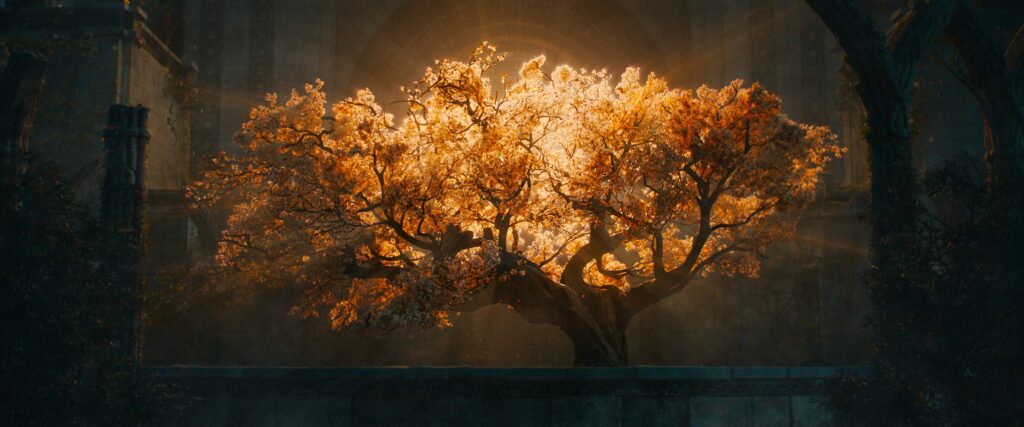
Nimloth foreshadows its own fate
Lindon and the Preservation of Memory
While Númenor reveals sacred spaces under strain, Lindon presents sacredness sustained through remembrance, where reverence is expressed not through grand architecture or formal worship, but through continuity. Lindon holds memory, woven seamlessly into the fabric of its landscape.
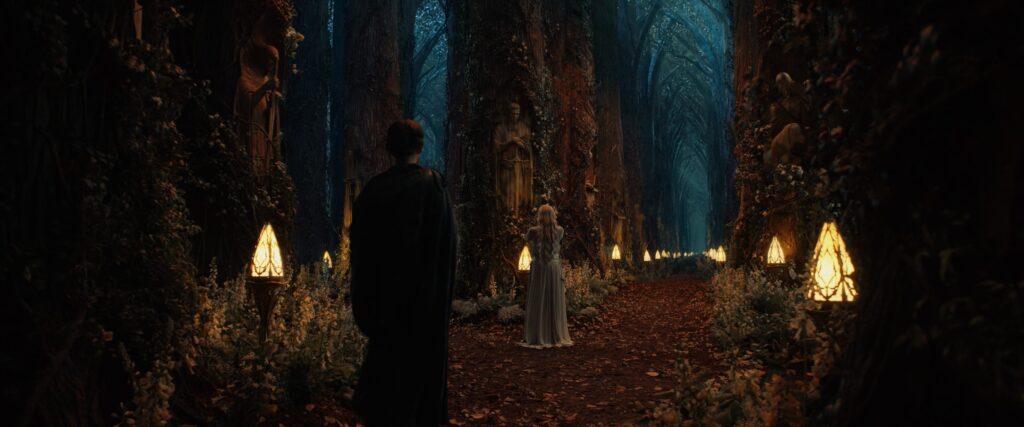
Galadriel stands under the figure of Finrod in the Grove of Remembrance
In Season 1, a grove of trees forms the images of Turgon, Fingolfin, Fingon, Finrod, and Lúthien, heroes of the First Age whose names carry histories of leadership, sacrifice, and defiance. These figures stand as foundational ancestors of the Elven people, grounding Lindon in a continuum of memory.
The decision to artistically shape trees carries symbolic resonance. Instead of cold stone, memory is preserved in wood that still grows. The grove reflects an intertwining of nature and history, suggesting that remembrance is nurtured and sustained over time. Sacredness is embedded within growth and legacy, held in forms that endure.
When Galadriel stands before the image of Finrod, this gesture extends beyond tribute. She approaches the grove during a period of inner conflict, seeking resolution amidst uncertainty. The tree bearing the image of Finrod becomes a place of return, where connection to her brother remains tangible. The grove functions as more than a memorial; it offers refuge and steadiness. This sacred space allows the Elves to draw strength from those who shaped them, sustaining relationships across absence, even when their loved ones have fallen or departed from Middle-earth.
Season 2 extends this sacredness through music. As the Elves prepare to depart Middle-earth, High King Gil-galad sings in Quenya. This lament weaves into the heart of their gathering, echoing fading leaves and the approaching end of their time in these lands. The song is addressed to the Elven-folk, the Eldalië, and speaks of loss and transition. Within Tolkien’s Legendarium, the world itself is brought into being through music. Therefore, song is tied to creation and meaning at the deepest level of Elven history and tradition. Gil-galad’s singing becomes a ritual that binds the Elves together in a moment of uncertainty and impending farewell, giving voice to their shared grief and hope as they face departure.
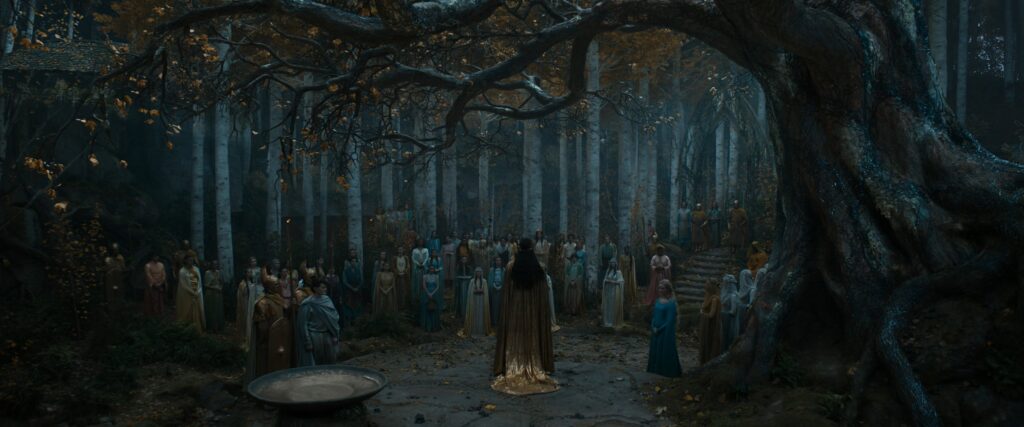
Gil-galad sings a lament to the Eldalië as they prepare to leave Middle-earth
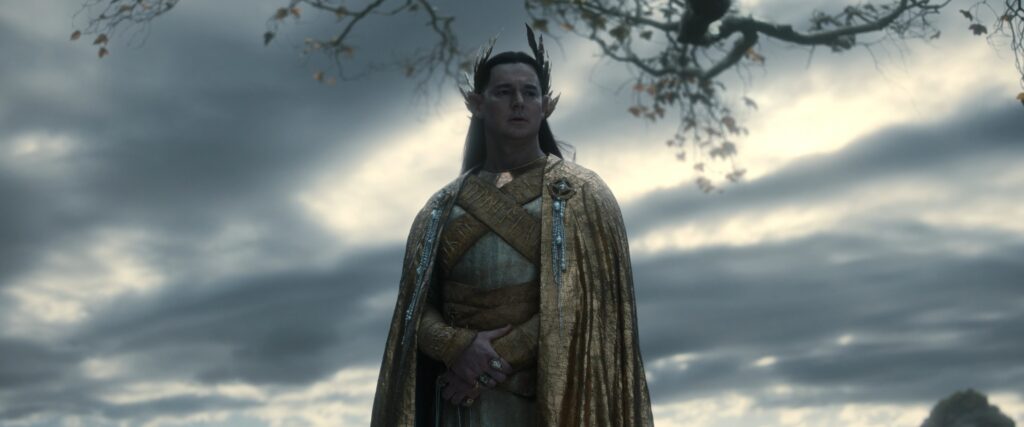
Gil-galad looks very cool here
Lindon’s sacred spaces are rooted in preservation, beauty, and shared history. Memory is encountered, tended, and returned to. In a world already shifting towards change, Lindon stands as a place where connection persists.
Khazad-dûm and the Fragility of Memory
While Lindon endures as a place where sacredness is carefully preserved, Khazad-dûm appears at first as something even more enduring: a sacred space rooted in stone itself. Yet beneath its strength lies a growing fragility, one that the evil of Sauron and his machinations will eventually expose.
Season 1 opens with Khazad-dûm at the height of its glory. The mountain where the Dwarves make their home is sacred, and they are its custodians. Their relationship to the mountain is expressed through practices such as stone singing, where the Dwarves resonate their voices through the rock to determine where to dig without harming the mountain’s integrity. Even Durin III initially refuses to mine mithril too deeply, wary of disturbing the equilibrium and sanctity of the place.
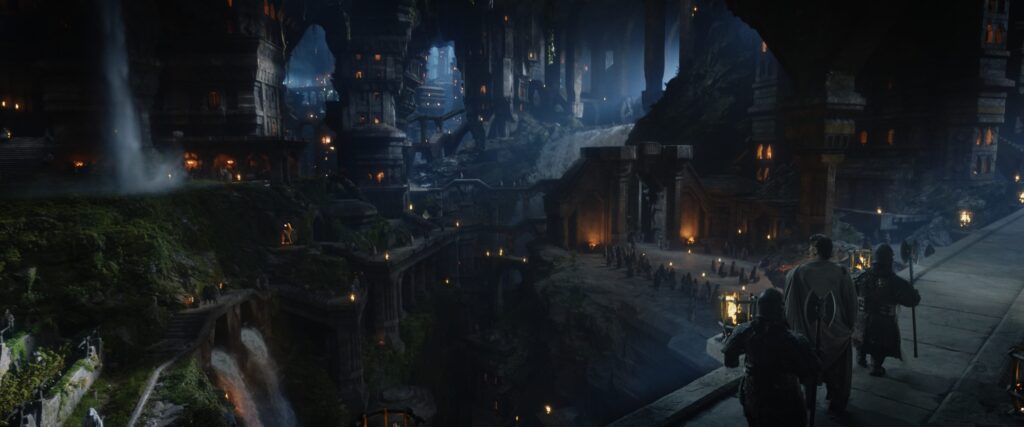
Elrond enters a Khazad-dûm at the height of its glory
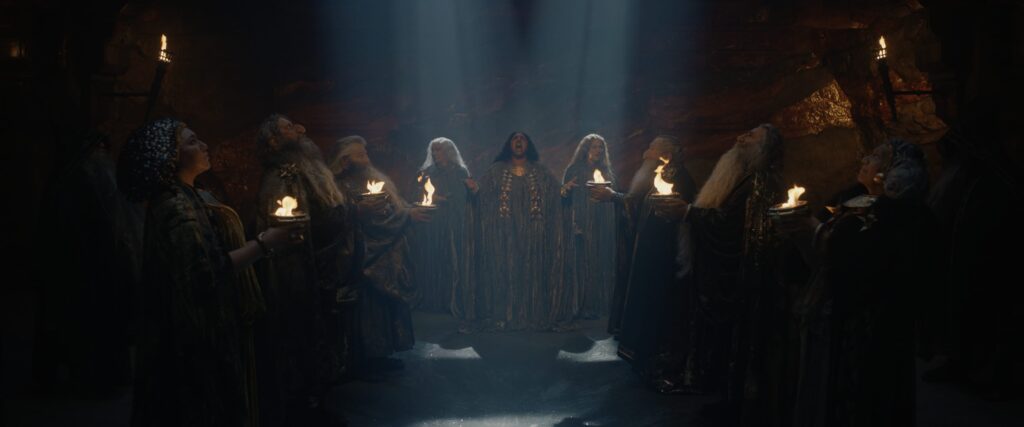
Disa leads the ritual act of stone-singing
Yet this sacred balance proves more fragile than it appears.
While Khazad-dûm has not yet fallen, there is a sense of uncertainty, as if on a knife’s edge. The eruption of Mount Doom sends tremors through the depths, casting darkness over the kingdom and disturbing the Dwarves’ ancient connection to the mountain. When Durin III receives one of the Rings of Power, that delicate balance begins to shift. Ambition and pride slowly eclipse the reverence that once defined the Dwarves’ stewardship.
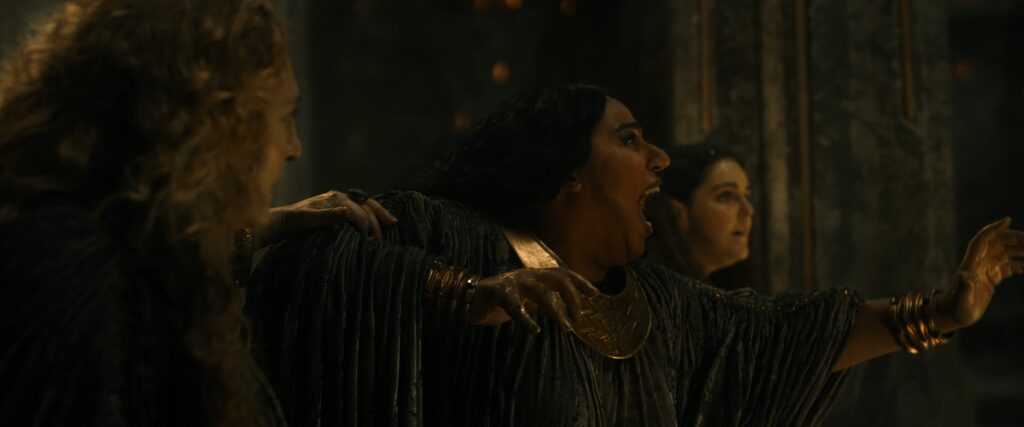
Disa and the stone-singers are horrified to realize they can no longer resonate with the mountain
Durin III begins mining mithril with increasing greed, hoarding the treasure and demanding tribute from the other Dwarven clans. His son recognizes the danger immediately. “It is not our mountain, Father. You taught me that,” Durin IV pleads. But the Ring twists King Durin III’s perception of the sacred space he once protected. “With these Rings, it could be,” he replies, asserting mastery over the mountain rather than stewardship.
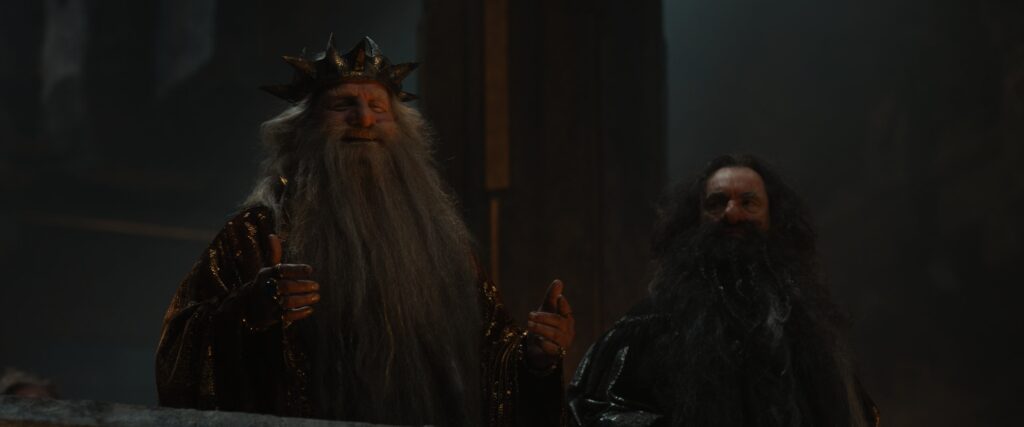
Durin III proclaims mastery over the mountain
In doing so, he violates the very sanctity he once sought to preserve. The relentless mining awakens the Balrog that had long slept beneath the mountain, a force that remained dormant so long as the mountain’s balance was respected. Though Durin III eventually removes the Ring and recovers, the damage has already been done. His actions do not destroy Khazad-dûm in that moment, but they set in motion the loss that will eventually follow: the fall of the kingdom and the memory of what was once one of the greatest realms of the Dwarves.
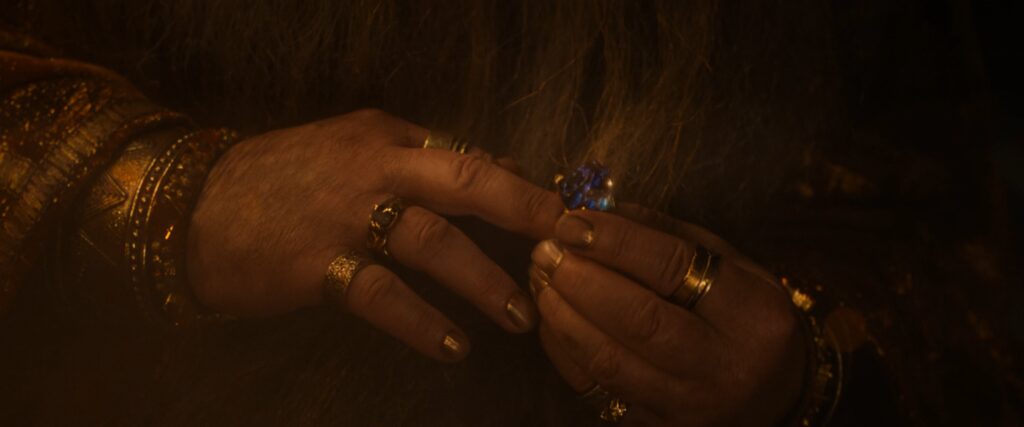
Finally realizing his folly, Durin III takes off his ring
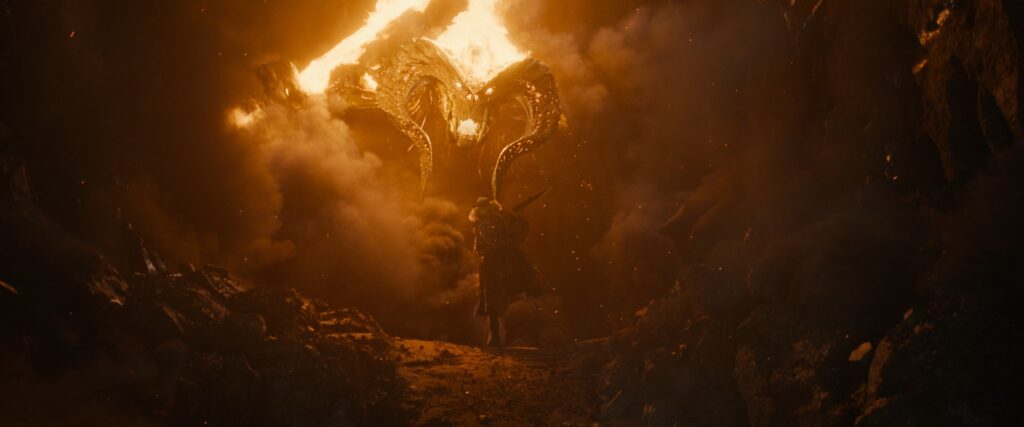
Durin III sacrifices himself to keep the Balrog from destroying Khazad-dûm
Eregion and the Catastrophic Loss of Memory
If Lindon preserves memory, Númenor strains against it, and Khazad-dûm balances on the edge, Eregion represents sacred space undone from within.
While Lindon’s sacredness rests in remembrance and continuity, Eregion’s lies in craft and knowledge. Celebrimbor’s forge stands at its heart, not merely as a workshop, but as a site where memory is preserved through skill and invention. The city becomes a repository of scrolls, lore, and accumulated history in an intentional effort to resist fading. Here, sanctity is embedded in the act of creation.
That is precisely why its fall is so catastrophic.
When Eregion falls, the devastation is both architectural and archival. Towers collapse under siege. Stone is shattered. Scrolls and records are consumed by flame. The forge that once rang with creation is overtaken by smoke and ruin. What is destroyed is not only a city’s structure, but its accumulated memory. Knowledge is scattered. Craft is interrupted. Cultural continuity is fractured.
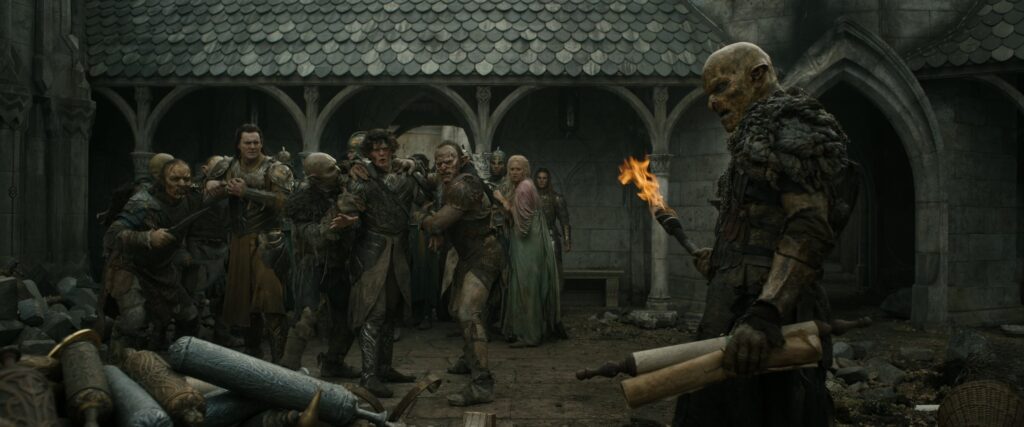
Elrond pleads for the Uruk to spare the records of Celebrimbor’s life’s work housed in Ost-in-Edhil
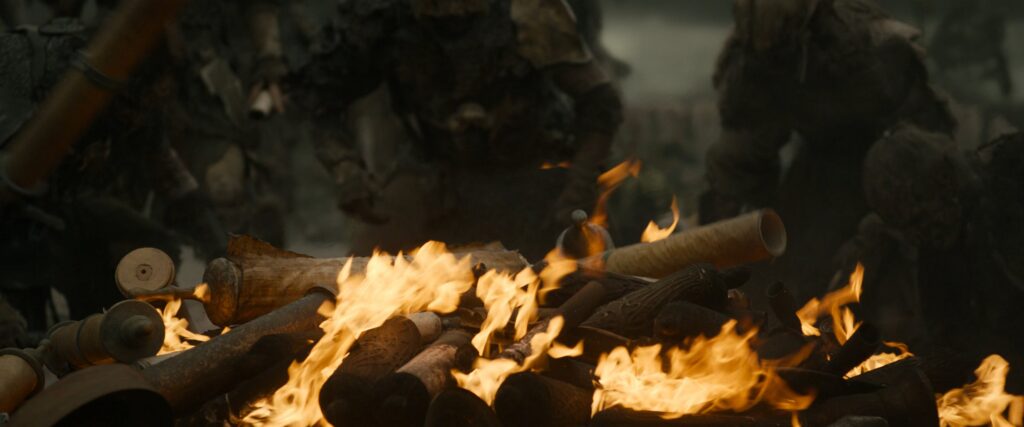
To no avail! The Uruk burn everything, and Eregion falls
This destruction carries an unmistakable echo of the Fall of Gondolin, another hidden Elven refuge brought down in fire. Once again, towers fall. Once again, a sanctuary built to preserve culture proves vulnerable. This repetition of history suggests that sacred space in Middle-earth is never immune to catastrophe, even when raised in defiance of darkness.
Elrond’s devastation gives the fall its weight. He stands amidst ruin not only as a witness, but as one who believed in what Eregion represented. The city was more than stone and skill. It was an answer to fading, a promise that beauty and knowledge could endure. To see it undone is to feel that promise falter. His grief is not only for what has been destroyed, but for what might never be fully recovered.
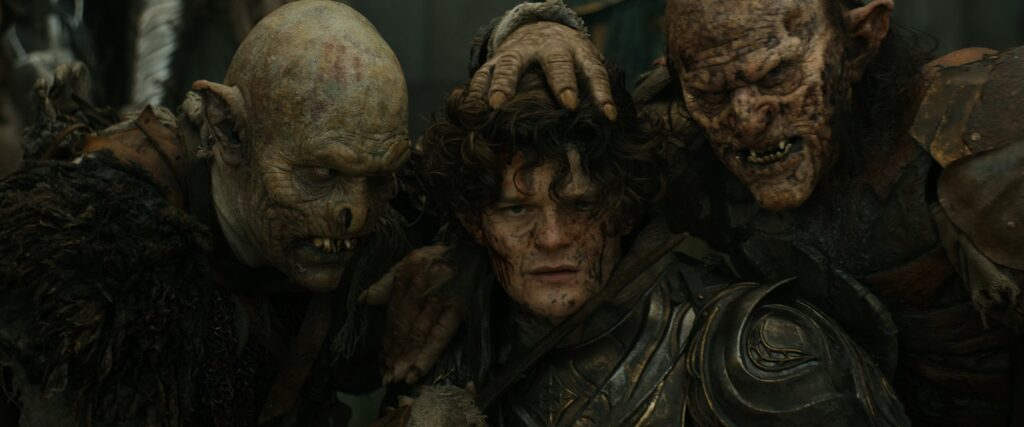
Elrond’s thousand-yard stare indicates his commitment to re-establishing a hall of lore
Yet loss does not end in ruin. Even in destruction, the legacy of Eregion does not vanish. What has been shattered cannot simply be restored. Instead, something new must be built, shaped by the knowledge of what has already been lost. Preservation will endure, but no longer with the innocence it once carried.
Rivendell and the Restoration of Memory
At this point in the series, Númenor stands increasingly divided. The Faithful remain committed to honoring the past, while the Kingsmen present themselves as focused on the island’s future, they are increasingly concerned with severing Númenor from its history. Lindon continues to preserve memory, though the strain upon it is becoming visible. Khazad-dûm has narrowly escaped catastrophe, yet its former glory will never fully return. And with the annihilation of Eregion, it would seem as if all hope is lost.
But destruction does not extinguish memory. It deepens its urgency.
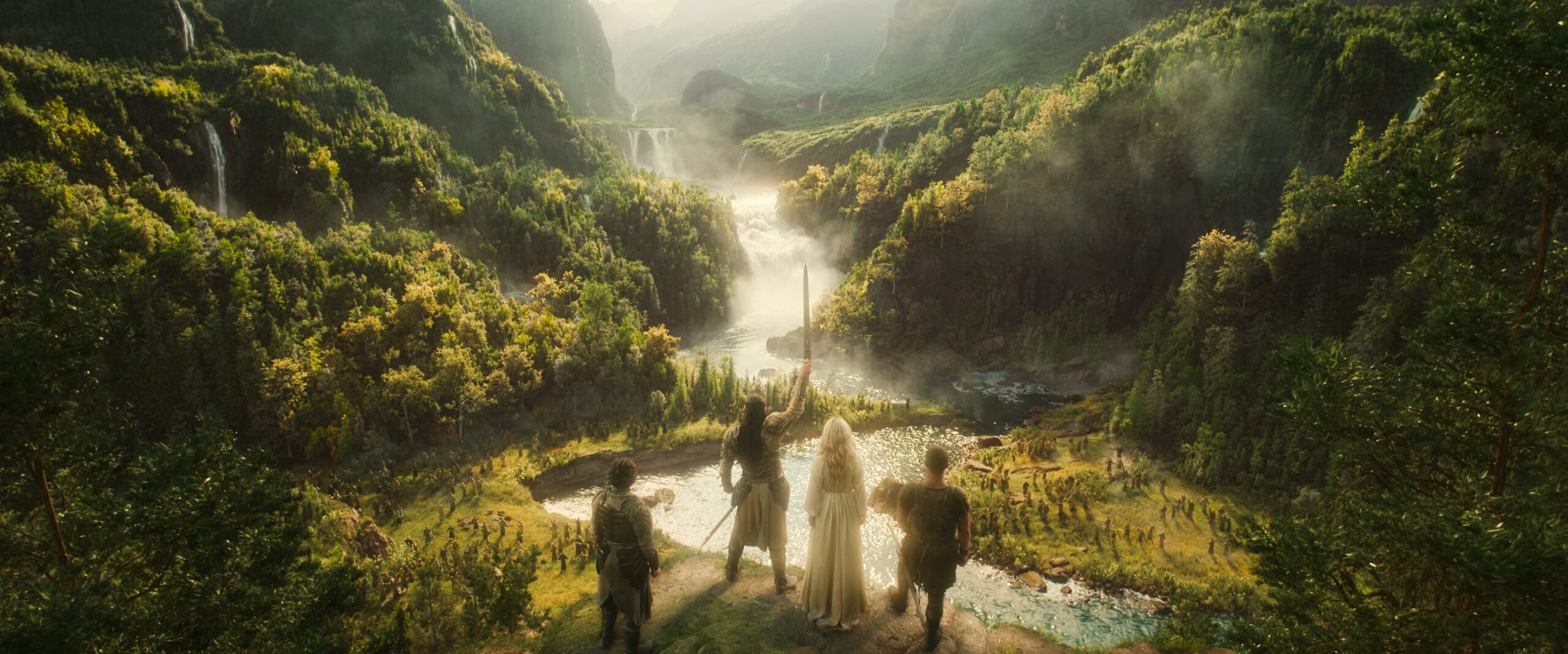
Season 2 ends with our heroes standing defiant against Sauron, overlooking the beautiful valley of Imladris. Here, Elrond will establish Rivendell, the last homely house East of the Sea, a refuge that will endure until the end of the Third Age. In Rivendell, memory will be safeguarded and carried forward. The valley will preserve not only the history of the Elves, but that of Men as well.
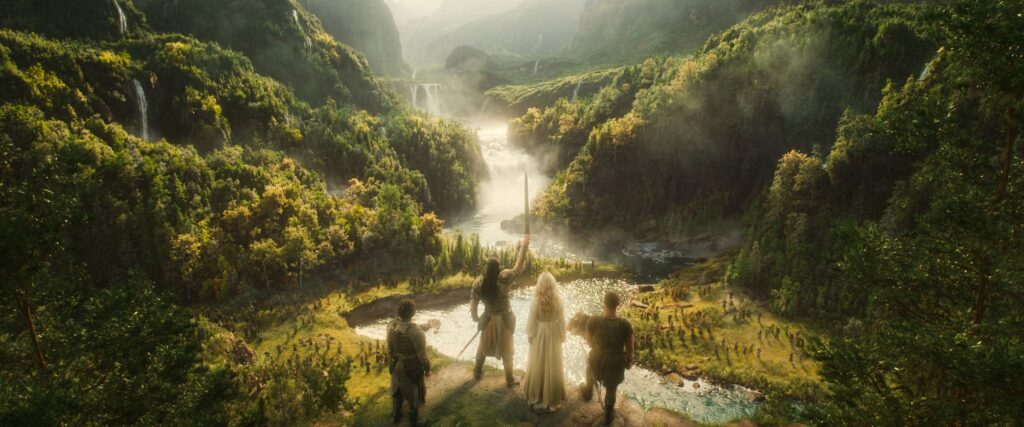
“Wow! Imladris is so pretty! Can’t wait to fill it with books!” – Elrond, probably
After the Downfall of Númenor, Rivendell will remain among the few places where its legacy survives. It will house surviving relics and records of Númenórean history, including safeguarding the shards of Elendil’s sword, Narsil, until they are reforged for Aragorn in the Third Age. Rivendell will also shelter the heirs of Isildur, descendants of Elrond’s brother, Elros, protecting the line that will one day reclaim the throne of Gondor.
Across Middle-earth, sacred spaces reveal how cultures remember, preserve, or abandon their past. Some fall into ruin, others endure. Yet even in the wake of destruction, memory persists, carried forward by those who choose to safeguard it.


No Comments