
Kellie Rice on ‘Middle-earth From Script to Screen’
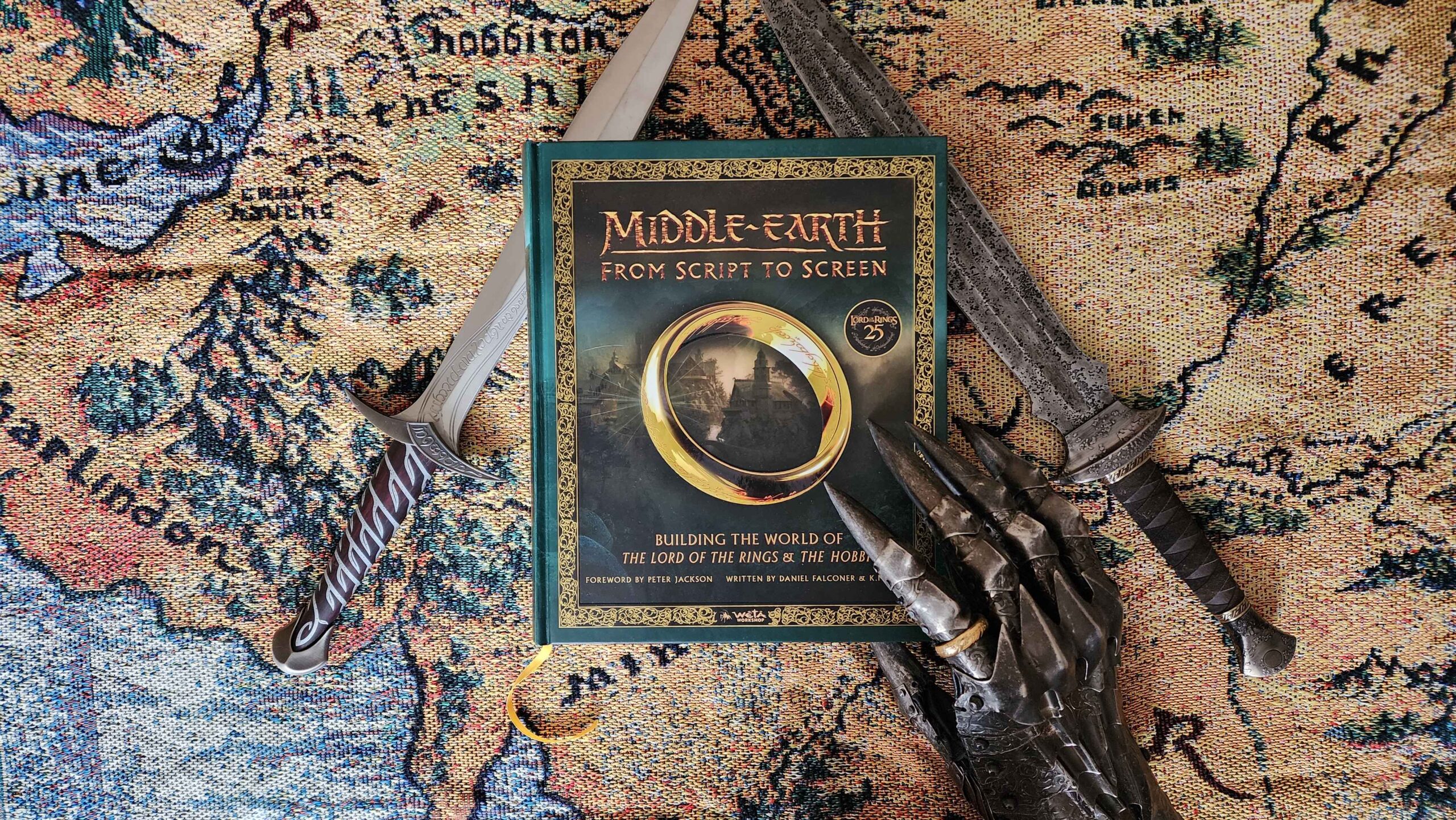
Little did Kellie “K.M.” Rice know that when she and her sister recorded a reaction video to the trailer for The Hobbit: The Desolation of Smaug in June 2013, it would lead to her eventually working at Wētā Workshop, co-authoring a book on the behind-the-scenes for all six of Peter Jackson’s Middle-earth films with designer Daniel Falconer. That hefty book, Middle-earth from Script to Screen, released in 2017, was a labour of love, to give a peek at the efforts and artistry that went into making those films. It has been out of print, and fetching rather steep prices on the second-hand market. Thanks to the event of the 25th anniversary of the release of the first film, Fellowship of the Ring, the book is being re-issued. Dee (aka ‘Chiv’) from Fellowship of Fans was able to sit down and have a lengthy chat with Kellie about not just the book, but wide ranging over her appreciation of Tolkien, her interests more broadly and being an author generally—as K.M. Rice she has published ten books.
Being known to the production already because of the ‘Hobbitception’ sequence of viral videos, and her volunteering with TheOneRing.net, Kellie originally went to Wētā as an intern in early 2015 due to her experience with World War I history. At that time the Workshop was working on things related to “Peter Jackson’s World War I museum” around the time of the centenary of the ANZAC Gallipoli landings. Yes, in addition to being a massive film nerd, Peter Jackson just happens to have a collection of WWI artifacts that is slightly mind-boggling.
Then when Daniel Falconer was starting to work on From Script to Screen, it was realised that the amount of work would need to be shared, given the size of it. Needing someone who is a fan of the films and Tolkien that was a good fit for the project was the perfect opening door for Kellie to come on board. She’d previously worked with fellow TheOneRing.net writers to contribute to Middle-earth Madness, published in 2014.
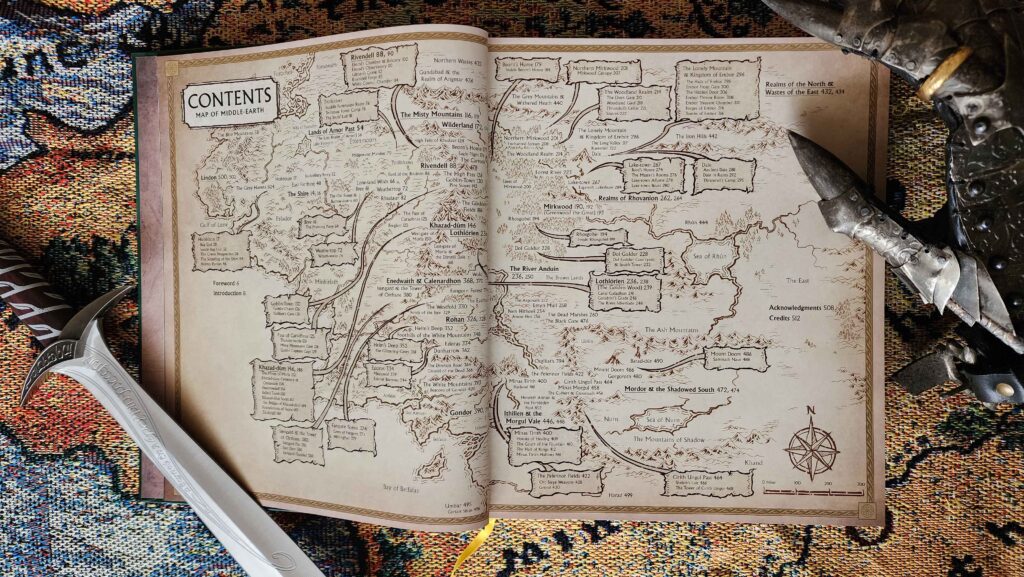
Ultimately, while Kellie was credited inside the book as being a co-author, the first edition didn’t include her name on the cover, a fact which is now rectified in this re-release. There are some small edits and fixes (apparently there was a place name in the first edition which was wrong; let us know if you know what this was!) but otherwise the book is as it was first time around: an incredibly rich exploration of material and stories behind the production. This involved, in part, trawling all the much-beloved behind-the-scenes material that was recorded, the ‘Appendices’ on the DVD release of the films. So one could view the book as a version of those in hard-copy that can sit on your coffee table. Though to be fair, the film Appendices must contain much, much more and nothing can substitute.
Famously, the Hobbit films had a rocky pre-production, with the initial phase under Guillermo del Toro before he had to pull out and Jackson took over. Kellie remarked “Yes, I may or may not have even seen things that were ultimately not relevant to the book [From Script to Screen], but were relevant to Guillermo del Toro’s vision of the Hobbit back when he was working on it.” While this material definitely doesn’t make it into Falconer and Rice’s book, Kellie gives a carefully-worded comparison to how fans reacting to Jackson’s production might have felt about del Toro’s take (you’ll have to watch the video to find out!).
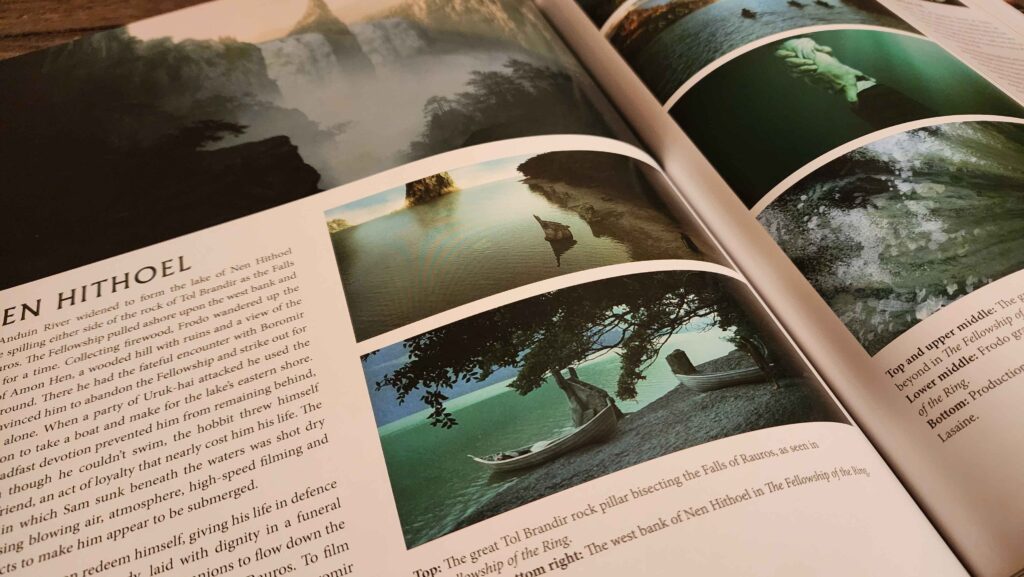
Because of her background of study leading up to a 2010 Master of Fine Arts in writing (fiction and screenwriting), Kellie was able to bring her experience learning Old English to bear when writing material about Rohan. Tolkien’s pseudotranslation fiction (that he was “merely translating” a book written in Westron) means that the language of Rohan, and names of people there, are represented using Old English in the published The Lord of the Rings. So, the book has some explainers on this, as Kellie said, “I know that was unique to me and that was something really cool that I was able to bring to the book”
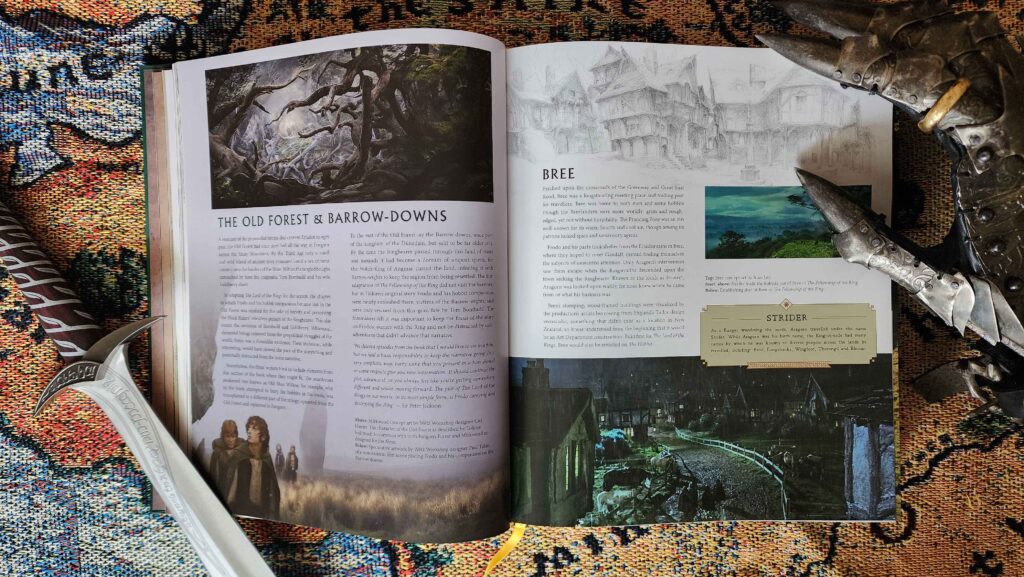
One exclusive thing Kellie and Dee both mentioned is that the book even contains things that people might not have seen before, specifically “speculative concept art for the Barrow-downs”. This location was ultimately cut from Fellowship of the Ring, it would have been between the Bucklebury Ferry scene, and arriving at Bree. [Though finally seen on the screen, millennia earlier in the timeline, in Rings of Power Season 2! —Ed.] Like the adjoining Tom Bombadil plot, it didn’t fit the adaptation to screen, but very cool to get a glimpse of at least the concept art in the film continuity.
The conversation ranged this way and that, discussing examples of Kellie’s experiences in writing her own novels; how Tolkien was shaped by his experiences; how his magnum opus just wouldn’t have been accepted by a publisher today; reflections on her own journey from an “anonymous girl online reading and writing Lord of the Rings fanfic” to professional opportunities in the space of Middle-earth.
In closing, I’ll leave you with some sage words of advice from Kellie:
I feel like the lesson there to any suits watching this is let the artists art, like let them do their thing. Like if you want to make something as iconic that becomes such a cinematic classic as the original trilogy, you have to trust your artists.
You can watch the full hour and 45 minute interview below.
Check out the channel Happy Hobbit for a back catalogue of videos by Kellie (as ‘Kili’) and her sister (as ‘Fili’), as well as her continuing work creating videos on various hobbity themes.
Quotes in this article have been lightly edited for clarity.


No Comments