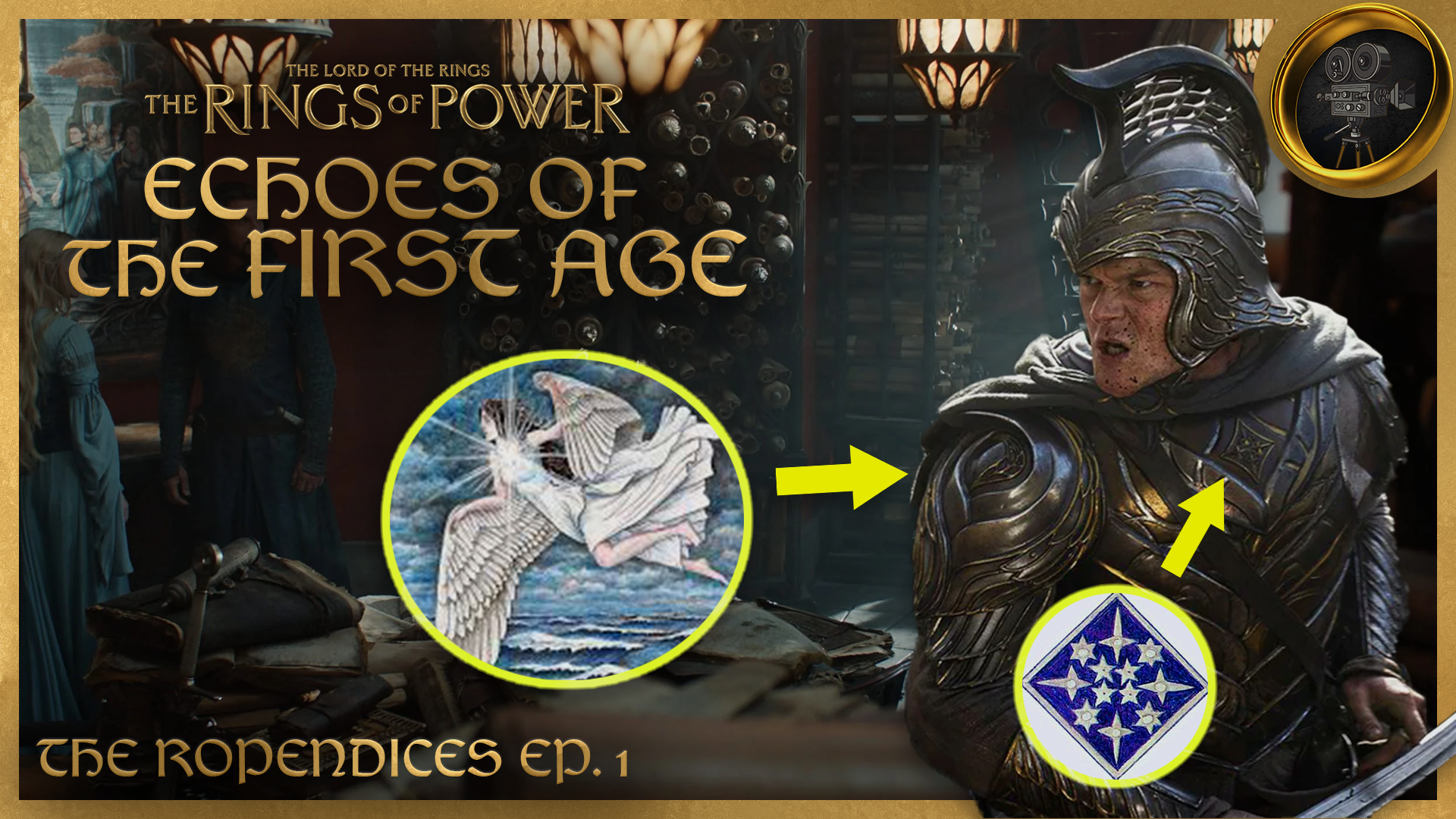
The RoPendices: Echoes of the First Age
Co-authors: Jessica and Sabrina
Tolkien fans fell in love with the Special Feature Appendices included with the Extended Editions of The Lord of the Rings, gaining new appreciation and insight into the monumental task of bringing Middle-earth to life onscreen. In the same spirit, the RoPendices is an ongoing project by Fellowship of Fans that showcases behind-the-scenes stories and production details from The Rings of Power. Through this project, we aim to celebrate the care, creativity, and dedication of the writers, artists, and craftspeople who have poured their talents into this series. In doing so, we hope to invite others to rediscover the enduring appeal of J.R.R. Tolkien.
Echoes of the First Age
One of the subtle ways The Rings of Power establishes continuity between past and present is through the careful preservation of objects. Rather than relying solely on dialogue or exposition, relics of the First Age exist visibly within Second Age spaces, not as active tools of war or power, but as curated heirlooms that signal memory, lineage, and reverence for a past that still shapes the present.
Relics and Heirlooms of the First Age
The Tower of the Palantír in Númenor houses several legendary artifacts from the First Age. Amongst them is the Dragon-helm of Dor-lómin, a famed helm crafted by the legendary Dwarven-smith Telchar that is associated with the House of Hador and the heroic deeds of Men in the wars against Morgoth. Also present are the axe and shield of Tuor, a mortal hero whose lineage leads to Elros, the first King of Númenor. The show rarely pauses to explain these objects in detail, but instead allows them to exist quietly, their significance implied rather than spelled out.
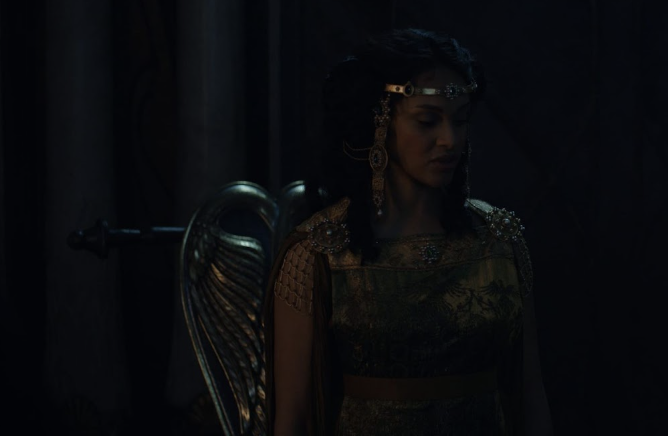
The shield of Tuor
The Dragon-helm of Dor-lóminin
In Season 1, Míriel bears a sword confirmed by Wētā Workshop to be Aranrúth, the legendary sword of King Thingol, the great grandfather of Elros. Of this sword, Wētā Art Director Vaughan Flanagan noted:
“The sword that Míriel wears is both a relic of the first age and heirloom of the Kings and Queens of Númenor. Its design draws inspiration from some heavily gilded Italian swords of the 1500s. The etched filigree posed a unique challenge as it was far more detailed than any of the other swords we made for the show. These etchings continue onto the blade and contain many first age references that will be familiar to Tolkien fans.”
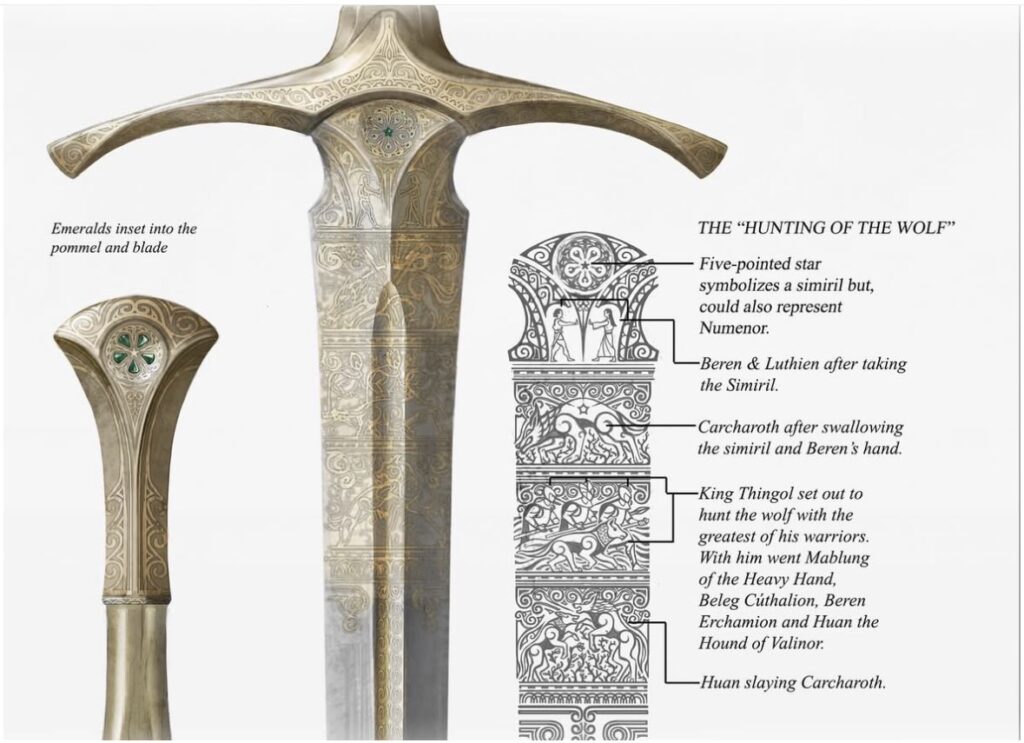
Details of Aranrúth from concept art shared by Wētā Art Director Vaughan Flanagan
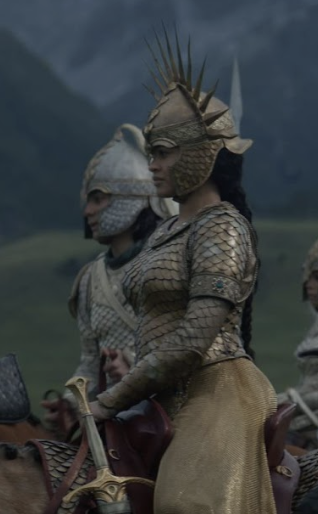
Míriel with Aranrúth
A closer look at these etchings in images shared by Flanagan reveals some spectacular artistry showcasing several momentous scenes from the legend of Beren and Lúthien, Thingol’s daughter. In addition, in its pommel and blade are inset several emeralds, establishing a visual connection to another emerald-adorned object from Tolkien’s Legendarium: the Ring of Barahir, in and of itself a relic from the First Age, but borne in the future by the heir of Isildur in the Third Age. The design also reflects that of Glamdring, the sword originally borne by Turgon, a High King of the Noldor in the First Age who fell with Gondolin. It was later borne by Gandalf, who wielded it throughout the War of the Ring. Aranrúth serves not only as a relic, but as a foretelling of a future we have yet to see. Additionally, it establishes a continuity in Elven craftsmanship all the way from the First Age to the Third Age, demonstrating the way the Elves seek to preserve the past throughout the long ages of the world.
Importantly, these relics are most often presented as artifacts rather than instruments. They are housed, displayed, and protected, not wielded. Aranrúth is a sword, but Míriel wears it only as an adornment and never wields it in battle. This distinction reinforces the idea that the First Age is already history within the world of the show. Its great conflicts have passed, and its heroes are remembered rather than reenacted. Númenor’s relationship to these objects suggests a culture that defines itself through remembrance and inheritance, valuing preservation alongside achievement.
By surrounding itself with the vestiges of earlier ages, Númenor visually aligns its identity with the sacrifices, victories, and losses that came before. The relics do not demand attention, but they do reward it, and for viewers familiar with Tolkien’s wider Legendarium, they carry deep resonance. And for those encountering these stories for the first time, they subtly communicate that the Second Age does not stand alone, but unfolds in the long shadow of a world already shaped by history.
At this point in the series, Númenor’s identity is increasingly divided. The Faithful remain committed to preserving and honoring the past, while the Kingsmen present themselves as focused on Númenor’s future but are increasingly concerned with severing the island from its history. This rejection of memory is already visible onscreen, most clearly in Kemen’s incursion into a Faithful temple and the destruction he leaves in its wake.
As Númenórean society shifts away from preservation, the loss that follows is not only physical but cultural. The eventual Downfall brings with it the destruction of the First Age relics housed within the Tower of the Palantír, the helm, shield, sword, and with them, the collective memory of Númenor’s past.
Armour and Visual Motifs
Beyond preserved relics, The Rings of Power also carries memory of the First Age through armor and visual motifs embedded in costume design. Rather than functioning purely as protective gear, armor often serves as a form of visual storytelling, subtly referencing histories, lineages, and lost places without drawing explicit attention to itself. These design choices reward close viewing while remaining unobtrusive to the broader narrative.
One of the clearest examples of this approach can be seen in Adar’s armor, which features imagery evocative of the River Sirion. For viewers familiar with the First Age, the Sirion carries deep associations with loss, exile, and the final movements of Elves fleeing the destruction of Beleriand. By incorporating this imagery into Adar’s design, the series visually situates him within the long aftermath of the First Age, reflecting a character shaped by its destruction rather than merely living in its wake.
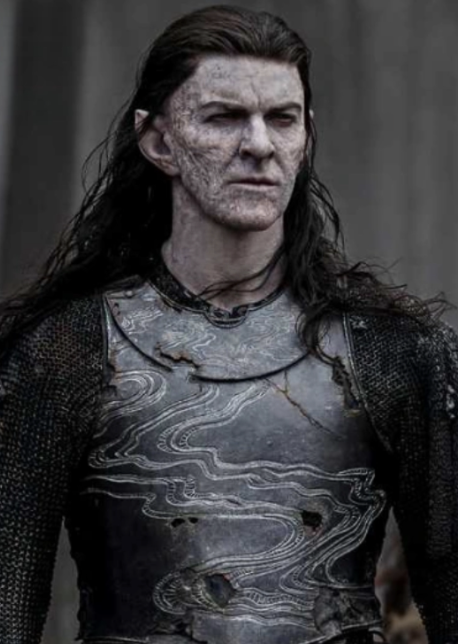
Adar’s breastplate evokes the River Sirion, imagery included in the costumes of other Elven characters
Elrond’s costuming offers a quieter but equally meaningful example. Wing motifs appear throughout his armor and clothing, a visual echo of his mother Elwing’s seabird form, and whose story is inseparable from the tragedy and hope of the First Age. These details are never explained onscreen, yet they subtly reinforce Elrond’s lineage and the personal history he carries into the Second Age. The design allows his heritage to be present without defining him solely by it.
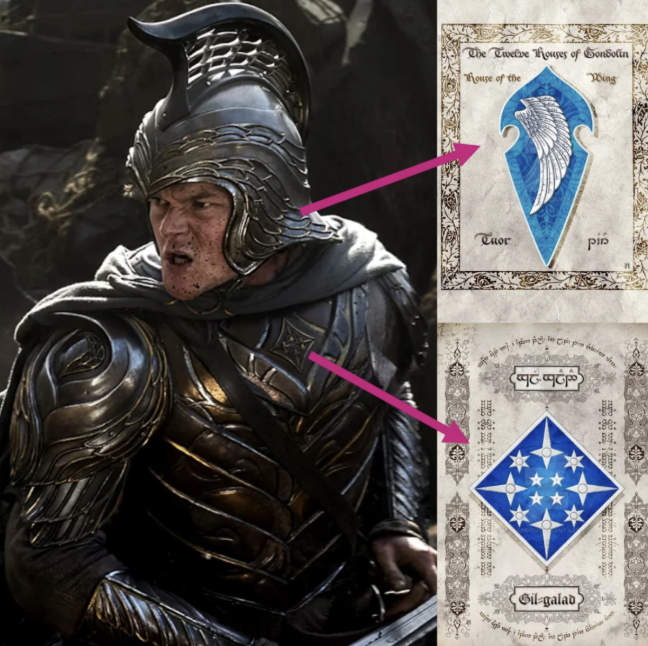
Elrond’s costuming includes visual motifs referencing his parentage and unique ancestry
Elrond’s armor and costuming also carry visual echoes that reach back beyond the First Age. Elements of Elven design incorporate motifs associated with the Two Trees of Valinor, Laurelin and Telperion, whose light shaped the earliest history of Arda. While these references are not foregrounded, they situate Elrond within a lineage that bridges eras, cultures, and memories. As a figure born of the First Age but living fully within the Second, Elrond becomes a natural bearer of this imagery, embodying continuity between what was lost and what endures.
Together, these examples demonstrate how The Rings of Power uses armor and visual motifs as extensions of cultural memory. Rather than relying on exposition, the series allows design to do quiet narrative work, embedding echoes of the First Age into the very surfaces of its characters. For those who notice, these details deepen the story. For those who do not, they remain part of a coherent and grounded world shaped by a long and remembered past.
The Fate of First Age Weapons and Their Legacy
While most of the relics on display in The Rings of Power serve as static artifacts that preserve the memory of the First Age, several objects break from this pattern. Rather than remaining mere relics, they continue to act in the world and affect change. These objects mark a shift from remembrance of the First Age into forces that actively shape the Second Age, and which we know will go on to shape the Third.
In Season 1, we see a brief shot of a sword leaning against the wall in the Tower of the Palantír, which eagle-eyed viewers might have recognized, and which is paid off in the Season 2 finale when Míriel presents Elendil with Narsil. While the specific past of this sword is relatively indistinct, we know it was made by Telchar, creator of the Dragon-helm of Dor-lómin and likely also of Aranrúth, both seen in the Tower of the Palantír among other First Age relics. Narsil, however, breaks from its fate as a static relic and escapes the Fall of Númenor. It is later wielded by Elendil in the Battle of the Last Alliance, where it is broken by Sauron. It is eventually reforged in the Third Age into Andúril, the Flame of the West, one of the last relics that preserves the memory of Númenor and its past.
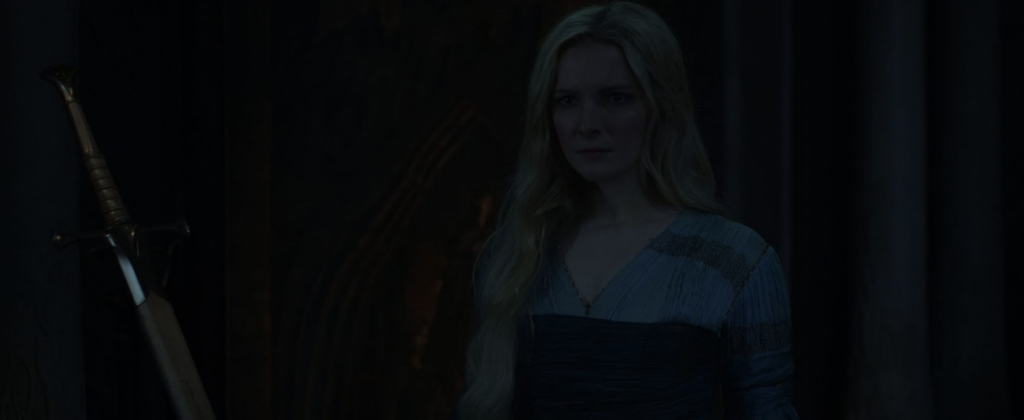
Narsil in the Tower of the Palantír in Númenor
Finrod’s dagger represents a relic from the past that undergoes a transformation into an object that will shape the future Ages of Middle-earth. Initially a symbol of Galadriel’s grief and quest for revenge, this dagger, originally made in Valinor and thus imbued with its preservative nature, is melted down and recast into a key ingredient in the forging of the Three Elven Rings, artifacts that will themselves shape the fate of Middle-earth across the Second and Third Ages.
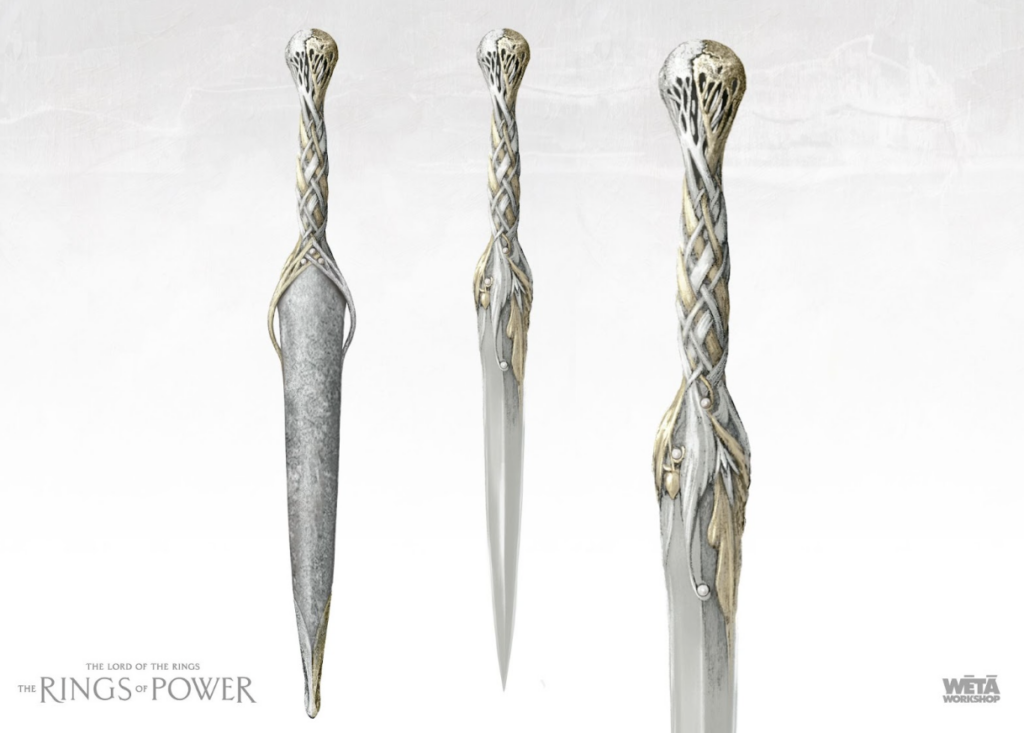
Wētā concept art of Finrod’s dagger
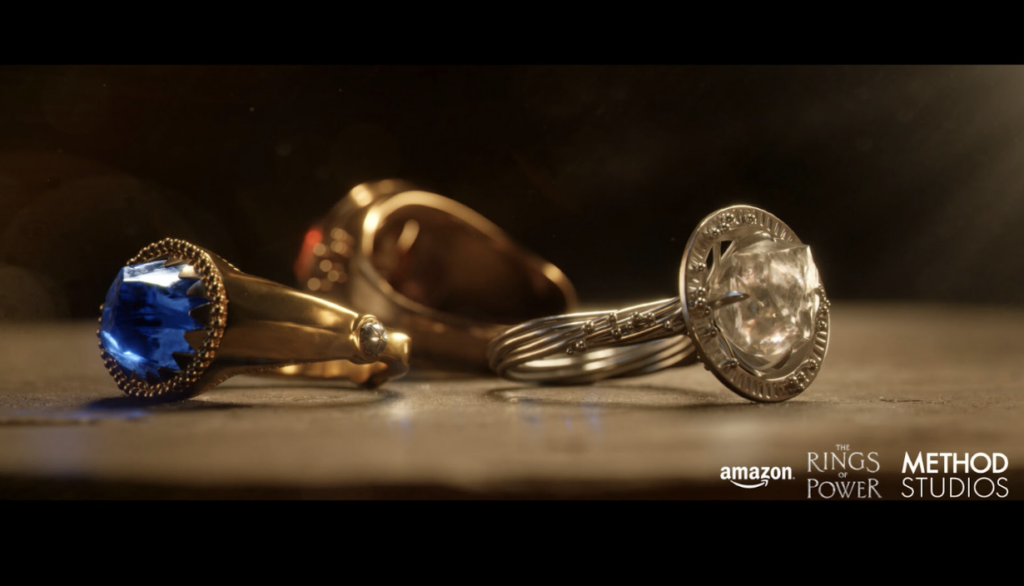
The Three Elven Rings forged using materials from Finrod’s dagger
The Crown of Morgoth offers a darker example of a First Age object that refuses to become a relic. Rather than being preserved or transformed, it continues to function as an instrument of domination well into the Second Age. Once worn by Morgoth himself, the crown reappears in the Second Age as a tool of violence, wielded by Adar as a weapon of destruction against Sauron before ultimately coming into Sauron’s possession by the end of Season 2, when he uses it to stab Galadriel. Its continued use underscores how the legacy of the First Age is not only remembered, but actively perpetuated. Unlike heirlooms that honor the past or objects reshaped toward preservation, the crown carries forward the destructive power of its original master, demonstrating how some legacies endure not through memory, but through control.
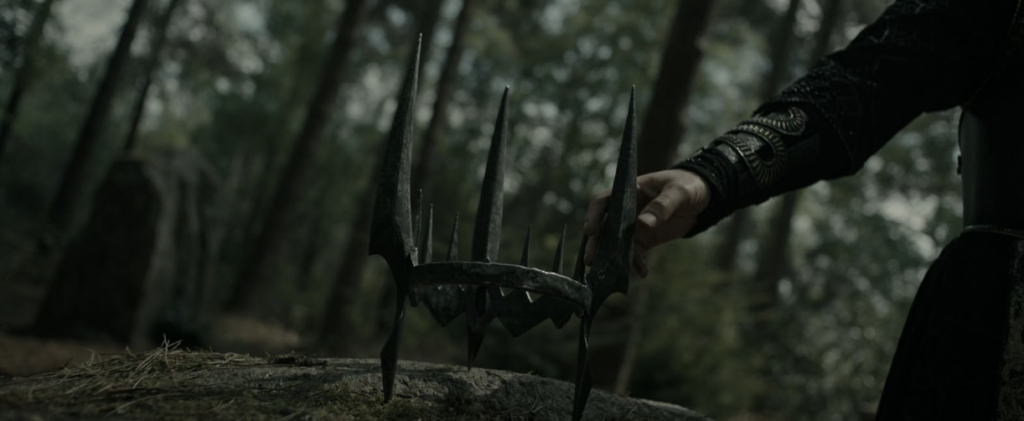
Sauron takes back Morgoth’s crown
Finally, Fëanor’s hammer appears first as a preserved object, displayed in Season 1 as Celebrimbor speaks longingly about legacy. The hammer once belonged to his grandfather, who possibly used it to create the Silmarils, the three legendary jewels that shaped, for both good and ill, the First Age of Middle-earth. When Celebrimbor later takes up the hammer as a tool of creation to craft the Rings of Power, its legacy is extended into the Second Age. Like the Silmarils before them, the Rings of Power will go on to shape the history of Middle-earth for Ages to come.
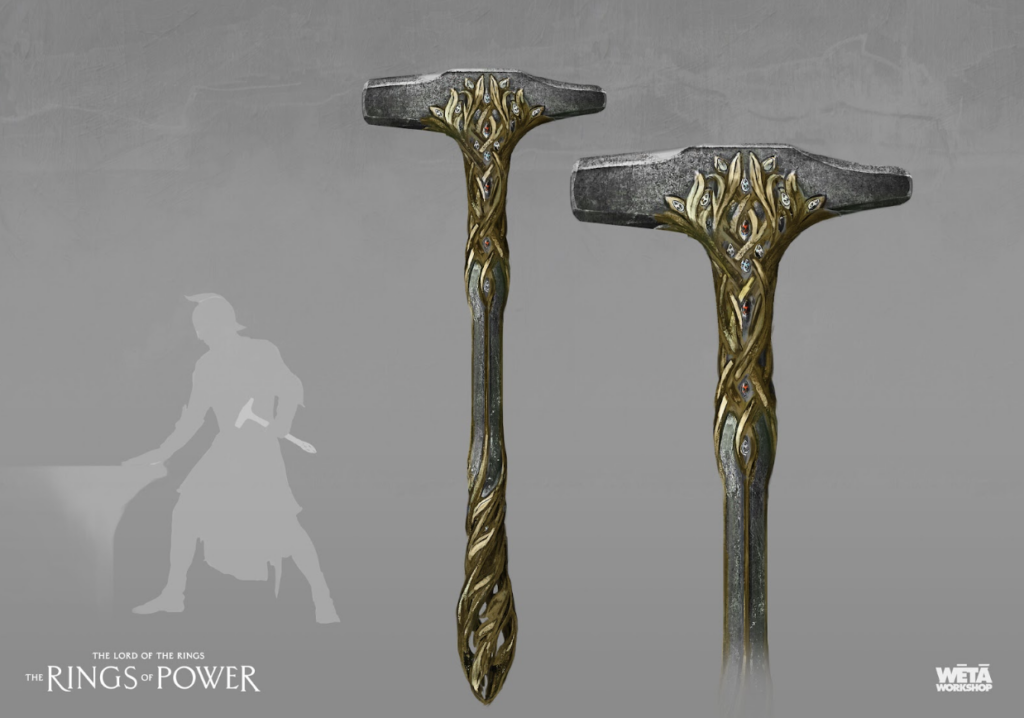
Wētā concept art of Fëanor’s hammer
What’s Next?
The First Age does not simply linger in memory, but continues to shape what is yet to be made.
In one of the final scenes of Season 2, the Harfoot Poppy recites a moving speech over various scenes. Her final words, “all anyone can do is try to build something new,” accompany a shot of Sauron holding Fëanor’s hammer. One of the Rings of Power has yet to appear, the One itself. The pairing of this dialogue and montage invites speculation about what is still to come, and whether Fëanor’s hammer will play a role in the forging of the One Ring, either as a tool in its making or as a material incorporated into it.
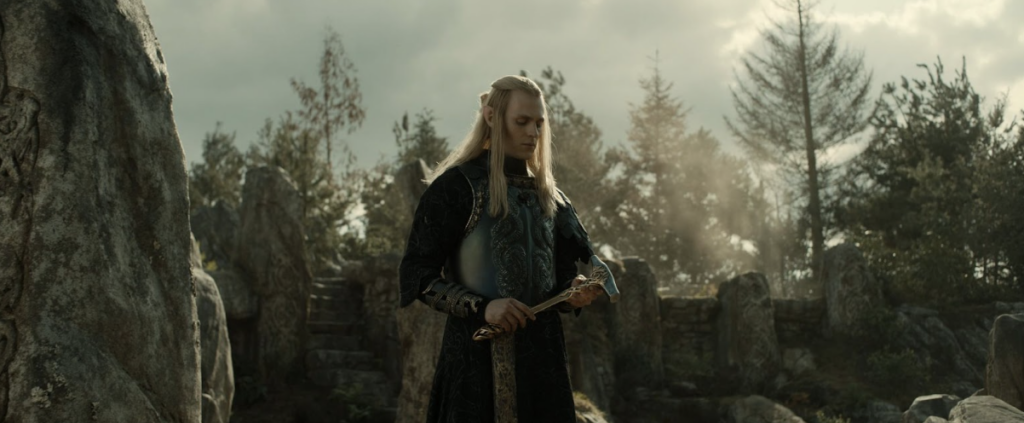
What will Sauron do with Fëanor’s hammer?
[Editor’s note: This article was co-written by Jessica and Sabrina, current website technical constraints, which we are going to address in the near future, only allow a single author on articles]


Cedar orest
February 10, 2026 at 5:53 pmThanks for this. Some of these I wasn’t aware of.