EXCLUSIVE: Sauron, Dwarves, and Orcs Set to Reshape The Rings of Power Season 3
Recent developments for The Rings of Power Season 3 indicate a significant shift in the state of Middle-earth. Fellowship of Fans can exclusively reveal that Sauron is expected to appear in a Dwarven kingdom for an episode, including a direct physical confrontation with Durin IV. Simultaneously, Durin’s brother is set to return to Khazad-dûm to challenge for the throne. Alongside this, an Orc character will play a central role in the season’s overarching narrative, travelling with both Galadriel and Arondir across Middle-earth.
In the aftermath of Season 2, these storylines emerge at a time of growing tension. Durin IV now holds the Dwarven Rings, while dissatisfaction among other Dwarven lords has already begun to surface. Together, these threads could reveal a Middle-earth that is becoming increasingly unstable, where internal divisions may prove just as significant as the external threat posed by Sauron.
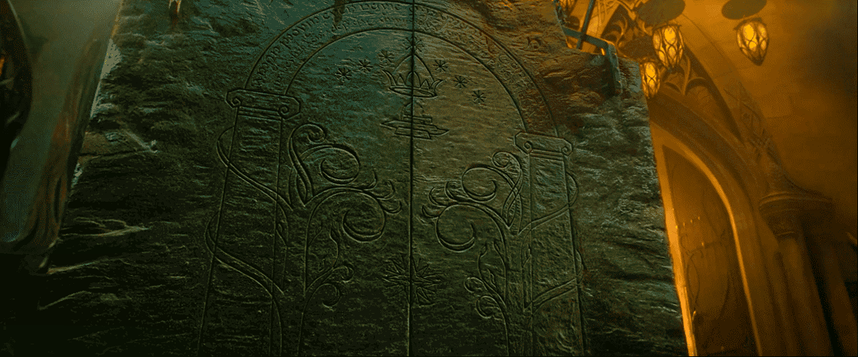
Khazad-dûm: A Kingdom Divided
Tensions within Khazad-dûm appear set to escalate significantly in Season 3. The return of Durin IV’s brother, who is expected to challenge for the throne, builds directly on tensions already established in earlier seasons.
At the center of this conflict are the Seven Dwarven Rings. Their full distribution has yet to be shown, leaving open the possibility that their allocation becomes a source of political fracture. Dialogue in Season 2 already hinted at competing claims and growing dissatisfaction among the Dwarven lords, with questions surrounding Durin IV’s legitimacy and the expectation that power and wealth should be more widely shared.
In Tolkien’s Legendarium, the Rings do not grant Sauron direct dominion over the Dwarves. Instead, they inflame greed, pride, and a desire for wealth, often leading to resentment and rivalry. This distinction is crucial, as it suggests that instability in Khazad-dûm may not stem from external control, but from pressures intensifying from within the kingdom itself.
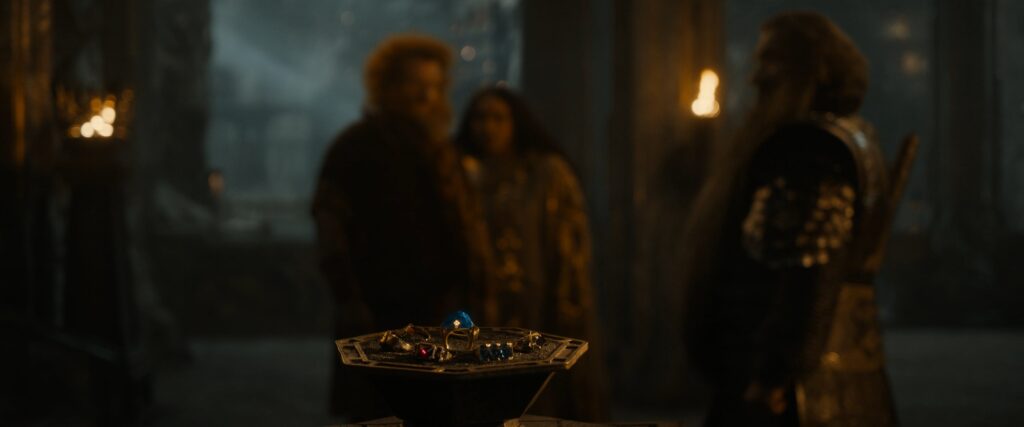
Several outcomes could emerge from this conflict. Durin IV may be temporarily usurped, or his brother could rally support from other clans and lay siege to the kingdom. In either case, Khazad-dûm risks becoming fractured, dividing loyalty between competing leaders.
In Tolkien’s Legendarium, Dwarves are noted to have fought on both sides during the War of the Last Alliance. Internal divisions within Khazad-dûm and across the wider clans could provide a narrative foundation for this, particularly if the current power struggle leads to shattered allegiances.
These tensions, seeded across earlier seasons, now appear set to expand into a broader political conflict that extends far beyond Khazad-dûm itself.
Sauron’s Role and Escalation
Moving into season 3, Sauron’s presence in a Dwarven kingdom marks a notable escalation in his strategy. In Season 2, operating under the guise of Annatar, his influence over the Dwarves is primarily tied to the forging of the Seven Rings and the growing importance of mithril. He briefly engaged with the Dwarves, including a visit to Khazad-dûm, where his request for more mithril was rejected. His involvement, however, remained limited, with the Rings acting as his primary instrument of manipulation. At this stage, it is unclear to what extent Durin IV is aware of Annatar’s true identity.
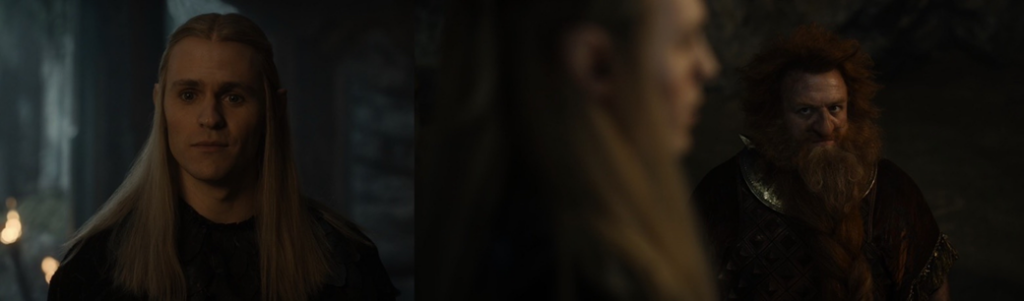
The reveal of a direct physical confrontation with Durin IV could signal a shift away from this subtle approach. It is uncertain who initiates the encounter, and this ambiguity matters. If Sauron seeks out Durin IV, it may suggest an attempt to assert dominance or secure control at a critical moment. Whereas if Durin confronts Sauron, it may indicate active resistance or a growing awareness of the threat the Dark Lord poses. Either way, the encounter marks a turning point, where Sauron is no longer solely operating from behind the scenes.
The wording of this exclusive also leaves open the possibility that this encounter does not take place in Khazad-dûm itself, but in another Dwarven kingdom. This distinction broadens the scope of the Dwarven storyline, suggesting that Sauron’s influence may extend beyond a single stronghold and possibly into many Dwarven lands.
Rather than creating outright division, Sauron may be entering a situation already shaped by conflict, using existing fractures to his advantage. As tensions rise among the Dwarven lords, his presence has the potential to accelerate internal disputes into open confrontation.
In Tolkien’s Legendarium, Sauron is unable to dominate the Dwarves in the same way as Men. His influence over them is indirect, working through the greed and pride fuelled by the Rings. A more direct confrontation may therefore reflect a shift in strategy, where influence alone is no longer sufficient. Thus, requiring Sauron to engage more openly with the divisions he seeks to exploit.
Elves and Orcs: A Changing Dynamic
The introduction of an Orc character travelling alongside Galadriel and Arondir marks a further evolution in the show’s portrayal of the Uruk. While earlier seasons have already begun to explore Orc individuality, particularly through Adar, this storyline places that perspective in direct proximity to two protagonists from opposing sides of the conflict.
This shift comes at a pivotal moment following the events of Season 2. With the death of Adar, who had previously acted as a defining and paternal figure for the Orcs, this may signal a change in how they are treated and understood. While Sauron now stands as the overarching authority, the loss of Adar removes a more immediate and personal form of leadership, potentially creating a gap between command and those carrying it out on the ground. This reflects moments in The Lord of the Rings, where Orcs like Shagrat and Gorbag express dissatisfaction with their leaders and even speak of breaking away from their command.
This development opens multiple narrative possibilities. It places an individual Orc within the orbit of two central characters, creating space for a more complex portrayal beyond that of a unified enemy.
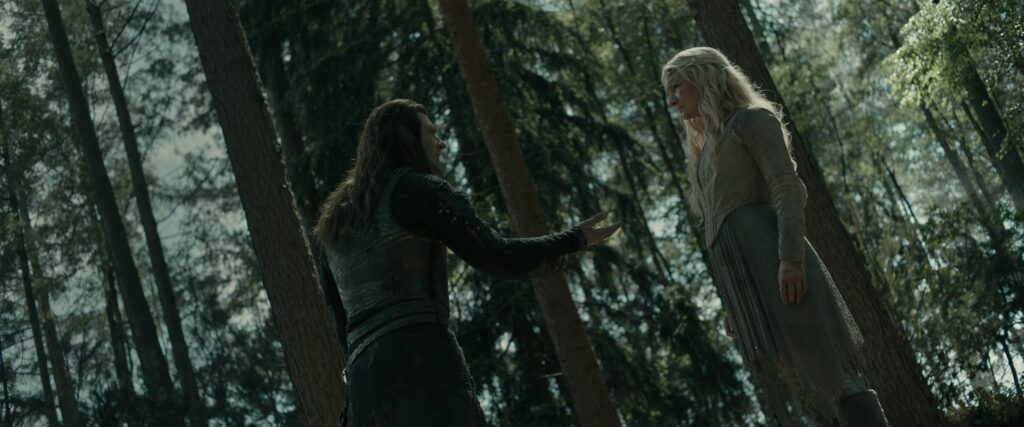
For Galadriel in particular, whose encounters with Adar have already complicated her understanding of Orcs, this dynamic may influence how she responds. It raises the possibility of a more nuanced perspective, while also highlighting the contrast between Sauron’s hierarchical model of control and the more collective identity that Adar had fostered.
Collectively, this storyline suggests that Sauron’s control over the Orcs may not be fully established. The evolving nature of Orc identity could shape how these forces function, particularly as tensions escalate in Season 3.
A World Under Strain
Looking across these storylines, a consistent pattern emerges of a Middle-earth becoming increasingly unstable from within. Conflict is no longer confined to opposing sides, but is instead developing from within them.
In Khazad-dûm, internal divisions between Durin IV, his brother, and the wider Dwarven lords threaten to fracture what was once a unified kingdom. The influence of the Rings intensifies these tensions, creating an environment where power, loyalty, and authority are actively contested. At the same time, Sauron’s growing presence signals a shift from indirect influence to direct involvement, with the potential to exploit and accelerate these divisions.
A parallel turning point may also be emerging within the Orc storyline. Following Adar’s death, this may signal a change in how Orcs are treated and understood. With Sauron now leading the Uruks once more, the loss of Adar removes a more personal form of leadership. Therefore, this opens the possibility for a transition in how Orcs relate to one another and to the wider conflict, particularly as new forms of leadership take shape.
Looking Ahead
As these threads converge, they point towards a Middle-earth where tension is no longer confined to a single front, but is instead spreading across its many peoples and kingdoms. Internal divisions among the Dwarves, shifting dynamics within the Orcs, and Sauron’s increasing presence all suggest a landscape that is becoming more volatile.
As these fractures deepen, they may begin to shape the alliances that define the conflicts to come. The growing instability across Middle-earth does not merely precede larger events, but may actively drive them, laying the groundwork for the wider struggles ahead.



No Comments